Sockwell Circulator vs Elevation: Which One Should You Buy?
Circulator is 15-20 mmHg moderate, Elevation is 20-30 mmHg firm. Both sit in Sockwell's Lifestyle collection and use the same merino blend, so the choice is compression level, not quality.
Search for Sockwell and you will find the Circulator, the Elevation, and a lot of pages referring to “Lifestyle” socks as though that were a third choice. It is not, and clearing that up removes most of the confusion.
Lifestyle Compression is the collection. The Circulator and the Elevation are both inside it, alongside Sockwell’s other everyday compression styles. The other collections are Sport Compression, Relief Solutions and Essential Comfort. So the real decision is only ever between two socks.
The difference is one number
| Circulator | Elevation | |
|---|---|---|
| Compression | 15-20 mmHg moderate | 20-30 mmHg firm |
| Height | Knee high | Knee high |
| Material | Merino wool and bamboo rayon blend | Same |
| Toe | Seamless closure | Same |
| Wide calf fit | Not on this style | Not available at all |
That is genuinely the list. Same yarn, same construction, same cut, same sizing bands. Sockwell has not made the Elevation a better sock, it has made it a firmer one, and treating firmer as better is the single most common way people end up with a pair they do not wear.
Which number to pick
For standing work, moderate 15-20 mmHg is where most people land. It is the level you can put on at six in the morning and forget about, which matters more than peak pressure because a sock in a drawer does nothing at all.
Firm 20-30 mmHg is a different proposition. It is more noticeable through the day and considerably harder to get on. It is also the level often specified for particular circulation issues, and that is the important distinction: which compression level a person needs is a clinical question, not a shopping one. We can tell you what these socks are; whether you should be in 20-30 mmHg is a conversation with a clinician.
If you have not settled on a level yet, the mmHg guide explains what the ranges mean before you spend anything.
The practical difference nobody warns you about
Firm socks are hard work. Not slightly, meaningfully. Getting a 20-30 mmHg sock over the heel takes technique and a bit of hand strength, and if you have arthritis or limited reach it can be the whole story. The Elevation is no worse than its peers here, but it is not exempt either.
This is worth weighing before compression level, because it decides whether a sock gets worn daily or twice. Our guide to putting compression socks on covers the methods that make firm socks manageable, including the rubber-glove trick that does more than any donning aid we have tried.
Where fit closes the door
If your calf measures over about 16 inches, the choice narrows on its own. Sockwell’s wide calf fit exists only on moderate styles, so the Elevation is simply not available to you in a leg that fits, and forcing a regular-fit firm sock over a wide calf produces the band mark and rolling you were trying to avoid.
That is a real constraint rather than a preference, and it is the one case where the decision is made for you.
So, which one
Buy the Circulator unless you have a specific reason not to. It is the most reviewed sock in the range, it is easier to live with, and it is cheaper. Buy the Elevation when 20-30 mmHg is what you have decided on and your calf fits a regular leg.
Either way you are getting the same merino blend that makes Sockwell worth the money in the first place.
How we test
Every pick is scored on the same five criteria and cross-checked against real owner feedback - so the ranking reflects how a product holds up over a full shift, not its spec sheet.
Support
Whether graduated compression actually matches its stated mmHg rating, or, for mats and insoles, how much load it takes off your legs.
Comfort
All-day wearability: no bite at the cuff, no hotspots, breathable enough for a full shift.
Durability
Whether it holds compression or loft after repeated washing and months of daily use.
Fit
Size range, calf-width options, and how honest the sizing chart is against real owner reports.
Value
What you get for the price, including cost per wear once durability is accounted for.
Best for most people
Sockwell Men's Circulator Moderate Graduated Compression
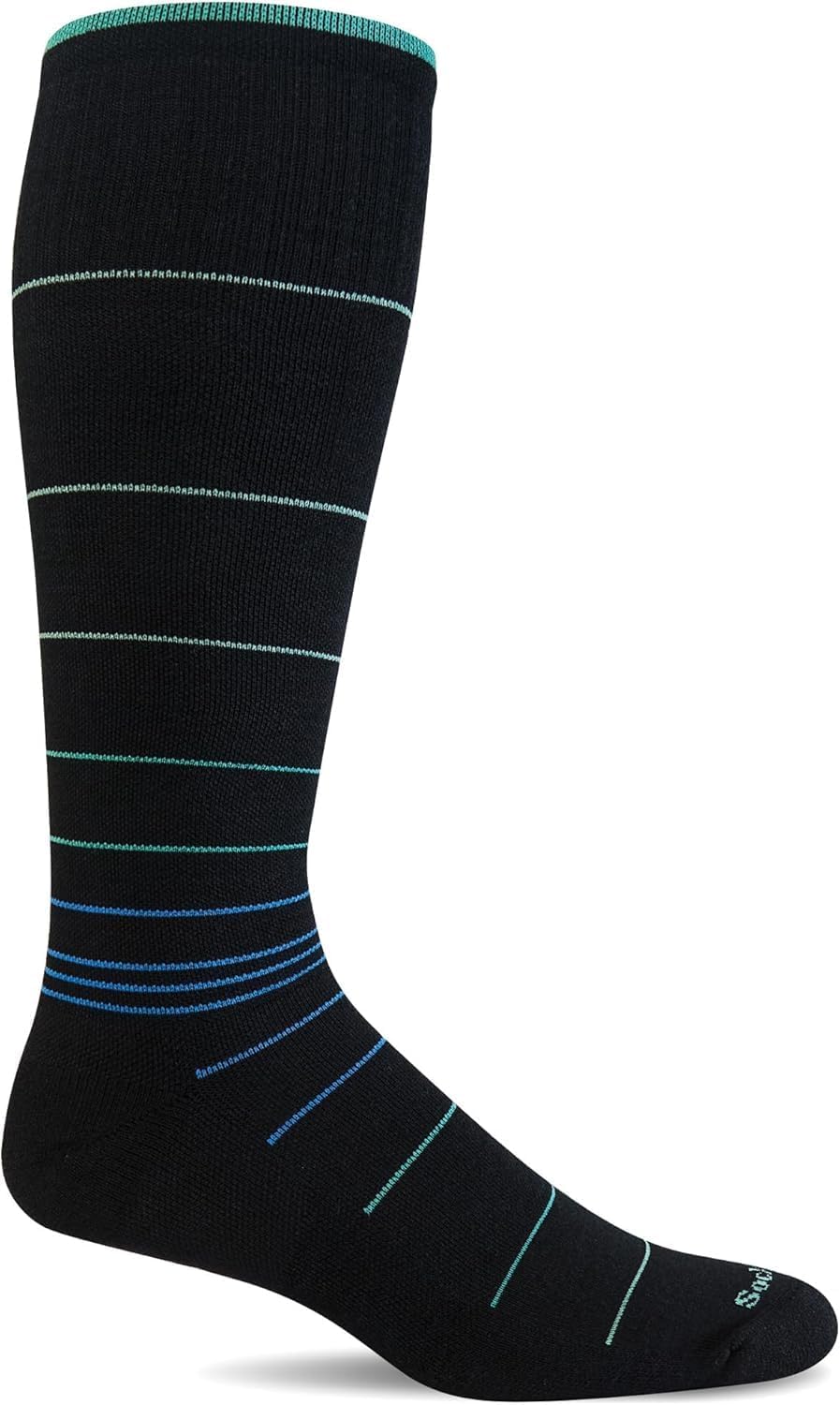
If you are not sure which you want, this is the answer. Moderate 15-20 mmHg is the level most people standing a long shift can actually wear all day without resenting it, and the merino blend is why it survives ten hours in a warm boot without smelling. Over 1,800 ratings at 4.5 stars makes it the most proven men's sock in the range. The Elevation is not an upgrade over this, it is a different specification.
Pros
- Moderate 15-20 mmHg is tolerable for a full shift
- Merino blend handles heat and odour better than nylon
- Substantially easier to put on than the firm version
Cons
- Not enough compression if you have been told to wear 20-30 mmHg
- M/L is the largest size
The firm version, same sock otherwise
Sockwell Men's Elevation Firm Graduated Compression
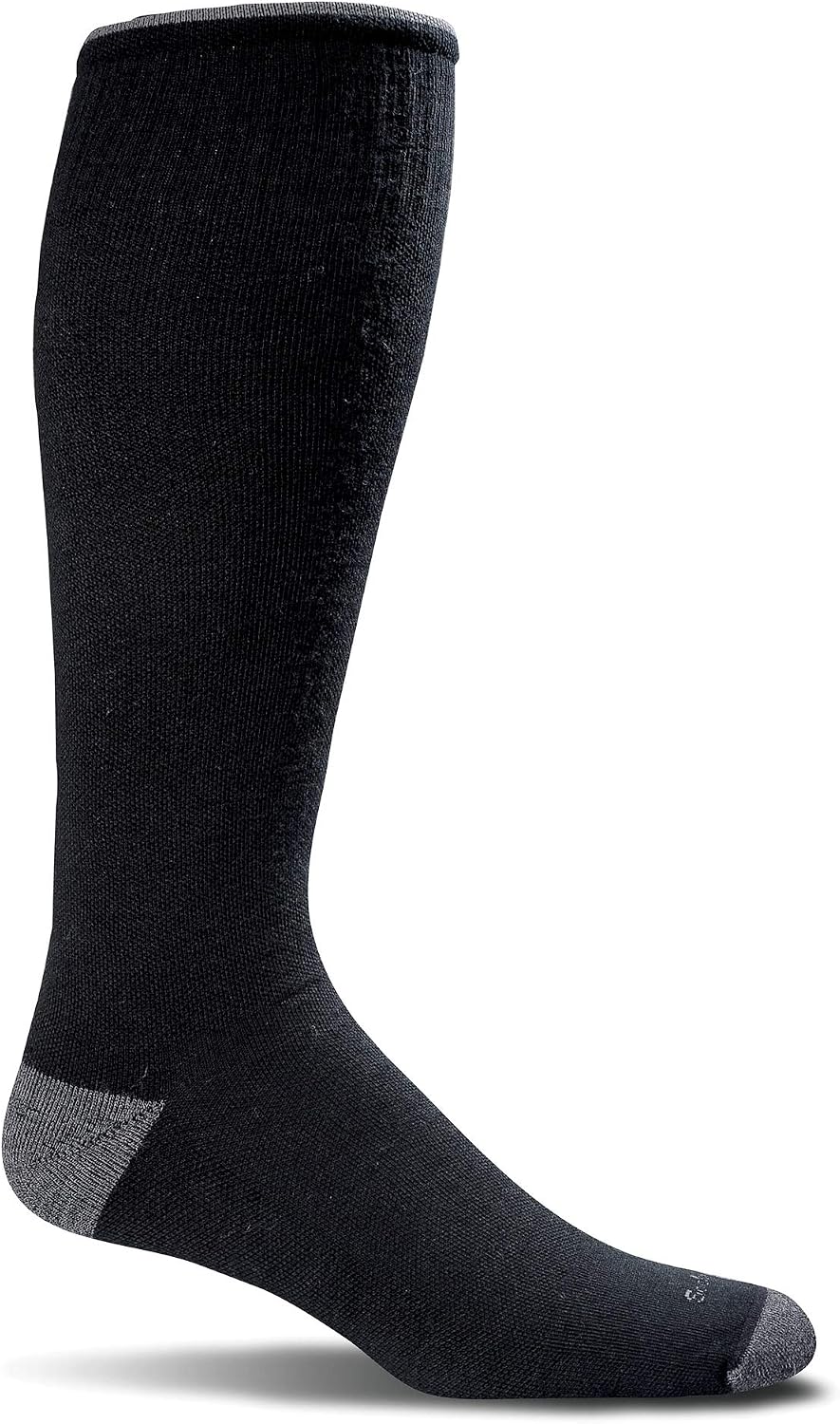
The same construction with firm 20-30 mmHg instead of moderate. Choose it when you have a specific reason to want that level rather than because more sounds better. The trade is real: it is harder to get on, more noticeable through the day, and it holds its shape best when the calf width is genuinely right. With nearly 2,000 ratings it has as much history behind it as the Circulator.
Pros
- Firm 20-30 mmHg with a well-executed ankle-to-calf gradient
- Same merino blend, so no comfort penalty from the material
- Long review history at 4.4 stars
Cons
- Genuinely hard to put on, especially over the heel
- More than most people need for ordinary standing work
- No wide calf option at this compression level
The women's moderate, and the range's bestseller
Sockwell Women's Circulator Moderate Graduated Compression
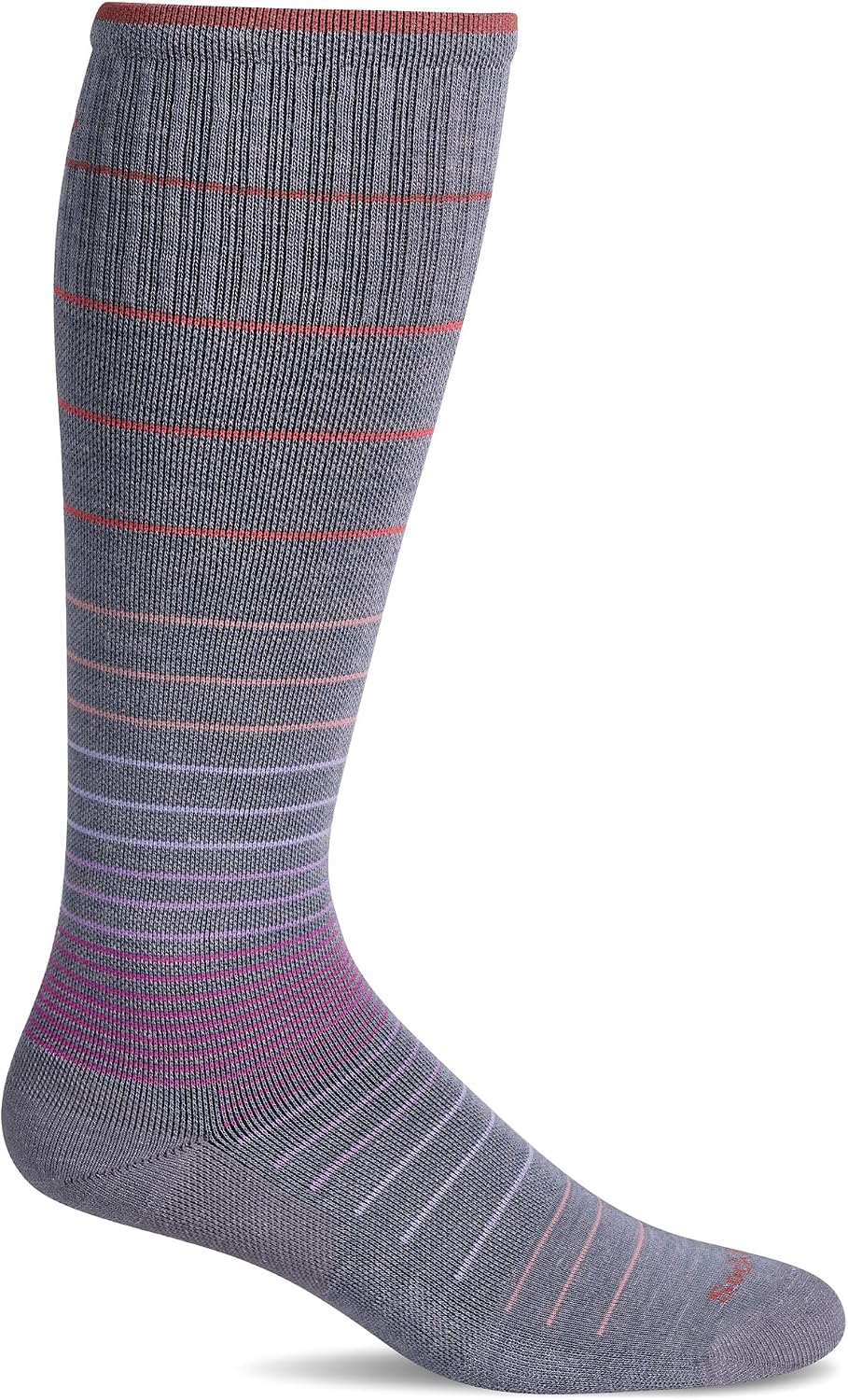
Close to 5,000 ratings makes this the most reviewed sock Sockwell sells, and the reason is that moderate compression in a merino blend is what most buyers actually want. The reviews are unusually consistent for a compression sock, where fit complaints normally dominate. If you are starting with Sockwell and have no clinical reason to go firmer, start here.
Pros
- The most reviewed sock in the range by a wide margin
- Widest colour selection Sockwell offers
- Easy enough to don daily without a routine
Cons
- Standard leg is tight on calves over roughly 16 inches
- Moderate only
Women's firm
Sockwell Women's Elevation Firm Graduated Compression
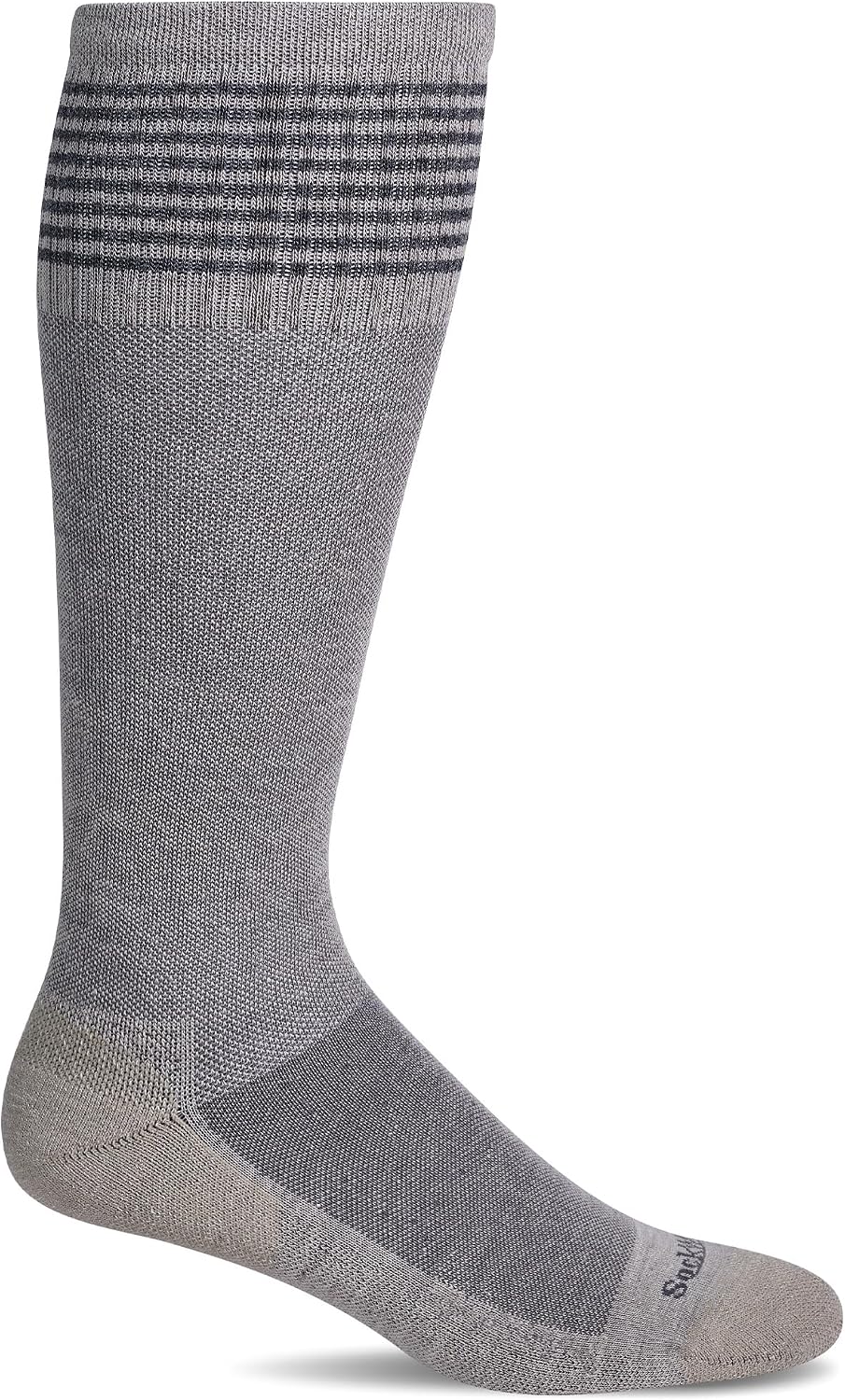
The women's firm option, and the same trade as the men's. The gradient is well executed, with a genuinely firm ankle that eases up the calf rather than clamping at the top, which is the failure mode of cheaper firm socks. Expect to budget a minute and a technique for getting it on, and expect to notice it through the day.
Pros
- Firm 20-30 mmHg that eases properly toward the calf
- Merino blend keeps it wearable despite the pressure
- 1,400-plus ratings at 4.5 stars
Cons
- Hard work to put on
- Regular leg only, no wide calf at this level
Also worth considering
Strong, well-reviewed products that just missed our ranked list - worth a look if the picks above aren't quite right for you.
- Sockwell Men's Pulse OTC Firm Graduated Compression - An over-the-calf firm option if the Elevation's height is not quite enough. Same compression class, taller leg.
- Sockwell Women's Elevate Micro Moderate Compression - Moderate compression in a micro-crew that stops below the calf. Sidesteps the leg-fit question if the knee-high band is your objection.
- Sockwell Women's Full Flattery Moderate, Wide Calf - The Circulator's compression level with roughly 15 to 20 percent more calf room. The only way to get a wider Sockwell, and moderate only.
Frequently asked questions
What is the actual difference between the Circulator and the Elevation?
Compression level, and very little else. The Circulator is 15-20 mmHg moderate, the Elevation is 20-30 mmHg firm. Both are knee-high, both use the same merino wool and bamboo rayon blend, both have the seamless toe closure and light arch support, and both sit in Sockwell's Lifestyle Compression collection. You are choosing a number, not a better or worse sock.
Is "Lifestyle" a third Sockwell option?
No, and this trips people up. Lifestyle Compression is the collection that contains both the Circulator and the Elevation, alongside Sockwell's other everyday compression styles. Searching for a Lifestyle sock as though it were a separate model will not find one. The parallel collections are Sport Compression, Relief Solutions and Essential Comfort.
Which one is right for standing all day at work?
Most people on their feet all day land on the moderate 15-20 mmHg Circulator, because it is the level you can tolerate for a twelve hour shift without fighting it. Firm 20-30 mmHg is a bigger commitment to wear and is more commonly recommended for specific circulation issues, which is a conversation for a clinician rather than a product page.
Are they harder to get on than each other?
Yes, noticeably. Firm 20-30 mmHg socks take real effort at the heel, and the Elevation is no exception. If you have grip strength or reach limitations, that difference matters more than any feature comparison. Our guide to putting compression socks on covers the technique that makes firm socks manageable.
Do they fit the same?
The foot sizing is identical, and both use the same S/M and M/L bands. Neither comes in Sockwell's wide calf fit, which is limited to moderate styles, so if you need extra calf room the Elevation is not available to you in that fit.