Back Pain From Standing All Day: Why It Happens and What Helps
Why standing shifts produce lower back pain, why the fix is usually posture and the surface rather than a belt, and the symptoms that need a clinician.
Back pain from a standing job usually behaves in a recognisable way: it builds through the shift rather than starting suddenly, it sits in the lower back, and it eases when you sit down or lie flat. If that is your pattern, the mechanism below is very likely what is happening, and the fix is probably not what is being marketed to you.
What standing does to your lower back
Standing still pushes most people into an increased lumbar curve.
Early in a shift, the muscles of your trunk and hips hold your pelvis in a reasonable position. As they fatigue, the pelvis tips forward, the lower back arches more, and load transfers from muscle onto the small facet joints at the back of the spine. Those joints are not designed to carry sustained compressive load, and they complain.
Two things make it worse:
Hard flooring, because none of the load is absorbed by the surface, so all of it travels up through you. Concrete is the worst case.
Leaning forward over a counter, bench or workstation set at the wrong height, which adds a constant forward bending moment your back muscles have to resist for hours.
The footrest, which almost nobody uses
If you take one thing from this page, take this.
Rest one foot on something roughly four to six inches high, and swap every ten to fifteen minutes.
Raising one foot tilts your pelvis backward slightly and flattens the excessive lumbar curve, which unloads the facet joints directly. Bars have had a foot rail for a century for exactly this reason.
A low box, a step stool, a milk crate, a shelf, the bottom rail of a workbench: it does not matter what it is. It costs nothing, it works better than most products sold for this problem, and it needs to be done consistently rather than once when you remember.
Then the surface
If you occupy roughly one spot, an anti-fatigue mat helps your back as well as your feet, and not simply by cushioning. A mat is slightly unstable, so you make constant small postural corrections instead of locking into one position. Sustained static posture is the problem; anything that breaks it up helps.
There is a mat in the queue specifically marketed for back pain, and the honest position is that the mechanism is the same as any decent mat. Thickness in the region of three quarters of an inch and bevelled edges matter more than the marketing.
Shoes, if you have a bad back
This is the commercial question people arrive with, and the answer is less exciting than the listicles suggest. There is no shoe that fixes a back. There are shoes that stop making it worse.
What matters, in order:
Genuine arch support. When an arch collapses, the foot rolls inward, which rotates the lower leg, which tilts the pelvis. Your lower back absorbs the end of that chain. Supporting the arch interrupts it.
A firm, stable midsole. This is where the instinct to buy the softest shoe available goes wrong. Very soft cushioning feels superb for an hour, then lets the arch drop and gives your foot nothing stable to work from. Stability beats softness.
A low heel drop. Any meaningful heel height pushes your pelvis forward and increases exactly the lumbar curve you are trying to reduce.
A midsole that has not collapsed. Foam compresses permanently. Shoes over a year old worn full time are probably not doing what they did new, and no insole restores a dead midsole.
Our roundups for women and men are scored on support, comfort, durability, fit and value, and the support column is the one to read first if your back is the issue. If your shoes are decent but under-supported, insoles are the cheaper intervention. For outdoor or wet-site work where a boot is the only option, our sister site reviews waterproof work boots.
On support belts
Lumbar support belts give some people short-term relief, and they are heavily marketed for exactly this use.
The honest summary is that evidence for using them to prevent back pain is weak, and there is a reasonable concern that wearing one routinely lets the muscles that should be doing that work get weaker. If you find one helps, treat it as a temporary aid through a bad patch rather than standard kit for every shift, and put your effort into the footrest, the surface and the shoes, which address the cause rather than splinting around it.
Movement through the shift
- Swap the raised foot every ten to fifteen minutes
- Shift your weight between feet regularly rather than planting
- Walk during breaks instead of sitting, which restores movement rather than adding another static posture
- Check your working height. If you lean forward all day, the bench or counter is probably too low, and no shoe fixes that
When it is not simple standing fatigue
Standing-related back pain builds through the day and eases with rest. Get advice if that is not your pattern, and specifically if:
- Pain runs down your leg below the knee
- There is numbness, tingling or weakness in a leg or foot
- It wakes you at night
- It followed a fall or injury
- It comes with unexplained weight loss or fever
Seek emergency care for numbness around the groin or inner thighs, or any change in bladder or bowel control. That combination needs immediate assessment and is not something to wait on.
We review products and we are not clinicians. Nothing here is a diagnosis, and persistent or worsening back pain deserves someone examining you rather than another purchase.
How we test
Every pick is scored on the same five criteria and cross-checked against real owner feedback - so the ranking reflects how a product holds up over a full shift, not its spec sheet.
Support
Whether graduated compression actually matches its stated mmHg rating, or, for mats and insoles, how much load it takes off your legs.
Comfort
All-day wearability: no bite at the cuff, no hotspots, breathable enough for a full shift.
Durability
Whether it holds compression or loft after repeated washing and months of daily use.
Fit
Size range, calf-width options, and how honest the sizing chart is against real owner reports.
Value
What you get for the price, including cost per wear once durability is accounted for.
Best for a fixed standing spot
ComfiLife Anti Fatigue Floor Mat, 20 x 32 inch
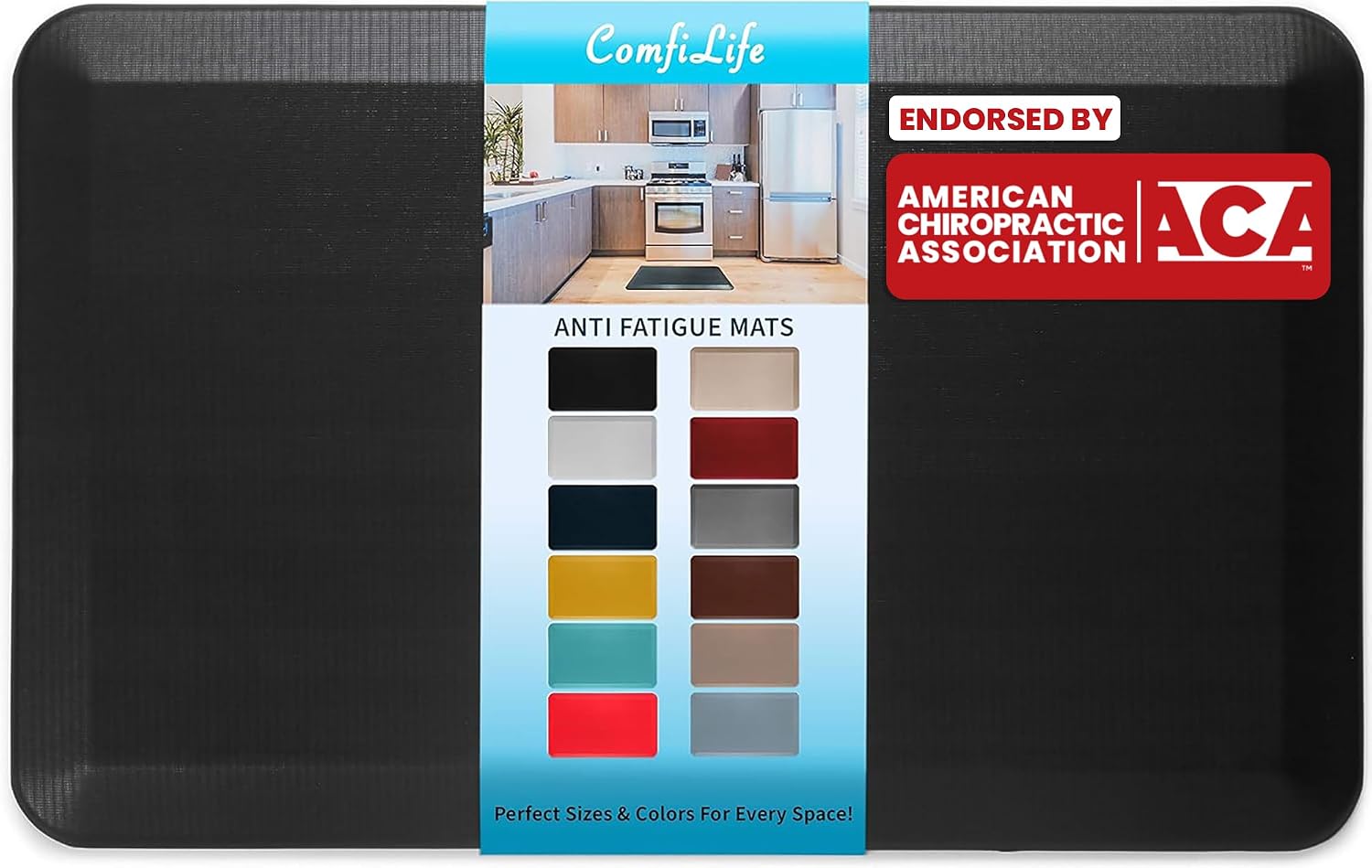
Sustained static posture is the problem, and a mat interrupts it. Its slight instability means constant small postural corrections rather than settling into one position and letting the pelvis tip forward. It reduces load rather than treating pain.
Pros
- Right size and lower price for a fixed standing spot
- Same 4.8 star foam as the longer version
- Easy to lift, move and store
Cons
- Too short if you move between stations
- No advantage over the 39 inch beyond price and storage
- Single firmness option
Best arch support
Superfeet All-Purpose Wide-Fit Support Insoles
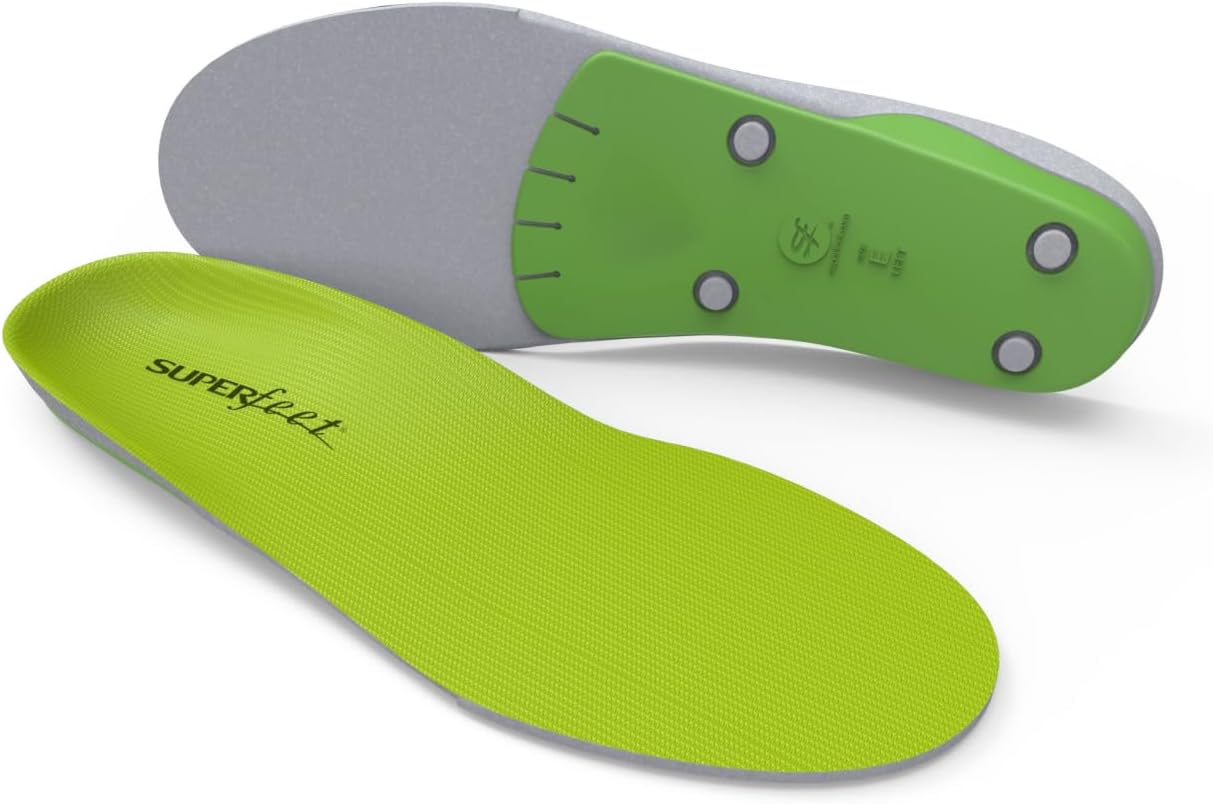
A collapsing arch rolls the foot inward, rotates the lower leg and tilts the pelvis, and your lower back absorbs the end of that chain. Structured support interrupts it at the start. This is why very soft shoes often make a back worse rather than better.
Pros
- Firm structural shell genuinely holds the arch all day
- Cut for wide feet, which most insoles are not
- Far more durable than foam or gel
- Over four thousand owner reviews
Cons
- Firm feel takes a week or two to adjust to
- Needs a shoe with a removable factory insole
- Most expensive option here
Best men's shoe for stability
Orthofeet Edgewater Orthopedic Men's Walking Shoes
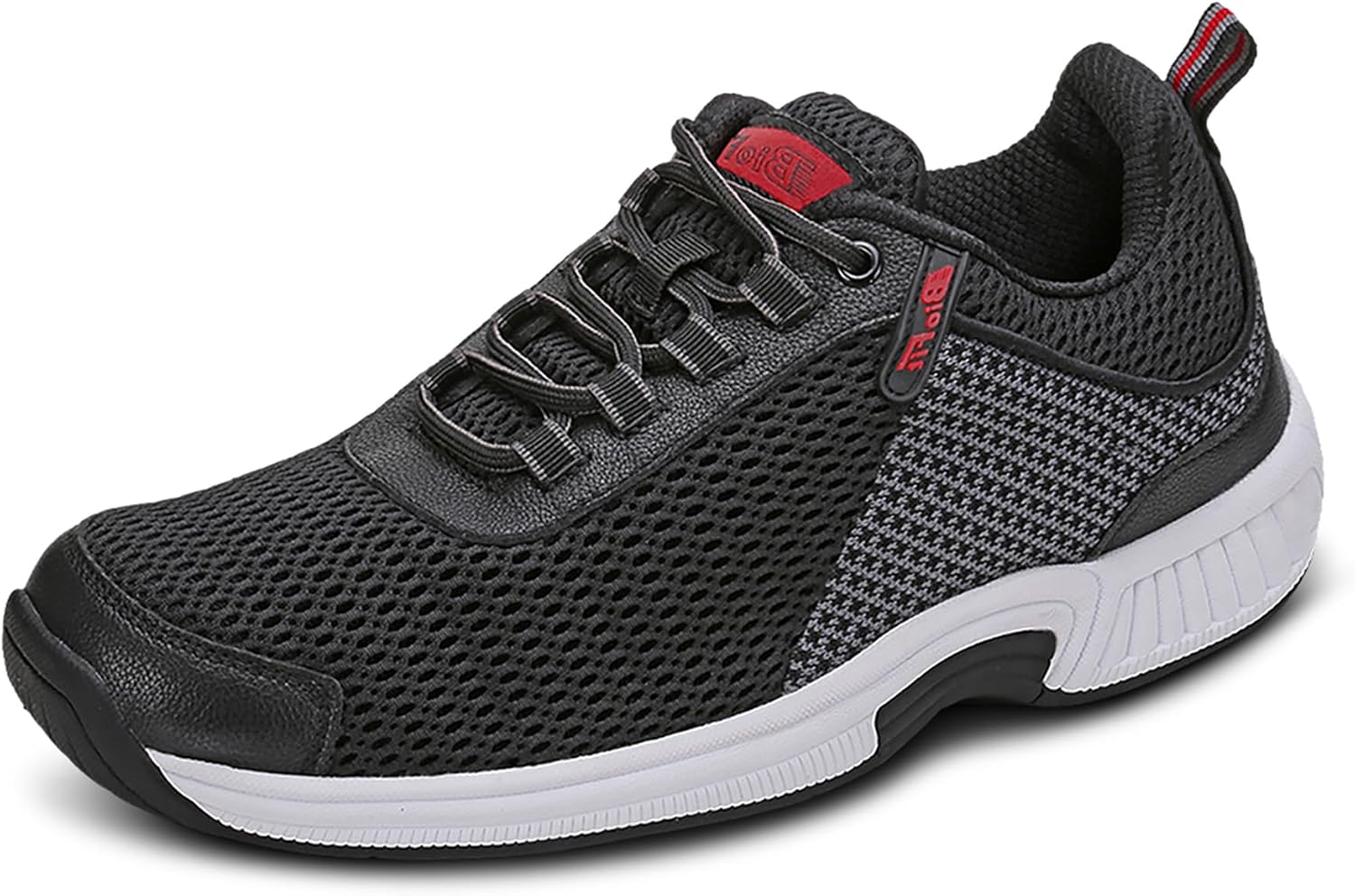
A wide, stable platform with a removable orthotic insole and adjustable arch height, which matters when you are trying to correct alignment rather than just add cushioning. Not slip rated, so it is wrong for a wet floor.
Pros
- Removable orthotic plus spacers to tune arch height
- Genuinely wide toe box for bunions and neuropathy
- Stretchable seam-free upper avoids pressure points
- Over three thousand owner reviews
Cons
- Not slip rated, so wrong for wet or greasy floors
- Least durable upper on this page
- Most expensive option here
Best women's shoe for stability
Orthofeet Coral Orthopedic Women's Sneakers
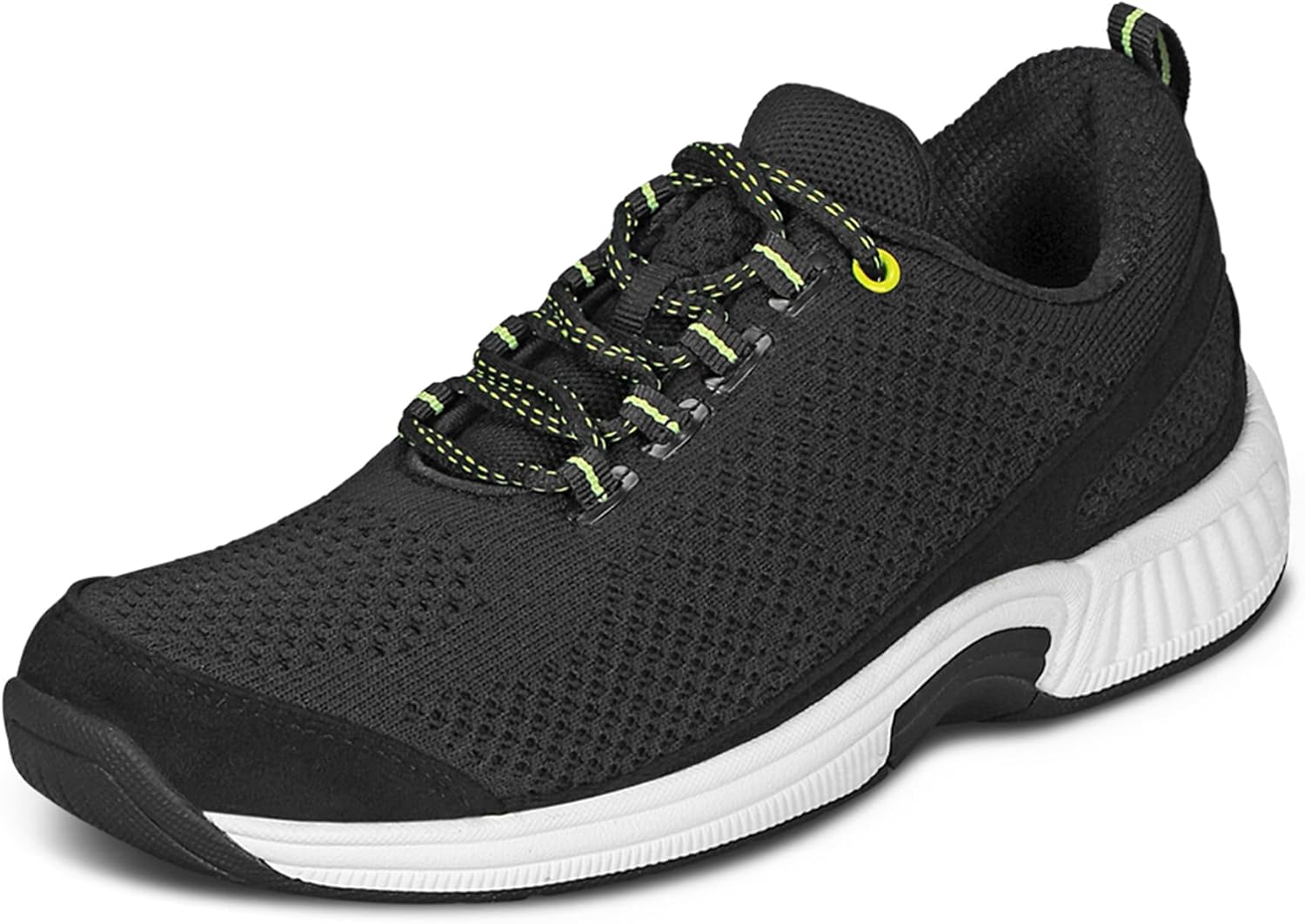
The same approach in the women's line: genuinely wide toe box, adjustable arch, and a stable base to work from. Buy it for support rather than for grip.
Pros
- Removable orthotic plus arch spacers to tune support height
- Genuinely wide toe box, built for bunions and hammertoes
- Closed heel is more stable than a clog
- Nearly six thousand owner reviews
Cons
- Not slip rated, so wrong for wet or greasy floors
- Rated 4.1 stars, with upper durability the common complaint
- Runs large, so size down
Best if you cannot move much
Topo by Ergodriven
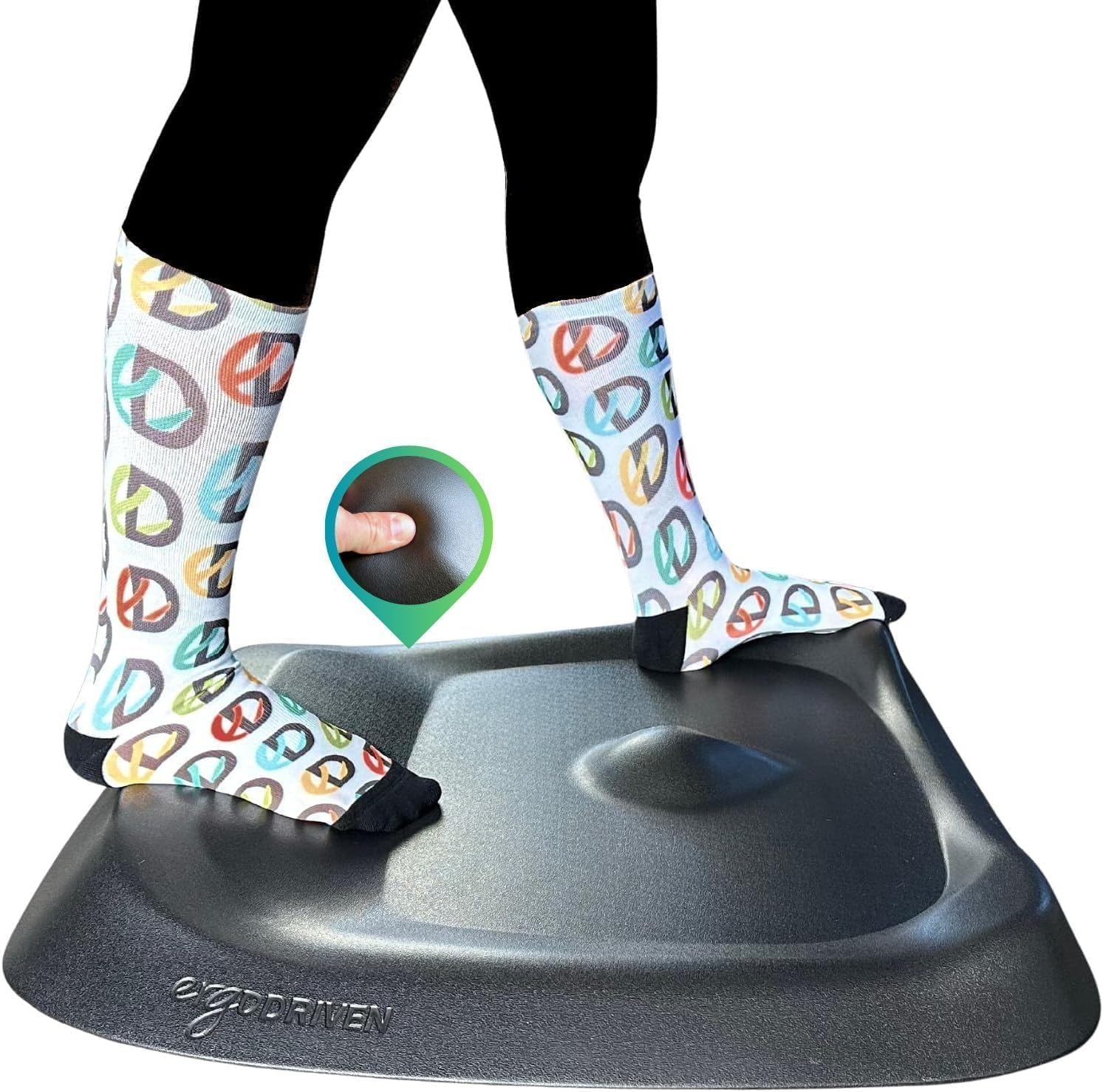
The terrain gives you somewhere to put your feet, so you change position constantly without leaving your spot. For a back that stiffens when you stand still, being offered new positions is the point.
Pros
- Terrain design keeps giving you new standing positions, not just cushioning
- Very dense foam that resists compression over years
- Built-in calf and arch stretch points
- PVC free
Cons
- Most expensive mat on this list by a wide margin
- Bulky and awkward to move aside when you want to sit
- Wrong shape and look for a kitchen
Also worth considering
Strong, well-reviewed products that just missed our ranked list - worth a look if the picks above aren't quite right for you.
- Dr. Scholl's Work All-Day Superior Comfort Insoles (Men's) - The cushioned rather than structured option, and the cheaper starting point if your shoes are otherwise sound.
- Timberland PRO Powertrain Alloy Toe Work Shoe - A firm, stable safety shoe for sites that require a protective toe, where stability matters more than softness.
- GORILLA GRIP Anti Fatigue Mat - The value mat, and a reasonable choice if the standing spot sees a few hours a day rather than a full shift.
Frequently asked questions
Why does my lower back hurt after standing all day?
Standing still pushes most people into an increased lumbar curve. As the muscles that support your trunk fatigue through a shift, the pelvis tips forward, the lower back arches more, and load shifts from muscle onto the small joints at the back of the spine. Hard flooring makes it worse because there is no give to absorb anything. The pain typically builds through the day rather than starting suddenly, and eases when you sit or lie down, which is the pattern that distinguishes it from most other causes.
What is the single best thing for back pain from standing at work?
A footrest. Resting one foot on a low box, rail or step of roughly four to six inches flattens the lumbar curve and takes load off the small joints of the lower back, and swapping feet every ten to fifteen minutes keeps the effect going. It costs nothing, it is more effective than most products sold for this, and almost nobody does it consistently.
Do back support belts help with standing all day?
They provide short-term relief for some people, but the evidence for preventing back pain with lumbar belts is weak, and there is a reasonable concern that relying on one long term lets the muscles that should be doing that job get weaker. If you use one, treat it as a temporary aid during the worst periods rather than as standard equipment for every shift, and put the effort into the footrest, the surface and the shoes instead.
What shoes are best for standing all day with a bad back?
Look for genuine arch support, a firm and stable midsole, and a low heel drop. Arch support matters because a collapsing arch rolls the foot inward, which rotates the leg and tilts the pelvis, and the lower back absorbs that. Avoid very soft cushioned shoes, which feel good briefly and then let the arch drop, and avoid any real heel height, which pushes the pelvis forward and increases the lumbar curve. Stability beats softness here.
When should I see a doctor about back pain from standing?
See someone promptly if the pain runs down your leg below the knee, if there is numbness, tingling or weakness in a leg or foot, if it wakes you at night, if it followed a fall or injury, or if it comes with unexplained weight loss or fever. Seek emergency care for numbness around the groin or inner thighs, or any change in bladder or bowel control, which requires immediate assessment.