Standing on Concrete All Day: Why It Hurts More and What Helps
Why concrete floors punish feet, legs and back more than any other surface, why cushioned shoes are the wrong first fix, and the order to solve it in.
If you stand on concrete, you are not imagining that it is worse. Warehouse, workshop, kitchen, factory, retail stockroom, garage: it is the hardest common working surface, and it punishes standing in a specific way that is worth understanding before you spend money on it.
What concrete actually does differently
Every surface absorbs some of the energy of a footfall and returns the rest. Wood over joists flexes slightly. Vinyl over a subfloor gives a little. Carpet gives a lot.
Concrete gives essentially nothing. The energy it does not absorb comes back up through your feet, ankles, knees, hips and lower back. Your own tissues end up doing the absorbing that the floor is not doing.
There is a second, less obvious problem. A surface with a little compliance encourages tiny constant adjustments in how you stand. Those micro-movements keep muscles contracting and relaxing, which keeps blood moving. Concrete is completely rigid, so it encourages you to plant and hold. That static loading is what fatigues the small muscles supporting your arch, and it is why the ache tends to arrive suddenly a few hours in rather than building gradually.
So concrete is worse in two ways at once: harder impact, and more static standing.
Why cushioned shoes are the wrong first move
The instinct is to buy the softest, squashiest shoe available. It is usually a mistake.
Cushioning is not support, and the failure mode on concrete is a collapsing arch, not insufficient padding. A very soft shoe feels superb for an hour and then lets your arch drop, which is exactly the thing that hurts by hour six. Worse, soft foam compresses permanently, so an expensive squashy shoe is often doing noticeably less after a year of full-time use than it did new.
Support first, cushioning second. That ordering is the single most useful thing on this page.
Fix it in this order
1. Put something between you and the floor
If you occupy roughly one spot, this is by far the highest-value change, and it is where an anti-fatigue mat earns its keep. Concrete is the surface these were designed for.
The mechanism is not padding. A mat is slightly unstable, so your feet and legs make constant small corrections to stay balanced. That restores the muscle cycling the rigid floor took away.
What to look for on concrete specifically:
- Around three quarters of an inch thick. Thicker feels unstable and becomes a trip hazard.
- Dense foam for a standing spot; rubber if things get dropped, dragged or spilled, as in a workshop, where durability beats a little extra comfort.
- Bevelled edges, because a square edge on concrete is something you will catch a toe on and is the first part to curl and fail.
- Length over width if you work along a bench or a line. Stepping on and off a short mat all day defeats the point.
If your mat lives in a kitchen, the kitchen-specific guide leads on size rather than brand, which is the decision that matters there.
2. Sort out arch support
If you cover ground rather than standing in one place, a mat is irrelevant and this becomes step one.
Structured support beats soft gel for standing on concrete. Gel absorbs impact, which matters for walking and running; standing still is a support problem, not an impact problem, and gel compresses across a shift. Firm, structured insoles hold the arch and stop it collapsing, which is the actual failure.
If your shoes are more than a year old and worn full time, replace them before buying insoles. A collapsed midsole cannot be patched, and no insole restores it. Our roundups cover women’s and men’s options separately. If the concrete you stand on is also wet, our sister site covers waterproof work boots in more depth than we do here.
3. Break up the static standing
Free, and it addresses the mechanism concrete creates:
- Shift your weight between feet every few minutes
- Rest one foot on a low box or rail, swapping regularly, which unloads your lower back too
- Calf raises, ten slow ones a few times a shift, to restart the pump returning blood up your legs
- Walk during breaks rather than sitting
4. Compression, if the problem is your legs
Concrete produces two different complaints and they need different tools. If your soles hurt, that is the surface and the shoe. If your legs feel heavy and your ankles swell by evening, that is fluid pooling from standing still, and compression socks address it directly. The mmHg guide covers choosing a strength, which matters more than the brand.
Heels specifically
Sore heels on concrete are common enough to deserve their own note. If the pain is worst on your first few steps in the morning and eases as you move, that pattern is associated with the plantar fascia rather than simple bruising. Adding cushioning is the usual instinct and it is not the fix; arch support is closer to the mark, and if it has gone on for more than a few weeks it is worth having looked at rather than self-treating indefinitely.
The realistic expectation
You will not make concrete feel like carpet. A mat, proper support and deliberate movement together take a shift from genuinely painful to tiring, which is a large improvement and about as far as products go.
If you are also getting back pain or knee pain from the same shifts, those follow from the same rigid surface and are covered separately.
We review products rather than treat people. Pain that wakes you at night, involves numbness or burning, affects one side much more than the other, or follows an injury is worth a clinical opinion rather than another purchase.
How we test
Every pick is scored on the same five criteria and cross-checked against real owner feedback - so the ranking reflects how a product holds up over a full shift, not its spec sheet.
Support
Whether graduated compression actually matches its stated mmHg rating, or, for mats and insoles, how much load it takes off your legs.
Comfort
All-day wearability: no bite at the cuff, no hotspots, breathable enough for a full shift.
Durability
Whether it holds compression or loft after repeated washing and months of daily use.
Fit
Size range, calf-width options, and how honest the sizing chart is against real owner reports.
Value
What you get for the price, including cost per wear once durability is accounted for.
Best overall for concrete
ComfiLife Anti Fatigue Floor Mat, 20 x 32 inch
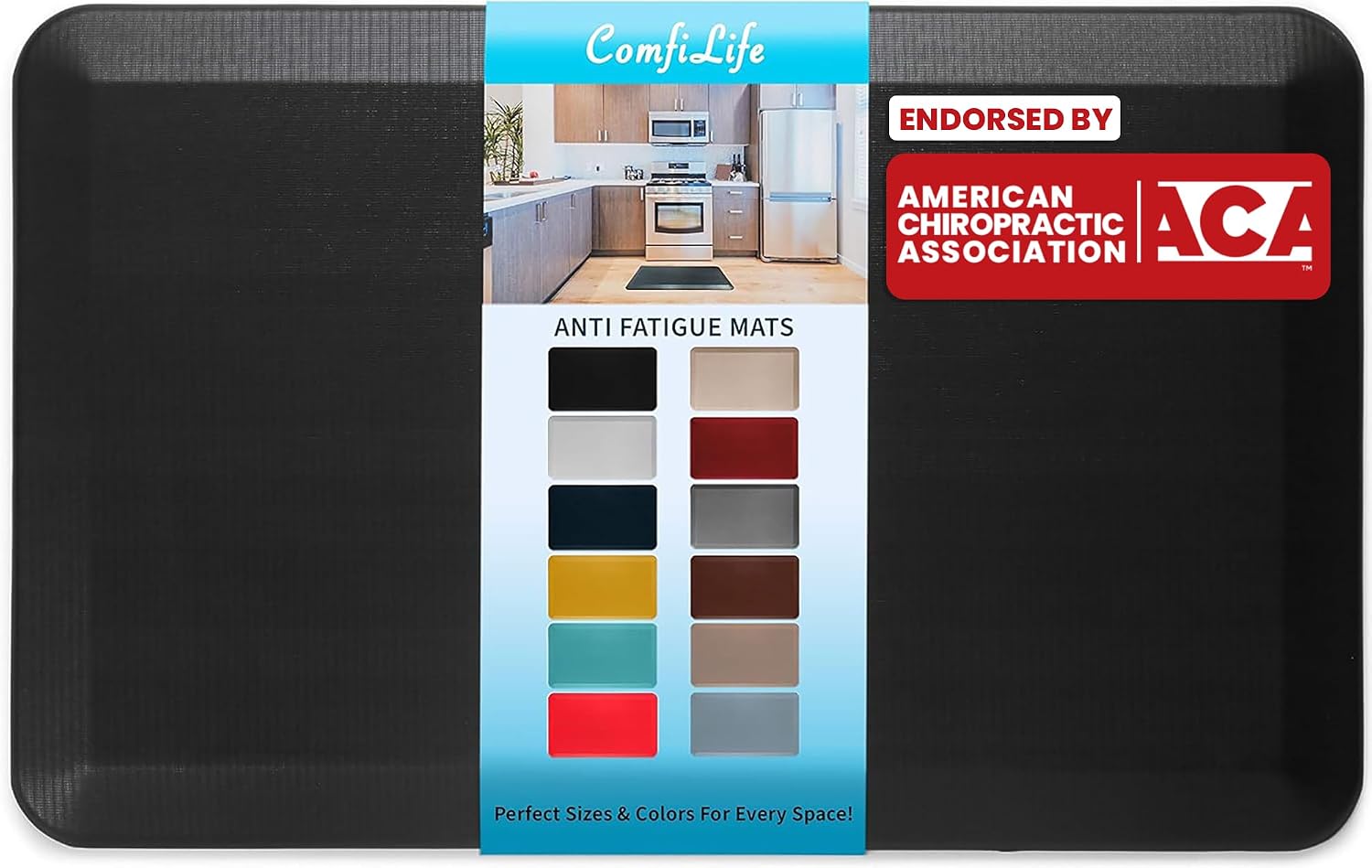
Concrete is the surface these were designed for, and this is the one to buy without overthinking it. The three quarter inch high-density foam holds its loft rather than flattening into a pancake, which is how cheap mats fail after a few months.
Pros
- Right size and lower price for a fixed standing spot
- Same 4.8 star foam as the longer version
- Easy to lift, move and store
Cons
- Too short if you move between stations
- No advantage over the 39 inch beyond price and storage
- Single firmness option
Best for a fixed standing spot
Topo by Ergodriven
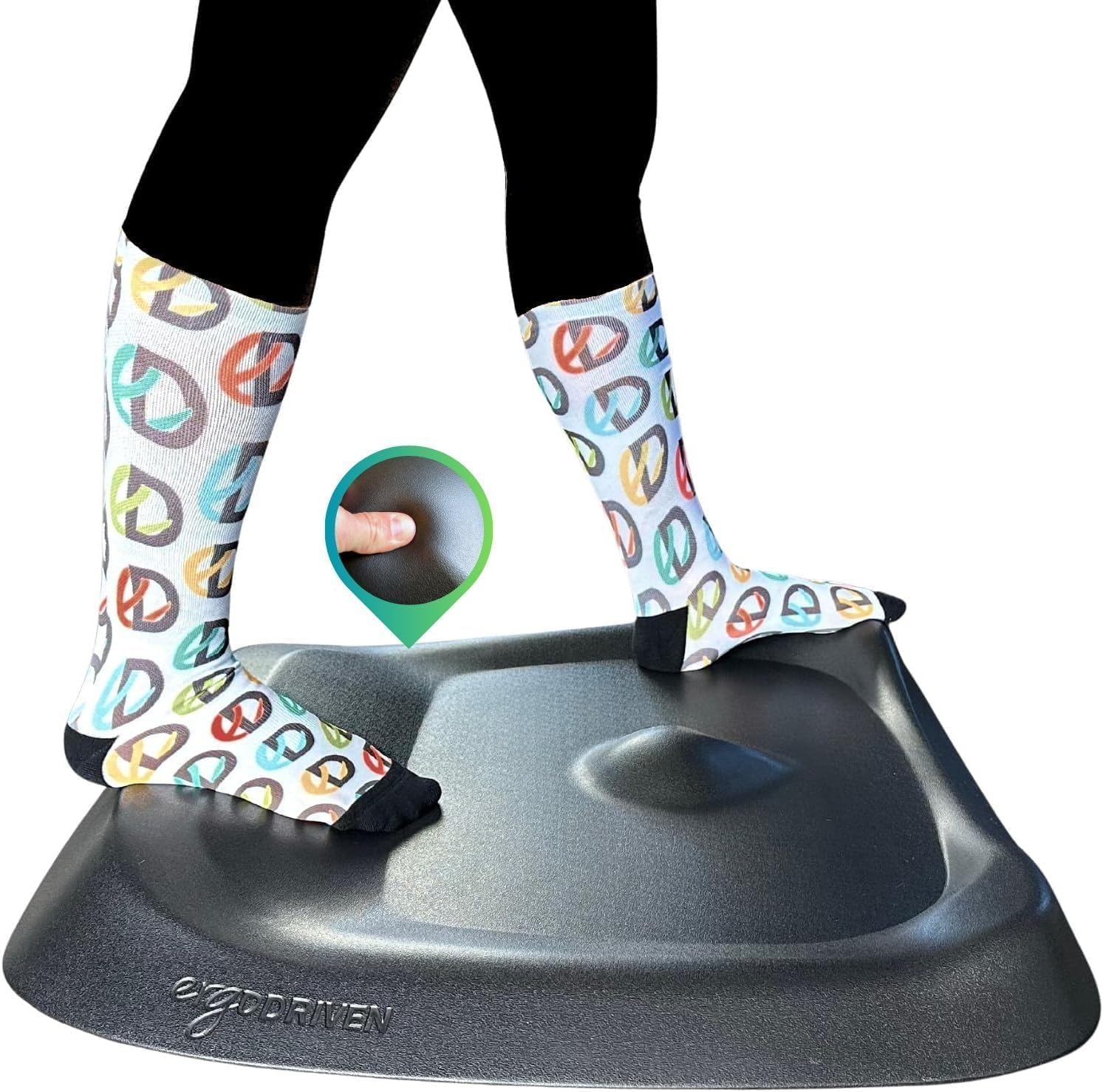
Not a flat cushion but a calculated terrain of mounds and edges, so you keep finding new positions instead of one slightly softer version of standing still. The answer if a normal mat stops helping after ninety minutes.
Pros
- Terrain design keeps giving you new standing positions, not just cushioning
- Very dense foam that resists compression over years
- Built-in calf and arch stretch points
- PVC free
Cons
- Most expensive mat on this list by a wide margin
- Bulky and awkward to move aside when you want to sit
- Wrong shape and look for a kitchen
Best support for hard floors
Superfeet All-Purpose Wide-Fit Support Insoles
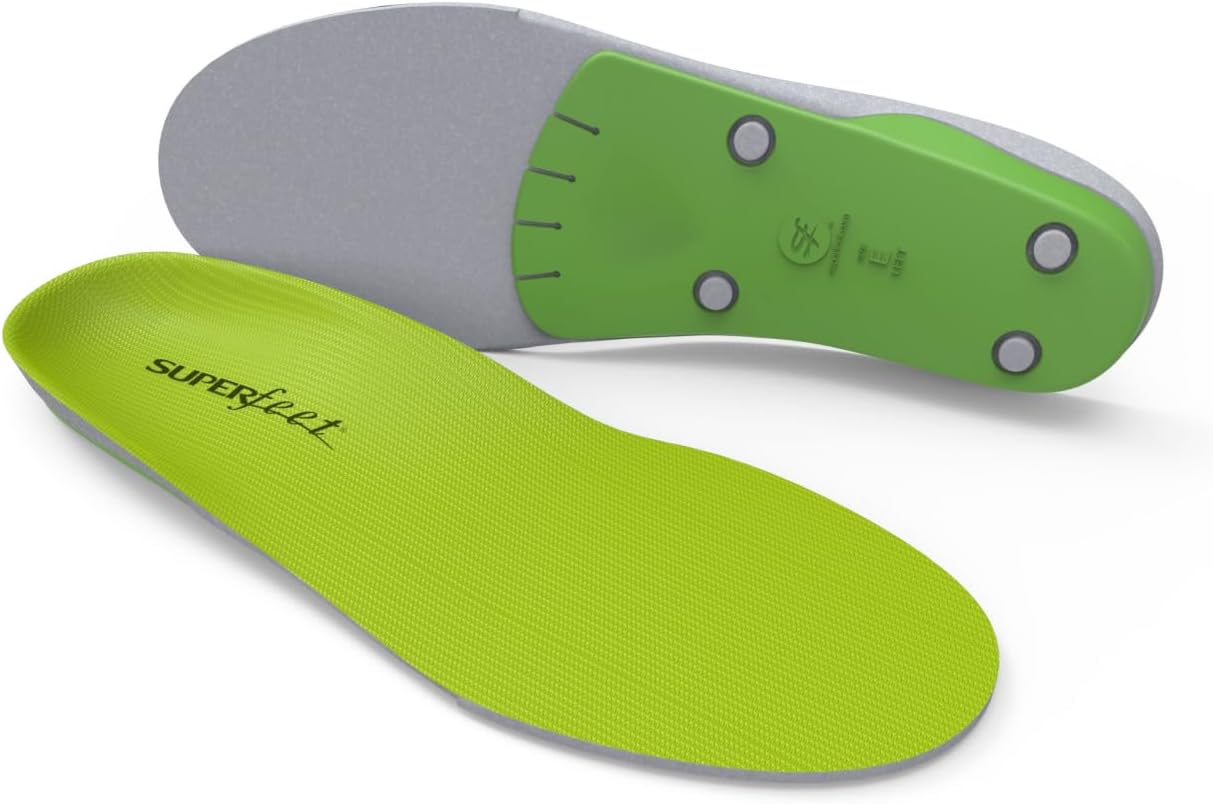
On concrete the failure is a collapsing arch, not insufficient padding, and structured support addresses that directly where gel does not. It also outlasts foam and gel by a wide margin, which matters on a surface this punishing.
Pros
- Firm structural shell genuinely holds the arch all day
- Cut for wide feet, which most insoles are not
- Far more durable than foam or gel
- Over four thousand owner reviews
Cons
- Firm feel takes a week or two to adjust to
- Needs a shoe with a removable factory insole
- Most expensive option here
Best work shoe for concrete
Timberland PRO Powertrain Alloy Toe Work Shoe
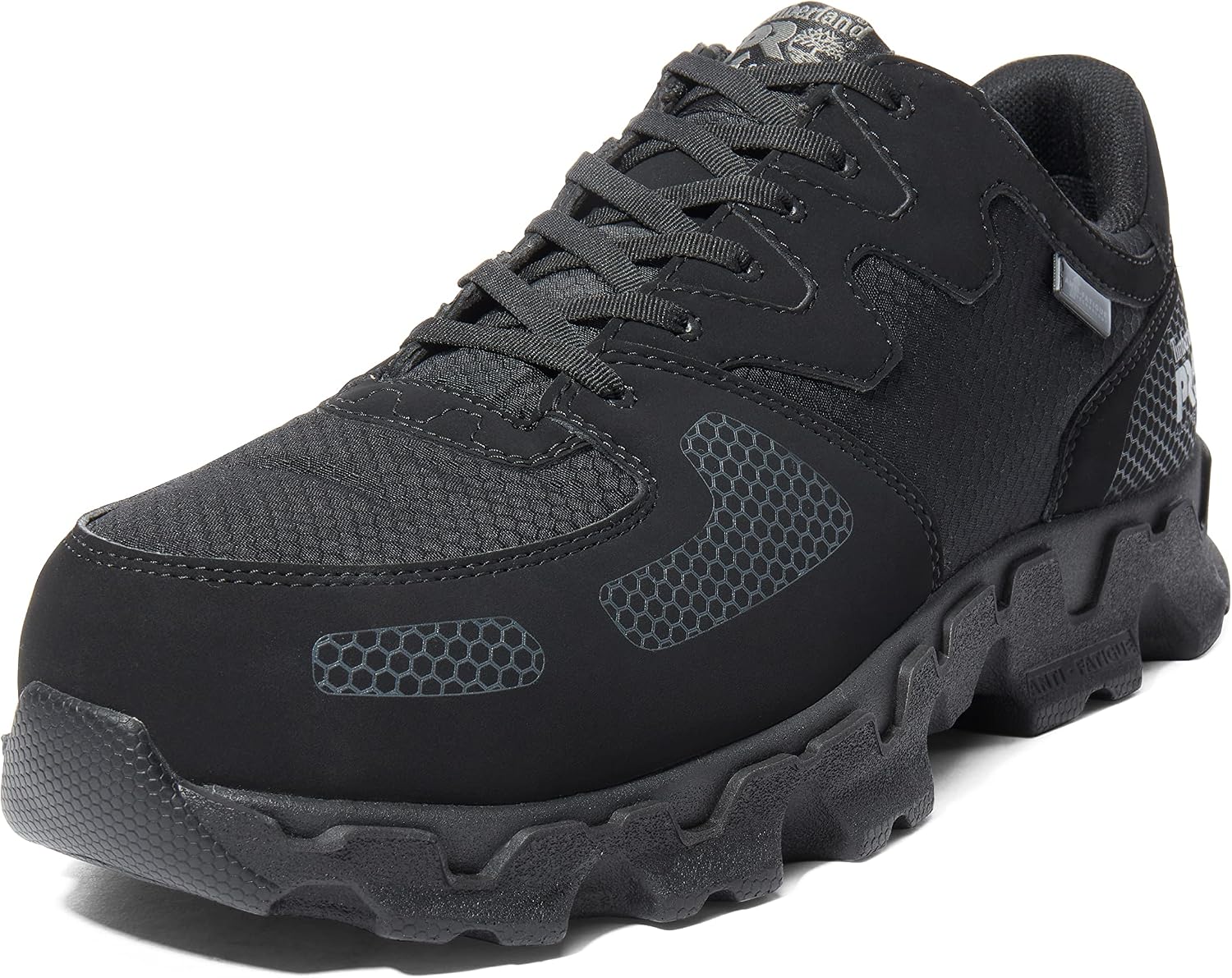
Built for exactly this: a firm, stable platform with an alloy toe for sites that require it. Stability beats softness on concrete, and a very cushioned shoe lets the arch drop by hour six.
Pros
- Alloy toe meets the safety standard at less weight than steel
- Slip, oil and abrasion rated outsole plus static dissipative
- Anti-Fatigue footbed built for hard floors
- Most durable shoe on this page
Cons
- Heaviest and stiffest option here
- Safety toe box is unforgiving if you size wrong
- Overkill if your job does not require protective footwear
Best for heavy legs afterwards
Sockwell Women's Elevation Firm Graduated Compression
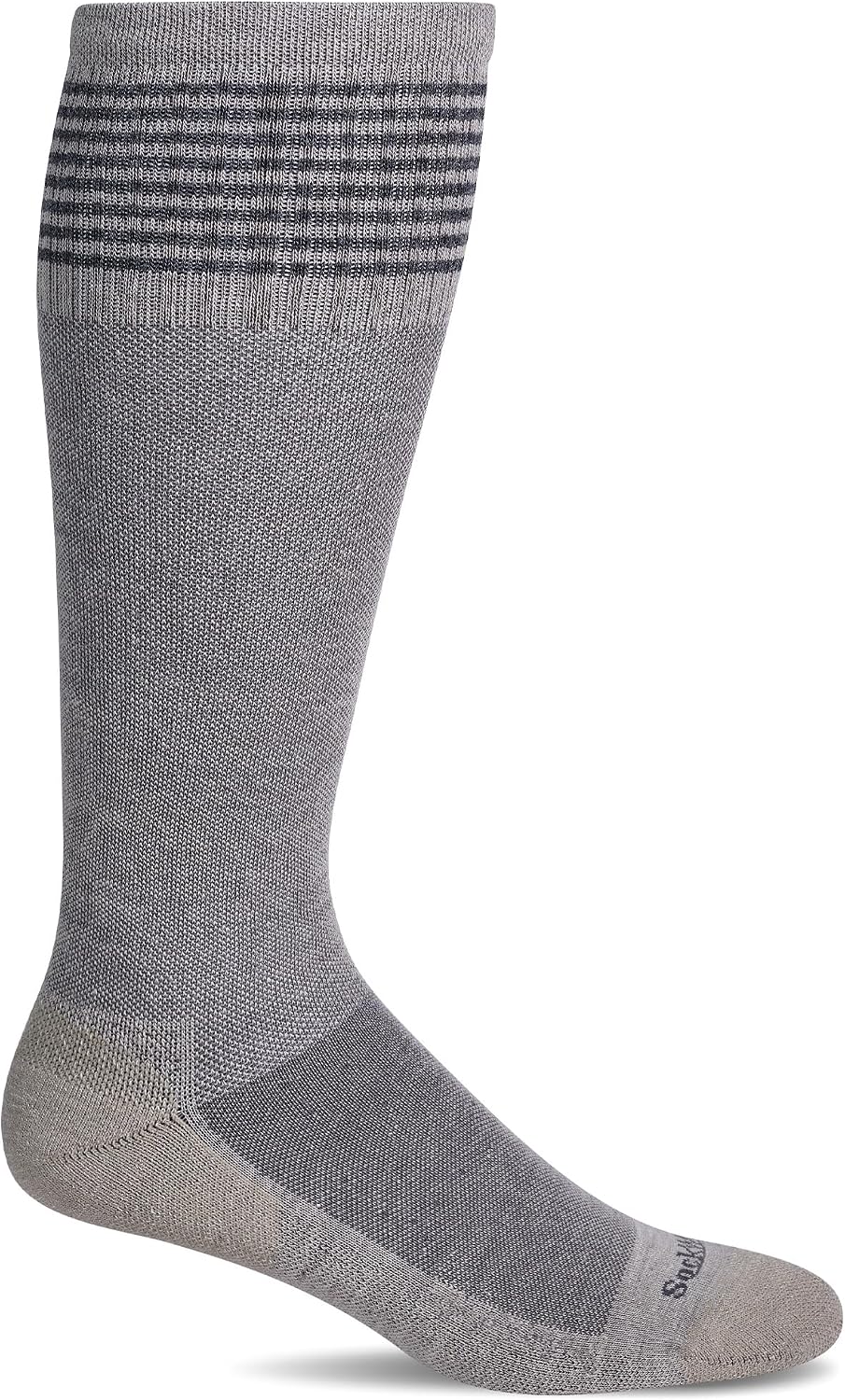
Concrete produces two complaints. Sore soles are the surface and the shoe; heavy legs and swollen ankles are fluid pooling, and firm graduated compression is what addresses that half.
Pros
- Firm 20-30 mmHg with a properly executed gradient
- Merino matters most at this compression level
- Better calf grading than the men's line
- Long review history
Cons
- Meaningfully harder to don than the Circulator
- Premium price
- Still no dedicated wide calf option
Also worth considering
Strong, well-reviewed products that just missed our ranked list - worth a look if the picks above aren't quite right for you.
- GORILLA GRIP Anti Fatigue Mat - The value pick, and a reasonable trade if the mat sees a few hours a day rather than a full shift on concrete.
- KANGAROO Cushioned Anti Fatigue Mat - A cheaper cushioned option worth considering if you need to cover several standing positions rather than one.
- Timberland PRO Anti-Fatigue Technology Insole - Designed for the inside of a work boot, with an inverted-cone heel meant to return energy rather than simply absorb it.
Frequently asked questions
Why is standing on concrete so much worse than other floors?
Because concrete has effectively no give. Every surface absorbs some of the energy of a footfall and returns the rest to you; concrete absorbs almost none, so your own tissues have to do the absorbing that the floor is not doing. Wood over joists flexes slightly, vinyl over a subfloor gives a little, and carpet gives a lot. Concrete gives nothing, and it is also unforgiving of standing still, because there is no compliance in the surface at all to encourage the tiny postural shifts that keep muscles cycling.
Do anti-fatigue mats really work on concrete?
This is the surface they were designed for, and it is where they make the most difference. The mechanism is not simply padding: a mat is slightly unstable, so your feet and legs make constant small adjustments to stay balanced, and that keeps muscles contracting and relaxing rather than holding one position. On concrete, where the floor contributes nothing, that matters more than anywhere else.
What kind of insoles are best for concrete floors?
Firm structured support generally outperforms soft gel for standing on concrete. Gel absorbs impact, which matters more for walking and running than for standing still, and it compresses over a day. Structured support holds the arch and stops it collapsing across a shift, which is the actual failure mode when you stand in one place for hours. If your heels are the problem specifically, support matters more than cushioning.
Why do my heels hurt from walking on concrete?
Heel pain on hard flooring usually comes from the heel strike having nowhere to go combined with an arch that is no longer being supported properly. If the pain is worst on your first few steps in the morning and eases as you move, that is the pattern associated with the plantar fascia rather than simple bruising, and it is worth taking seriously rather than adding more cushioning to.
Are rubber mats or foam mats better for concrete?
For standing in one place, a dense foam mat around three quarters of an inch thick is the usual right answer, because it gives enough to encourage movement without feeling unstable. Rubber is more durable and better where things get dropped, dragged or spilled, such as a workshop, but tends to be firmer. Very soft or very thick mats feel good briefly and then make standing feel unstable, which is its own kind of tiring.