The Best Women's Shoes for Standing All Day (2026)
Women's clogs and work shoes from Dansko, Alegria, Skechers and Orthofeet compared for nurses, chefs, teachers, retail and twelve hours on concrete.
Looking for men’s picks? See the best men’s shoes for standing all day. Every shoe on this page is a women’s fit.
The advice you usually get about standing all day is “buy cushioned shoes”, and it is the wrong advice. Soft cushioning feels wonderful for twenty minutes in a shop and has collapsed by hour six of a shift. What actually helps is structure: a supportive footbed that holds your arch, a sole that does some of the work of moving you forward, and enough room that your foot can swell without being squeezed.
We compared five shoes on our five criteria. The Dansko XP 2.0 is the best of them by a clear margin, but it is not automatically the right one for you, and the fit is genuinely tricky.
Our picks at a glance
- Best overall: Dansko XP 2.0, purpose-built for standing, with the strongest track record here
- Best for arch support: Alegria Kourtney, the one that takes a custom orthotic
- Best value: Skechers Work Clog SR, slip-rated at a fraction of the price
- Best lightweight: Skechers Foamies Arch Fit, washable and almost weightless
- Best for foot pain and wide feet: Orthofeet Coral, with a tunable orthotic and a genuinely wide toe box
How we picked
Every shoe here is a single buyable item with a working Amazon buy box, which excluded more candidates than we expected. Athletic footwear on Amazon is listed by size and colour variant, and those variants frequently have no buy box even when the shoe is widely available, so several obvious names could not be verified and are not listed.
We applied a floor of 4.0 stars with a meaningful review count. Two of our picks sit at exactly 4.0, and we have said clearly in each blurb what pulls them down rather than quietly ranking them anyway.
Then we scored on support, comfort, durability, fit and value. In footwear, fit carries unusual weight, because the single most common reason a good work shoe fails someone is that they bought the wrong size, not that the shoe is bad.
What actually matters in a shoe for standing
Midsole firmness, not softness. A firm, structured midsole holds its shape across a twelve hour shift. A plush one compresses and stops doing anything. This is the main reason a running shoe often disappoints people who stand rather than run: it is tuned for impact absorption, not for hours of static load.
A rocker sole. The curved sole profile on the Dansko is not styling. It helps roll your foot from heel to toe so your calf muscles do less work on every step. Over eight hours of small movements this adds up more than any cushioning.
Toe box width. Your feet swell during a shift, sometimes by half a size. A shoe that fits perfectly at 7am is tight by 3pm. Buy for the swollen foot, not the fresh one.
Slip resistance, specifically rated. In healthcare and food service this is often mandatory and always sensible. A rubber sole is not the same as a rated slip-resistant sole, and the difference on a wet floor is significant.
Clog or shoe?
Roughly, clogs suit people who stay in an area and closed shoes suit people who cover ground.
A professional clog like the Dansko is easy to get on and off, has a firm supportive footbed and a helpful rocker, and is easy to clean. The trade-off is the open heel: less stability, and a shoe that can come off if you move suddenly.
If you cover several miles a shift, or you lift and carry, a closed-heel option like the Alegria Kourtney with its adjustable strap is the safer choice.
About Dansko sizing
This deserves its own section because it is the most common reason people are disappointed by an otherwise excellent shoe.
Dansko uses European sizing, and the conversions are not intuitive. The brand runs in whole-size EU bands, so a US 8.5 and a US 9 may map to the same shoe. Widths matter too, and the standard fit is not generous.
Buy somewhere you can return, and if you are between sizes, most owners advise sizing so that the footbed’s arch sits under your arch rather than behind it. A Dansko that fits is superb. A Dansko half a size out is uncomfortable in a way no break-in period fixes.
If your back rather than your feet is the complaint, back pain from standing all day explains what to look for in a shoe and why the softest option is usually the wrong one.
And if you work a wet floor all day, grooming or veterinary, the priorities reorder completely: slip resistance and washability come before support, so weight those over cushioning when choosing from the picks above.
Shoes are one of three levers
If you stand for a living, there are three separate problems and shoes only solve one:
- The surface under your feet. If you stay in one spot, an anti-fatigue mat does more than any shoe and costs less.
- The shoe, which matters most if you cover distance.
- Blood pooling in your legs, which neither a shoe nor a mat addresses. That is what compression socks are for, and it is the fix if your feet are fine but your calves ache and your ankles swell by evening.
Men should start with our men’s picks instead, since the shoes here are all women’s fits.
Most people who are genuinely on their feet twelve hours a day end up needing at least two of the three. If you are only going to change one thing and you move around a lot, make it the shoes. If you barely move, make it the mat.
Replace them sooner than you think
The midsole compresses long before the upper looks worn. For someone standing eight to twelve hours daily, six to nine months is a realistic life even for a good shoe.
The tell is not appearance, it is timing: if your feet start hurting at hour four when they used to make it to hour eight, the shoe is finished. Rotating two pairs roughly doubles the calendar life of each, because the foam gets a day to recover between wears.
How we test
Every pick is scored on the same five criteria and cross-checked against real owner feedback - so the ranking reflects how a product holds up over a full shift, not its spec sheet.
Support
Whether graduated compression actually matches its stated mmHg rating, or, for mats and insoles, how much load it takes off your legs.
Comfort
All-day wearability: no bite at the cuff, no hotspots, breathable enough for a full shift.
Durability
Whether it holds compression or loft after repeated washing and months of daily use.
Fit
Size range, calf-width options, and how honest the sizing chart is against real owner reports.
Value
What you get for the price, including cost per wear once durability is accounted for.
Best overall
Dansko XP 2.0 Clog
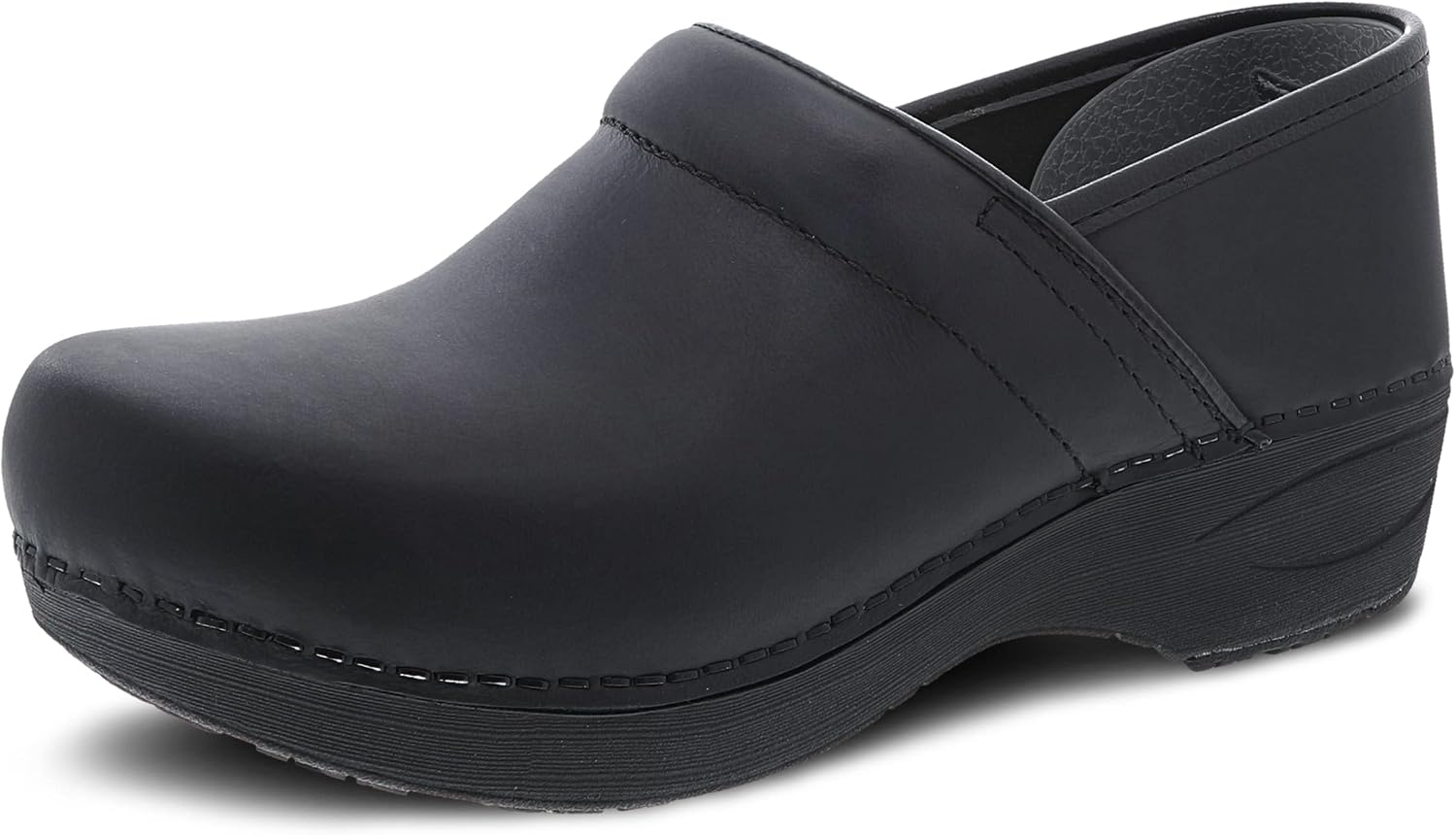
The XP 2.0 is the shoe that nurses and chefs keep buying, and the reason is that it is engineered specifically for standing rather than adapted from a walking shoe. The removable dual-density polyurethane footbed gives real arch support, the rocker sole does some of the work of rolling through each step so your calves do less, and the outsole is rated slip resistant on wet, dry and oily-wet surfaces, which is the specification that actually matters on a hospital or kitchen floor. With close to fifteen thousand owner reviews it also has by far the strongest track record of anything here. Two honest caveats. The fit is the narrowest thing about it: Dansko sizing is European and unusual, and getting it wrong is the single most common complaint, so buy where you can return. And the open heel means it is not the shoe for anyone who moves quickly or carries heavy loads.
Pros
- Removable dual-density footbed with genuine arch support
- Rocker sole reduces calf workload over a long shift
- Slip resistant on wet, dry and oily-wet floors
- Waterproof leather version wipes clean, which matters in healthcare
- Enormous and consistent owner review history
Cons
- European sizing is unfamiliar and easy to get wrong
- Open heel is less stable if you move fast or carry loads
- Expensive, and heavy compared with a clog-style trainer
Best for arch support
Alegria Kourtney Professional Clog
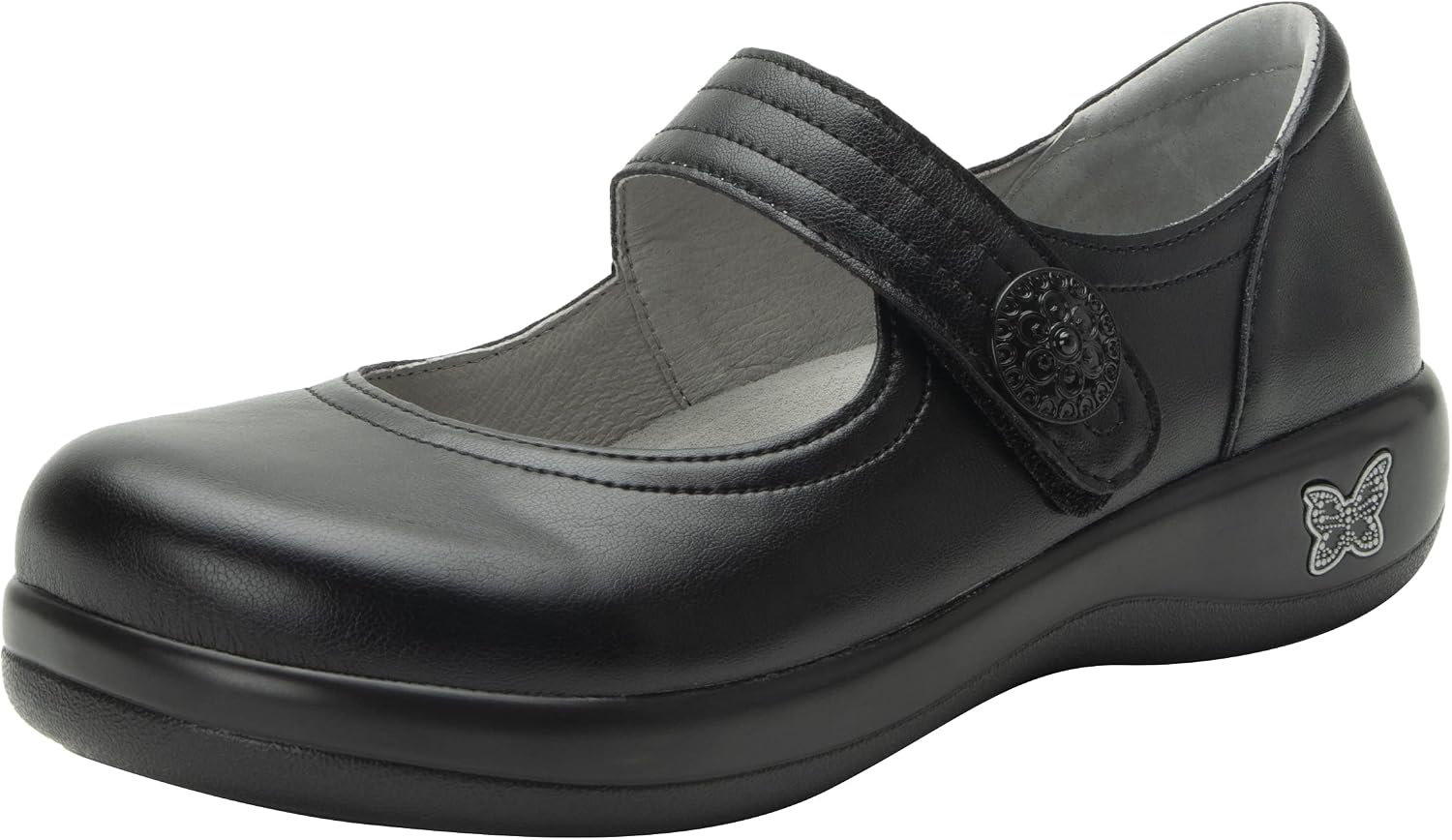
The Kourtney is the pick if your problem is arches rather than general fatigue. Alegria builds it on a removable cork and memory foam footbed that moulds to your foot over the first week and can be swapped for a custom orthotic, which is the feature that matters if you have been told you need one and have been struggling to fit it into a work shoe. The adjustable Mary Jane strap is the other real advantage over the Dansko: it closes the heel, so this is a considerably more stable shoe if you move quickly, and it lets you adjust as your feet swell during the shift. It is a roomier fit than the Dansko and more forgiving to size. The rocker sole is less pronounced, so you get slightly less help rolling through each step, and it is a more casual look than a plain black clog.
Pros
- Removable cork and memory foam footbed moulds to the foot
- Takes a custom orthotic, unlike most work clogs
- Adjustable strap closes the heel and accommodates swelling
- More forgiving sizing than Dansko
Cons
- Less pronounced rocker than the Dansko
- Distinctive styling that will not suit every dress code
- Footbed needs a week to break in properly
Best value
Skechers Work Clog SR
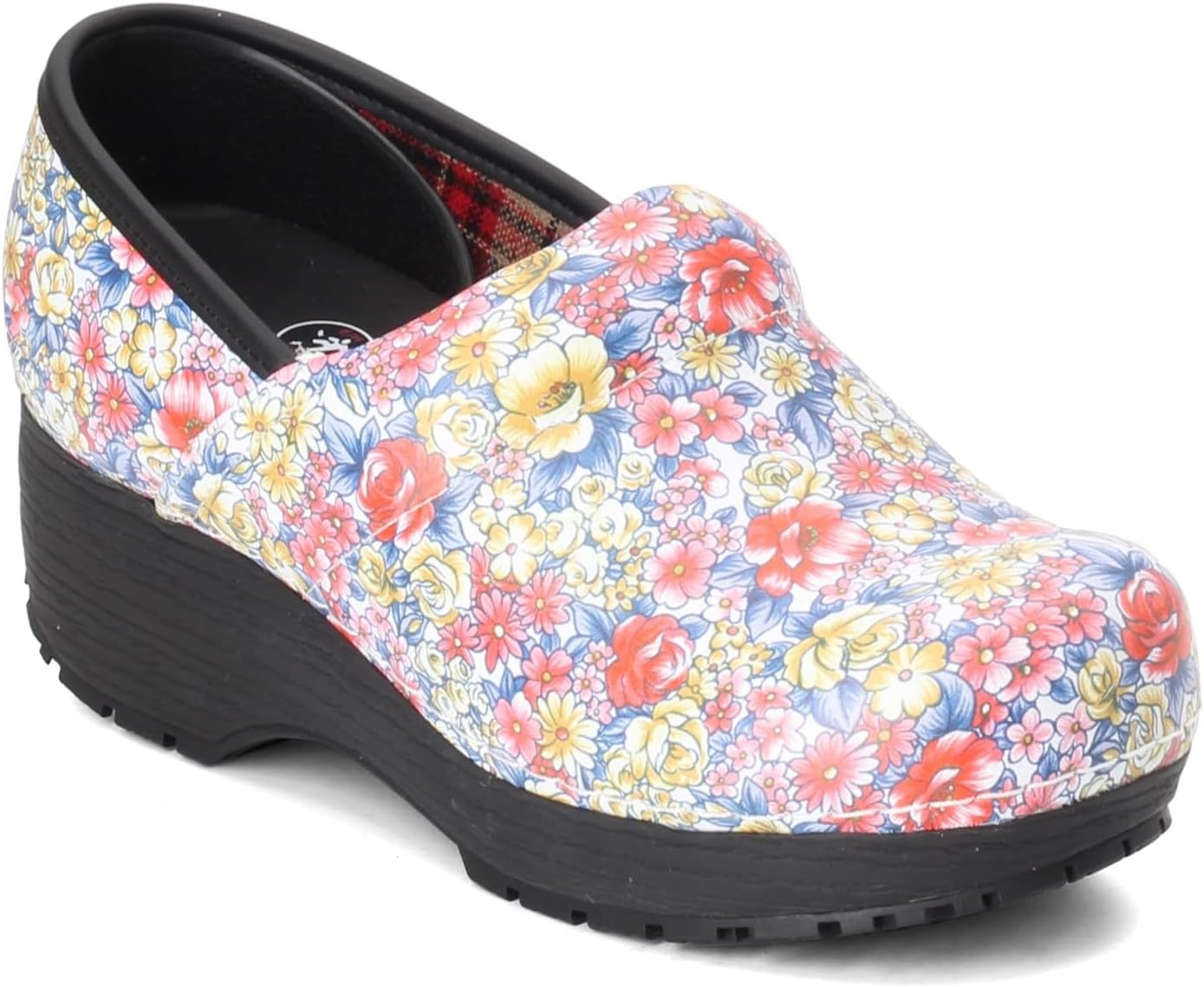
The honest pitch for this one is price. It is a fraction of what the Dansko costs, it has an OSHA-compliant slip resistant outsole and a shock absorbing midsole, and with nearly two thousand owner reviews it is a known quantity rather than a gamble. For someone starting a job that requires slip-resistant footwear next week, or anyone who wants a spare pair to rotate, it does the job. It sits at 4.0 stars rather than higher and we want to be straight about why: the midsole is noticeably softer and less structured than the Dansko or the Alegria, and owner reports point at the cushioning packing out sooner. Rotating two pairs and replacing them more often is a perfectly reasonable strategy at this price, but do not expect it to feel like the Dansko at hour eleven.
Pros
- Far cheaper than the professional clogs here
- OSHA compliant slip resistant outsole
- Large, consistent review base
- Lightweight and easy to slip on
Cons
- Softer, less structured midsole that packs out sooner
- Minimal arch support compared with Dansko or Alegria
- Rated 4.0 stars, the lowest here
Best lightweight option
Skechers Foamies Arch Fit Clog
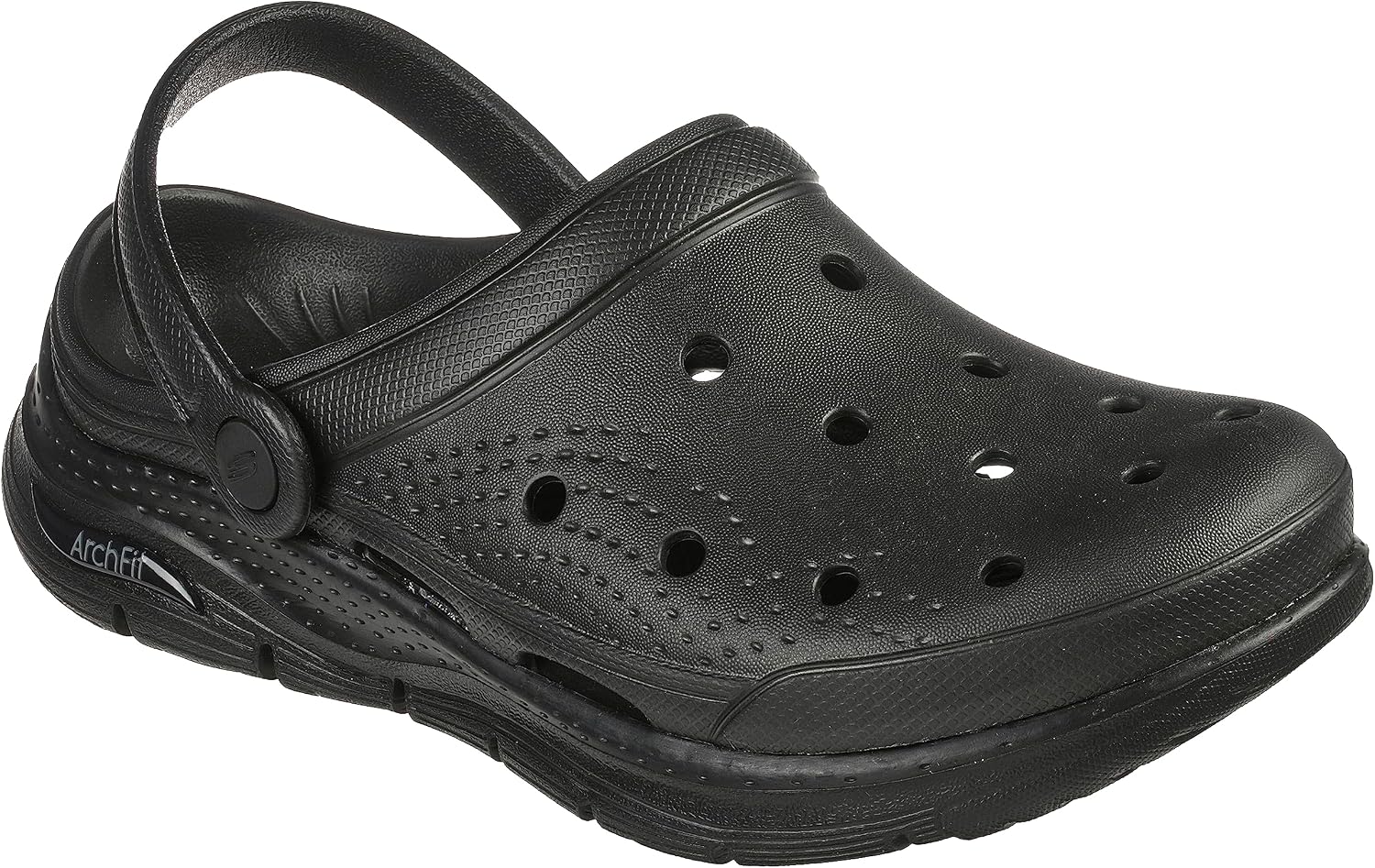
This is the shoe for anyone who wants something they can hose down at the end of a shift. It is a moulded foam clog, so it weighs almost nothing and cleans completely, which makes it a sensible pick for food service, labs, veterinary work and anywhere that gets messy. The Arch Fit footbed is the meaningful difference from a plain foam clog: it is a contoured, podiatrist-developed shape rather than a flat slab, so you get real arch support in a shoe that costs and weighs very little. The compromises follow from the material. Foam offers less structure than leather over a very long shift, it is warmer than it looks, and durability is the weak point since foam compresses permanently. Its review count is also the smallest here, so treat our durability score as provisional.
Pros
- Contoured Arch Fit footbed rather than flat foam
- Almost weightless and completely washable
- Cheap enough to replace on a schedule
Cons
- Foam compresses permanently and will not last like leather
- Warmer than it looks over a long shift
- Smallest review base here, so durability is less certain
Best for foot pain and wide feet
Orthofeet Coral Orthopedic Women's Sneakers
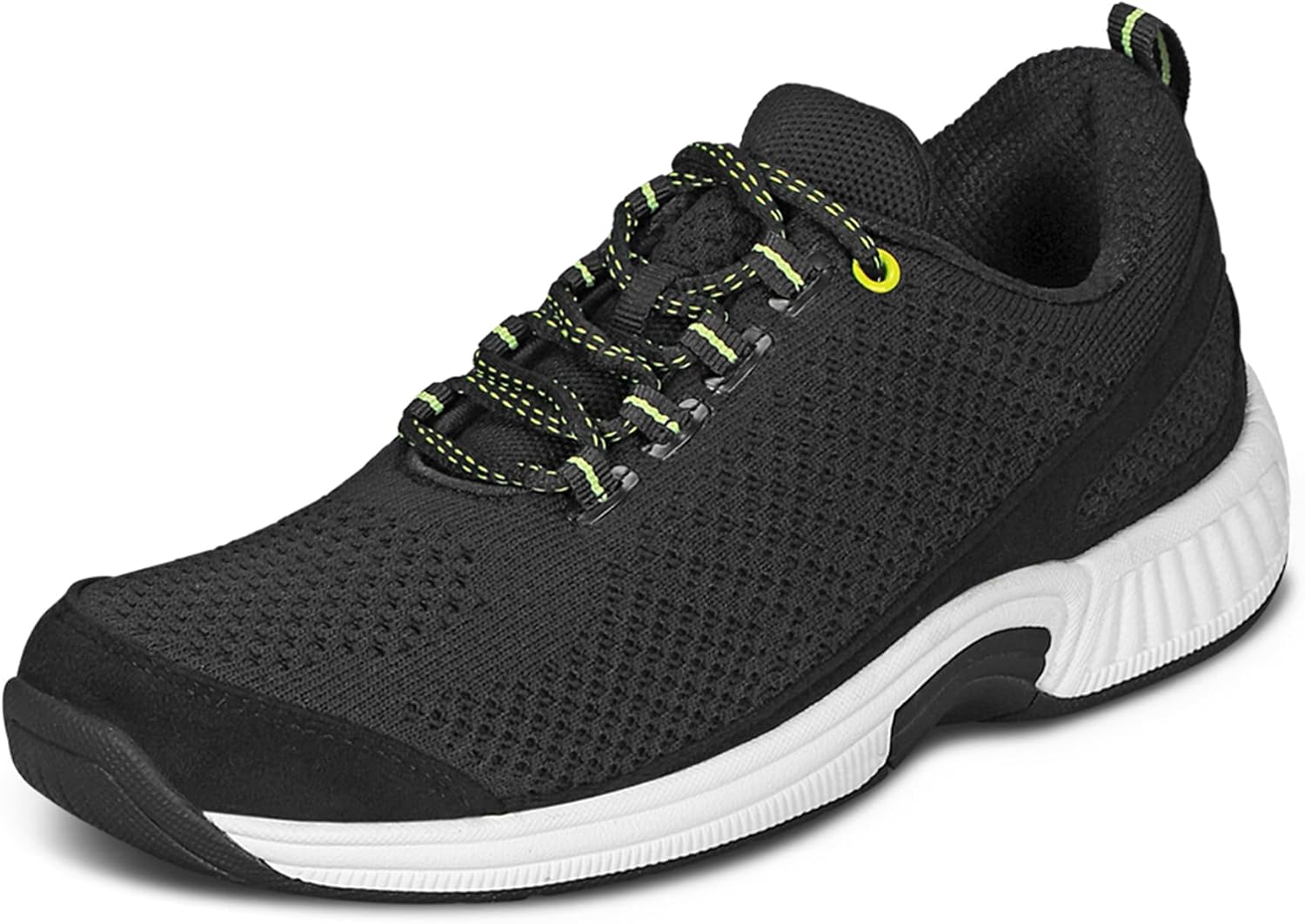
Orthofeet build for feet that already hurt, and that is a different brief from the clogs above. The Coral ships with a removable orthotic insole and a set of arch spacers, so you can tune the arch height rather than accept whatever the factory chose, and the toe box is genuinely wide rather than nominally so. Combined with a stretchable seam-free upper, it is the shoe on this page for anyone dealing with bunions, hammertoes, neuropathy or plantar fasciitis, where a standard work shoe creates pressure points that no amount of cushioning fixes. It is also a lace-up sneaker rather than a clog, so the heel is closed and it is stable if you move quickly. Two honest caveats. It rates 4.1 stars, the lowest here, with the recurring complaints being durability of the upper and a fit that runs large. And it is not slip rated, so it is the wrong shoe for a wet kitchen floor.
Pros
- Removable orthotic plus arch spacers to tune support height
- Genuinely wide toe box, built for bunions and hammertoes
- Closed heel is more stable than a clog
- Nearly six thousand owner reviews
Cons
- Not slip rated, so wrong for wet or greasy floors
- Rated 4.1 stars, with upper durability the common complaint
- Runs large, so size down
Also worth considering
Strong, well-reviewed products that just missed our ranked list - worth a look if the picks above aren't quite right for you.
- Dr. Scholl's Work All-Day Insoles, Women's - The cheapest meaningful upgrade to the two Skechers on this list, both of which are under-structured through the arch. A budget shoe plus a decent insole often beats a mid-priced shoe on its own.
- Superfeet All-Purpose Wide-Fit Support Insoles - The firmer alternative if your arches rather than your heels are the problem. Cut for wide feet, so it suits the roomier work shoes without squeezing the forefoot.
- Sockwell Women's Circulator Compression Socks - If your feet are fine but your calves ache and your ankles swell by the end of a shift, that is a circulation problem and no shoe fixes it. This is where to start instead.
Frequently asked questions
What kind of shoe is best for standing all day?
Something with a firm, supportive midsole rather than a soft one, a wide enough toe box that your foot can spread as it swells through the shift, and a slip-resistant outsole if you work on wet floors. Very soft cushioning feels great in the shop and collapses by hour six. Clogs suit people who stay in one area; a proper shoe suits people who cover distance.
Are clogs actually good for your feet?
A well-made professional clog with a contoured footbed and a rocker sole is genuinely good for standing, because it supports the arch and reduces the work your foot does to roll through each step. Cheap flat clogs with no arch shape are not. The other consideration is that most clogs are open at the heel, which means less stability if you move quickly or carry loads.
How often should I replace work shoes?
For someone standing eight to twelve hours a day, six to nine months is realistic. The midsole compresses long before the upper looks worn out, which is why shoes that still look fine can stop helping. If your feet start aching at hour four when they used to last until hour eight, the shoe is done regardless of appearance.
Do I need slip-resistant shoes?
If you work in healthcare, food service, hospitality or anywhere floors get wet or greasy, yes, and it is often a workplace requirement. Look for an outsole specifically rated slip resistant rather than just a rubber sole. General athletic trainers are not slip rated and behave badly on a wet kitchen floor.
Shoes, insoles or a mat: what should I fix first?
It depends on whether you move. If you stay in roughly one spot, an anti-fatigue mat does more than any shoe and costs less. If you cover several miles a shift, the shoe matters most. If your feet are fine but your legs ache and swell, neither is the answer and you want compression socks instead.