Standing All Day at Work: The Survival Guide
A practical guide to standing jobs: why standing still is harder than walking, the four levers that reduce pain, and what is worth buying in what order.
Retail, nursing, hospitality, teaching, manufacturing, hairdressing, security, warehouse work: a standing job asks something of your body that a desk job does not, and most of the advice aimed at it is a list of products in no particular order.
This is the order.
Start here: standing still is harder than walking
This is the single most useful thing to understand, and it explains almost everything below.
When you walk, your muscles contract and relax in a cycle. That cycle pumps blood back up your legs against gravity, and it keeps rotating load between different tissues so nothing carries strain continuously.
Standing in one place removes both. The same structures take the same load for hours, and the calf muscle pump that returns blood from your lower legs switches off, so fluid pools below.
That is why a job that keeps you walking is usually easier on your body than one that keeps you in a single spot, and why “how many hours” is a less useful question than “how much did you move”.
The four levers, in order of effect
1. The surface, if you occupy one spot
If your work keeps you in roughly one place, a till, a bench, a line, a sink, a chair-side station, then the floor is doing more damage than your shoes are. Hard flooring returns everything to you, and concrete returns essentially all of it.
An anti-fatigue mat is the highest-value single purchase in this situation, and the mechanism is not padding. A mat is slightly unstable, so you make constant small postural corrections, which keeps muscles cycling instead of holding one position. It gives you movement without having to remember to move.
If it lives in a kitchen, size matters more than brand, and the kitchen guide leads on that.
2. The shoes, if you cover ground
If you walk a beat, a mat is irrelevant and this is lever one. Two things matter more than brand or price:
Real arch support, because the muscles holding your arch up are the ones fatiguing. Support takes over that job. Note that cushioning is not support: a very soft shoe feels superb for an hour and lets your arch collapse by hour eight.
A midsole that has not collapsed. Foam compresses permanently. Shoes over a year old worn full time are very likely not doing what they did new, and no insole fixes a dead midsole.
Roundups for women and men are separate because arch position and sizing genuinely differ, and groomers and vet techs get their own because a permanently wet floor puts slip resistance ahead of support. If your job puts you outdoors or on wet floors, our sister site covers waterproof work boots and walking shoes. If your shoes are sound but under-supported, insoles are the cheaper fix.
3. Movement, which is free and gets skipped
This addresses the actual mechanism and costs nothing, which is presumably why it is the least followed advice in the category.
- Shift your weight between feet every few minutes rather than planting
- Rest one foot on a low box or rail, four to six inches, swapping every ten to fifteen minutes. This is the single best thing for your lower back
- Do not lock your knees. A slight bend shares load with muscle instead of dumping it on the joint, and it keeps the calf pump available. Locked knees are the usual cause of sore knees
- Ten slow calf raises, several times a shift. That is the pump, operated manually
- Walk on breaks rather than sitting. Sitting is just a different static posture
4. Compression, if your legs swell
A separate problem with a separate tool. If your legs feel heavy and your ankles are visibly puffier by evening, that is fluid pooling, and compression socks address it directly. They do nothing for soles that hurt because the shoe is wrong.
They work while worn, so they go on before the shift, not after. For most people standing without a diagnosed condition 15-20 mmHg is right, and firmer is not better; the mmHg guide covers that decision. For long shifts specifically, the compression socks for nurses page explains why fibre and calf fit start to matter more than compression level past about eight hours.
Match the fix to the symptom
Different pain, different lever. Buying the wrong one is the most common mistake.
| What hurts | Most likely cause | Where to start |
|---|---|---|
| Soles, general ache | Surface and shoe | Mat if static, shoes if moving |
| Heel, worst first thing in the morning | Plantar fascia pattern | Arch support, and get it looked at if it persists |
| Legs heavy, ankles swollen | Fluid pooling, idle calf pump | Compression plus movement |
| Lower back | Increased lumbar curve | Footrest, then surface and shoes |
| Knees stiff or sore | Locked knees, static joint | Soft knees, movement, mat |
More detail on the most common of them: why your feet hurt after standing all day.
What to do when you get home
- Get the shoes off immediately. A shoe that has been on a swollen foot for ten hours is now tighter than it was that morning
- Elevate for fifteen minutes, feet above heart level. Feet on a footstool does not count, because they are still below your heart. Legs up the wall does
- Cold if swollen, warm if aching
- Stretch your calves, which often does more for foot pain than stretching the foot
Buying order, if you are starting from nothing
- A mat, if you occupy one spot. Highest value by a distance
- Shoes, if you move around, or if yours are over a year old and worn full time
- Insoles, if the shoes are decent but under-supported
- Compression socks, if your legs swell rather than your soles hurting
Most people do this in reverse and start by buying the softest shoes they can find.
When it stops being ordinary
Tiredness that settles overnight is the normal cost of a standing job. Get advice if pain persists into the next day, is worse on your first steps in the morning, involves numbness, tingling or burning, affects one side much more than the other, or comes with swelling that has not gone by morning.
Seek prompt assessment for pain, swelling, warmth or redness in one leg, particularly the calf. If you have diabetes, treat foot problems as a reason to get advice early rather than late.
We review products and we are not clinicians. Nothing here is a diagnosis.
How we test
Every pick is scored on the same five criteria and cross-checked against real owner feedback - so the ranking reflects how a product holds up over a full shift, not its spec sheet.
Support
Whether graduated compression actually matches its stated mmHg rating, or, for mats and insoles, how much load it takes off your legs.
Comfort
All-day wearability: no bite at the cuff, no hotspots, breathable enough for a full shift.
Durability
Whether it holds compression or loft after repeated washing and months of daily use.
Fit
Size range, calf-width options, and how honest the sizing chart is against real owner reports.
Value
What you get for the price, including cost per wear once durability is accounted for.
Buy first if you stand in one spot
ComfiLife Anti Fatigue Floor Mat, 20 x 32 inch
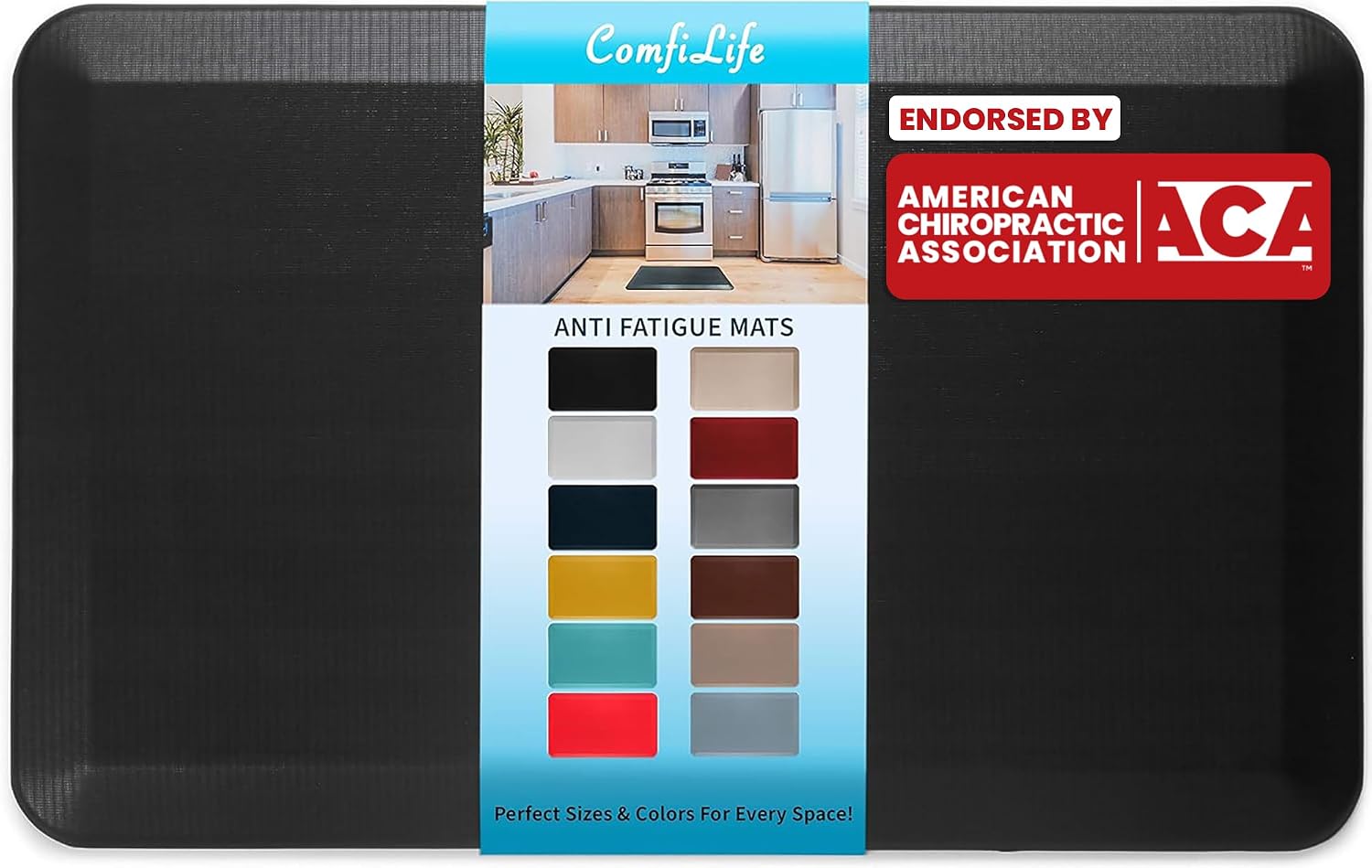
The highest-value single purchase for anyone who occupies roughly one position. The floor does more damage than the shoes when you do not move, and this is the one to buy without overthinking it.
Pros
- Right size and lower price for a fixed standing spot
- Same 4.8 star foam as the longer version
- Easy to lift, move and store
Cons
- Too short if you move between stations
- No advantage over the 39 inch beyond price and storage
- Single firmness option
Buy first if your shoes are fine
Dr. Scholl's Work All-Day Superior Comfort Insoles (Men's)
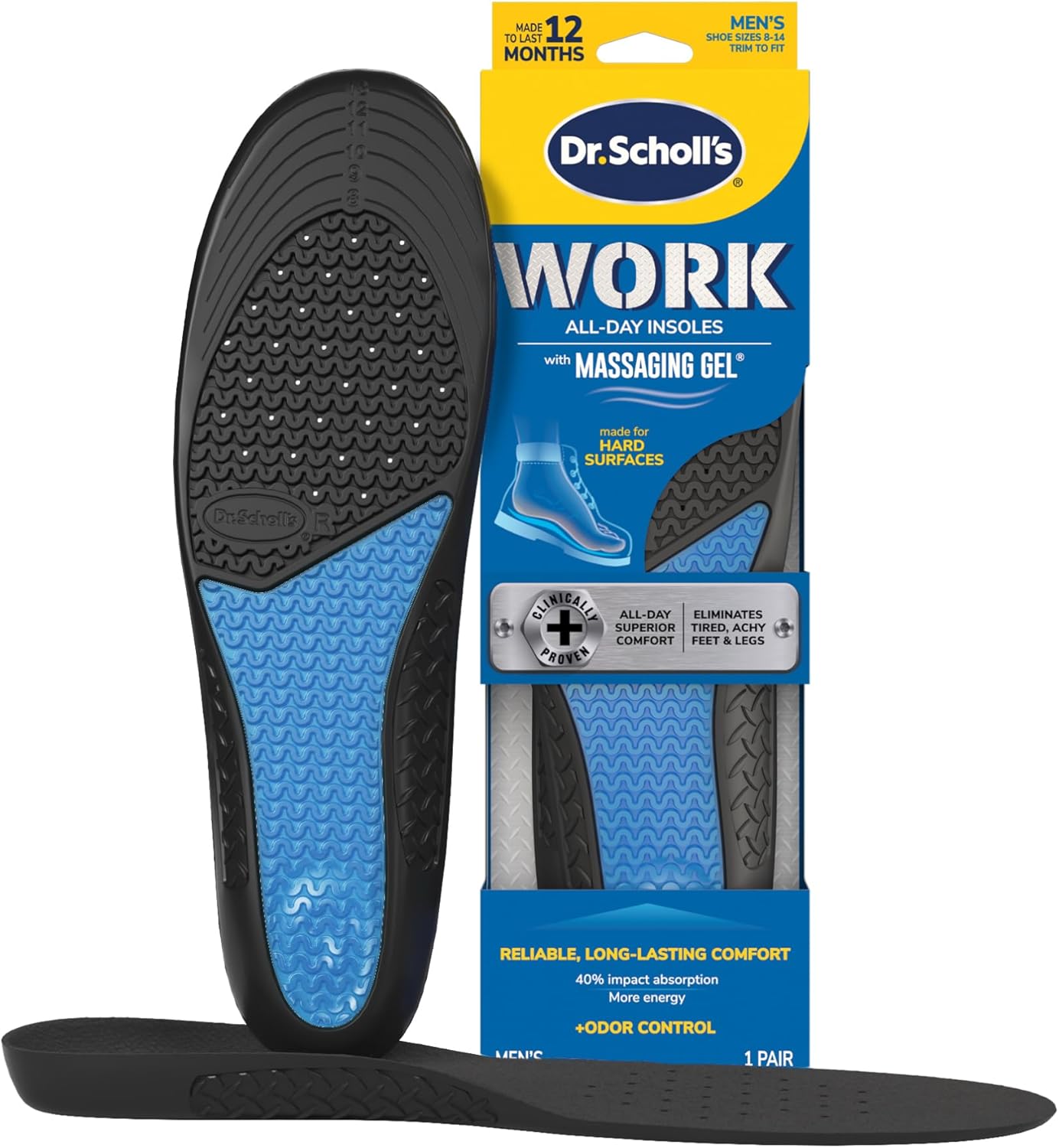
The cheapest meaningful upgrade when the shoe is sound but under-supported. Well evidenced, trims to fit boots and work shoes, and cheap enough to replace on schedule, which you should.
Pros
- Over sixty thousand owner reviews, exceptional evidence base
- Designed for standing rather than adapted from a running insole
- Trim to fit works in boots, trainers and work shoes
- Inexpensive enough to replace on schedule
Cons
- Gel compresses, so realistically a six month life on concrete
- Not a corrective orthotic for significant overpronation
- Adds bulk, so a snug shoe may become tight
Best all-round work shoe
Skechers Work Clog SR
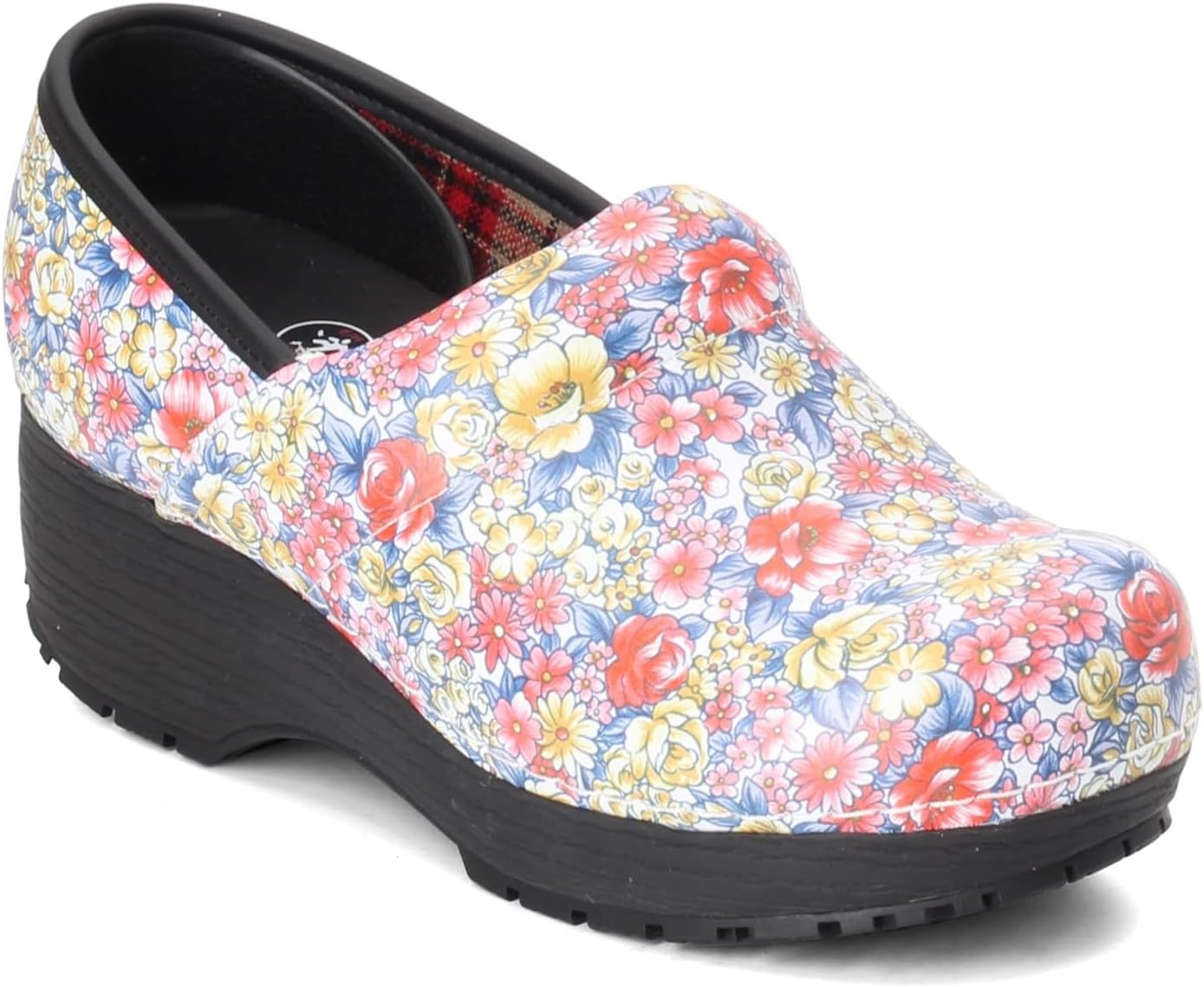
Slip resistant, easy to get on and off, and supportive enough for a full shift. For hospitality, healthcare and retail this covers most of what the job asks of a shoe.
Pros
- Far cheaper than the professional clogs here
- OSHA compliant slip resistant outsole
- Large, consistent review base
- Lightweight and easy to slip on
Cons
- Softer, less structured midsole that packs out sooner
- Minimal arch support compared with Dansko or Alegria
- Rated 4.0 stars, the lowest here
Best if your legs swell
Sockwell Women's Circulator Moderate Graduated Compression
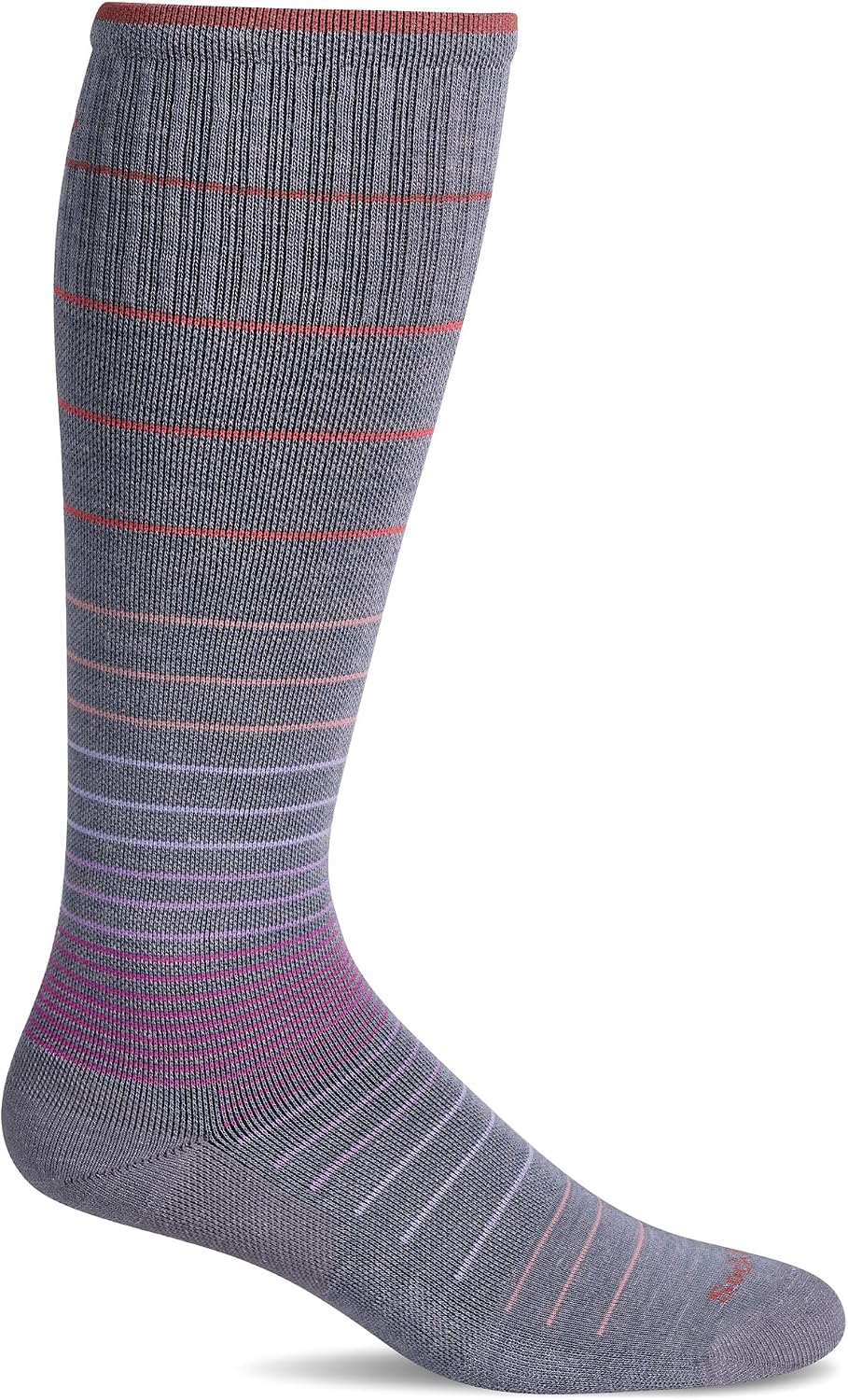
The answer to the third problem, which neither a mat nor a shoe touches. If your ankles are puffier at 6pm than at 8am, this is the tool, worn from the start of the shift.
Pros
- 15-20 mmHg is the right level for standing, travel and recovery
- Nearly five thousand owner reviews, the strongest in the range
- Merino blend manages heat and odour over a long day
- Easy enough to don that it gets worn consistently
Cons
- Premium price, and three pairs is the realistic requirement
- Air dry only
- Not firm enough if you have been told to wear 20-30 mmHg
Best if your arches ache
Superfeet All-Purpose Wide-Fit Support Insoles
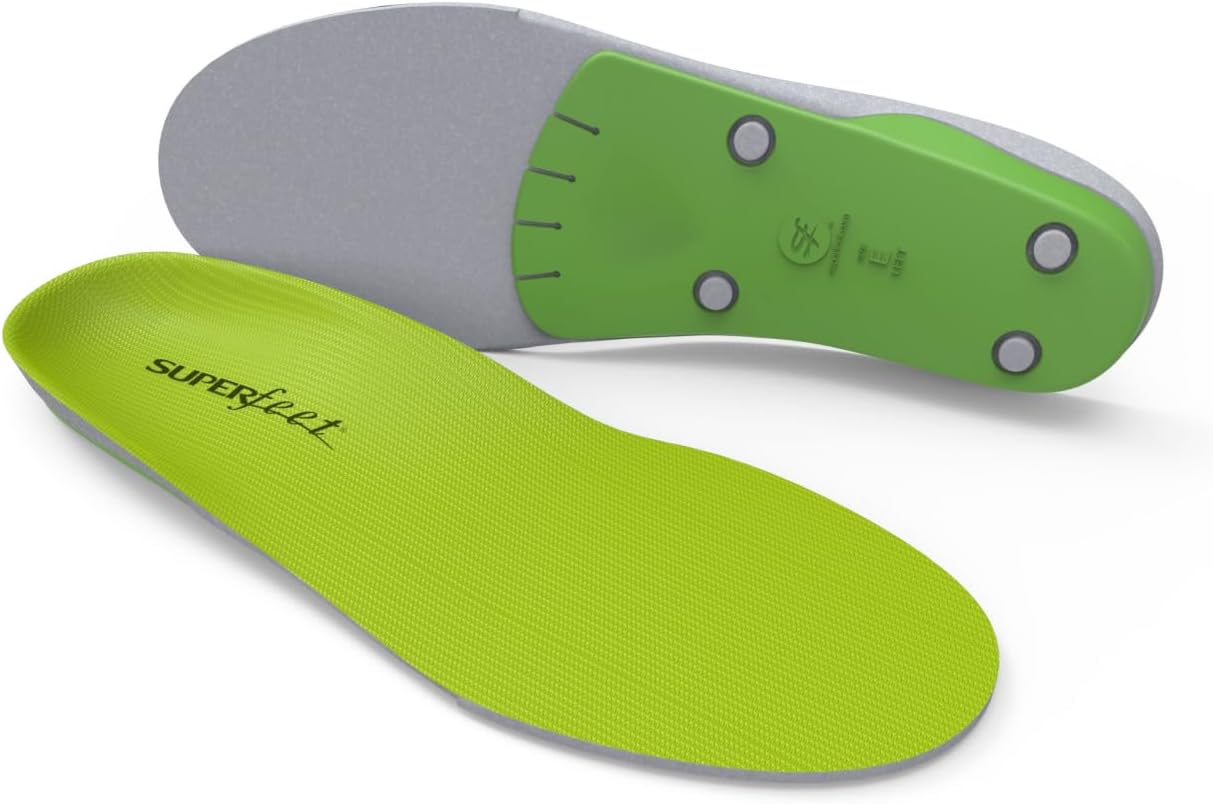
Structured support rather than cushioning, for the specific complaint of arches that give out across a shift. Firm for the first week by design.
Pros
- Firm structural shell genuinely holds the arch all day
- Cut for wide feet, which most insoles are not
- Far more durable than foam or gel
- Over four thousand owner reviews
Cons
- Firm feel takes a week or two to adjust to
- Needs a shoe with a removable factory insole
- Most expensive option here
Also worth considering
Strong, well-reviewed products that just missed our ranked list - worth a look if the picks above aren't quite right for you.
- Topo by Ergodriven - A terrain rather than a flat mat, and the better choice if a normal mat stops helping partway through a shift.
- GORILLA GRIP Anti Fatigue Mat - The value mat for a spot that sees a few hours a day rather than a full shift.
- Comrad CloudCotton Knee High - The most comfortable compression option, and the one most likely to actually get worn every day.
Frequently asked questions
How do you survive standing all day at work?
The order matters more than the individual tips. Sort out the surface you stand on if you occupy one spot, sort out the shoes if you move around, break up static standing with weight shifts and a footrest, and add compression if your legs swell. Most people start by buying cushioned shoes, which is often the third most useful thing rather than the first, and skip the free changes that address the actual mechanism.
Is standing all day worse than walking all day?
For most people, yes, which surprises them. Walking runs the calf muscle pump that returns blood up your legs, and it keeps rotating load between different tissues so nothing takes strain continuously. Standing still does neither: the same structures carry the same load for hours and the pump switches off, so fluid pools. A job that keeps you moving is generally easier on your body than one that keeps you in a single spot.
How many hours of standing a day is too much?
There is no single number, and it depends far more on the surface, the footwear and whether you can move than on the hours alone. Continuous static standing is the thing that causes trouble, so eight hours with regular movement, a decent surface and supportive shoes is much easier than four hours locked in one position on concrete. If pain persists into the next day rather than settling overnight, that is a more useful signal than any hour count.
What should I do on my break if I stand all day?
Walk, and if you can, elevate. Sitting down feels like the reward but it is just another static posture. A few minutes of walking restarts the circulation that standing still shut off. If you have somewhere to lie down, getting your feet above heart level for even ten minutes drains fluid far better than sitting with your feet on the floor.
What is the best thing to buy if you stand all day?
It depends on whether you move. If you stay in roughly one place, an anti-fatigue mat does more per pound than anything else, because the floor is doing more damage than the shoes are. If you cover ground, the mat is irrelevant and supportive shoes with a midsole that has not collapsed are the priority. Compression socks are the answer to a third problem, heavy swollen legs, and do nothing for sore soles.