Why Do My Feet Hurt After Standing All Day? Causes and What Helps
Why feet ache, burn and throb after a standing shift, how to tell arch from heel from ball-of-foot pain, and the symptoms that mean you should see someone.
If your feet hurt after a standing shift, the useful thing to know first is that standing still is harder on your feet than walking is. That sounds wrong, and it is the key to most of what follows.
When you walk, your muscles contract and relax in a cycle that pumps blood back up your legs and keeps shifting load between tissues, so nothing takes the strain continuously. Standing in one spot removes both. The same structures carry the same load for hours, fluid pools in your lower legs, and the small muscles holding your arch up fatigue and stop doing their job.
The ache that arrives around hour six is usually those muscles giving up, not an injury.
Work out where it actually hurts
“My feet hurt” covers several different problems with different fixes. Before buying anything, work out which pattern matches yours.
Across the whole sole, general and dull. The most common pattern after a standing shift. This is general fatigue of the structures in the foot plus fluid pooling. It responds best to changing the surface you stand on and to getting your feet up afterwards.
Concentrated in the heel, worst on the first steps after rest. This is the classic plantar fascia pattern. The giveaway is the morning: the first few steps out of bed are the worst of the day, and it eases as you move. If that is you, it is worth reading up on plantar fasciitis specifically rather than treating it as ordinary tiredness, and the fix leans much harder on arch support than on cushioning.
Across the ball of the foot, behind the toes. Load is being carried on the metatarsal heads rather than distributed. Common in flat, unsupportive shoes, in anyone who leans forward over a workbench or counter, and in narrow toe boxes that squeeze the forefoot.
Burning, tingling or numbness. Different category. Nerve symptoms are not fatigue and do not belong in a self-treatment plan. Get them looked at, particularly if you have diabetes.
One foot much worse than the other. Fatigue is usually roughly symmetrical because both feet did the same shift. A clear asymmetry suggests something specific on that side.
The three things that actually change it
There are only really three levers, and most people reach for the third when the first would do more.
1. The surface, if you stay in one spot
If your job keeps you in roughly one place, a checkout, a workbench, a line, a sink, then the floor is doing more damage than your shoes are, and hard flooring is the single biggest factor. Concrete is the worst case because it has no give at all: every step and every minute of standing returns the load straight back up through your feet.
This is where an anti-fatigue mat does more per pound than anything else you can buy. It works by encouraging tiny, constant postural adjustments, which keeps the muscles cycling instead of holding one position. If you stand on concrete specifically, we cover why that surface is worse and what helps in more detail.
A mat does nothing for you if you walk a beat all day. Which brings us to the second lever.
2. The shoes, if you move around
If you cover ground, the mat is irrelevant and the shoe is everything. Two things matter more than brand or price:
Arch support, because the muscles that hold your arch up are exactly the ones fatiguing. Support takes over that job so they do not have to. This is why a soft, squashy shoe with no structure often feels wonderful for an hour and awful by hour eight: cushioning is not support.
A midsole that has not collapsed. Foam compresses permanently with use. A shoe that is over a year old and worn full time is very likely not doing what it did when you bought it, and no insole fixes a collapsed midsole. If your shoes are old and you stand full time, replace them before buying anything else.
If the shoes are decent but under-supported, insoles are the cheapest meaningful upgrade. If they are worn out, start with the shoes: our roundups cover women’s and men’s options separately, because arch position and sizing genuinely differ.
3. Movement, which is free
People skip this because it does not involve buying anything, and it is the lever that addresses the actual mechanism.
- Shift your weight between feet every few minutes. It sounds trivial; it is the difference between static and cyclical loading.
- Rest one foot on a rail or low box, swapping regularly, which unloads your lower back too.
- Ten slow calf raises, a few times a shift. That is the pump that returns blood up your legs, operated manually.
- Walk during breaks rather than sitting, which restarts circulation far better than sitting does.
What helps once you are home
None of the above helps the feet you already have at 6pm. For that, our standing all day at work guide has a section on what to do when you get home.
The short version: get your feet above your heart for fifteen minutes, because elevation drains the fluid that gravity spent eight hours pooling. It is unglamorous and it beats almost everything else.
Where compression fits
Compression socks address a different half of the problem. They do not cushion anything, and they will not help a foot that hurts because the shoe is wrong.
What they do is stop blood and fluid pooling in your lower legs over a long shift, which is why the benefit shows up as legs that feel less heavy and ankles that are less swollen by evening rather than as feet that hurt less underfoot. If your legs ache and your ankles puff up, that is the tool. Our general compression sock roundup covers the field, and if you are unsure which strength you need, the mmHg guide is the place to start, because that decision matters more than the brand.
If you are not convinced they do anything, we went through what the evidence supports separately, including where the claims outrun the research.
When to stop self-treating
We review products. We are not clinicians, and general foot fatigue is a different thing from a foot problem. See someone if:
- Pain is worst on your first steps in the morning and has gone on for more than a few weeks
- There is numbness, tingling or burning rather than aching
- Pain wakes you at night
- One foot is much worse than the other
- It followed a specific injury
- Swelling does not settle overnight
- You have diabetes, in which case foot problems are managed differently and reduced sensation can hide the warning signs entirely
Aching feet after a long shift are ordinary. Any of the above is not, and no shoe, mat or insole is the right answer to it.
How we test
Every pick is scored on the same five criteria and cross-checked against real owner feedback - so the ranking reflects how a product holds up over a full shift, not its spec sheet.
Support
Whether graduated compression actually matches its stated mmHg rating, or, for mats and insoles, how much load it takes off your legs.
Comfort
All-day wearability: no bite at the cuff, no hotspots, breathable enough for a full shift.
Durability
Whether it holds compression or loft after repeated washing and months of daily use.
Fit
Size range, calf-width options, and how honest the sizing chart is against real owner reports.
Value
What you get for the price, including cost per wear once durability is accounted for.
Best if you stand in one spot
ComfiLife Anti Fatigue Floor Mat, 20 x 32 inch
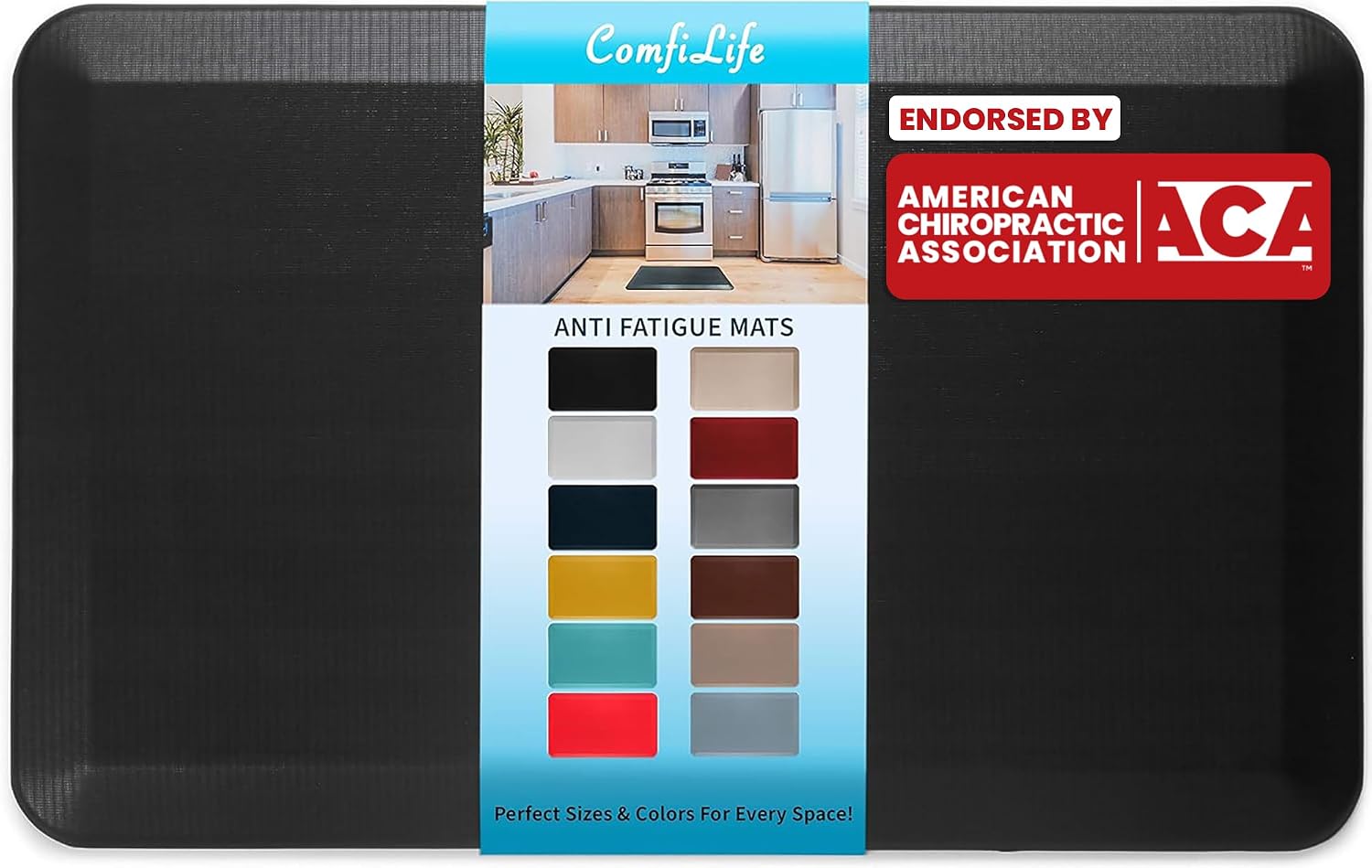
If you occupy roughly one position, the floor is doing more damage than your shoes are, and this is the highest-value thing on the page. It does not work by padding: the slight instability keeps your feet and calves making small corrections, which is exactly the muscle cycling that standing still removes.
Pros
- Right size and lower price for a fixed standing spot
- Same 4.8 star foam as the longer version
- Easy to lift, move and store
Cons
- Too short if you move between stations
- No advantage over the 39 inch beyond price and storage
- Single firmness option
Best for aching arches
Superfeet All-Purpose Wide-Fit Support Insoles
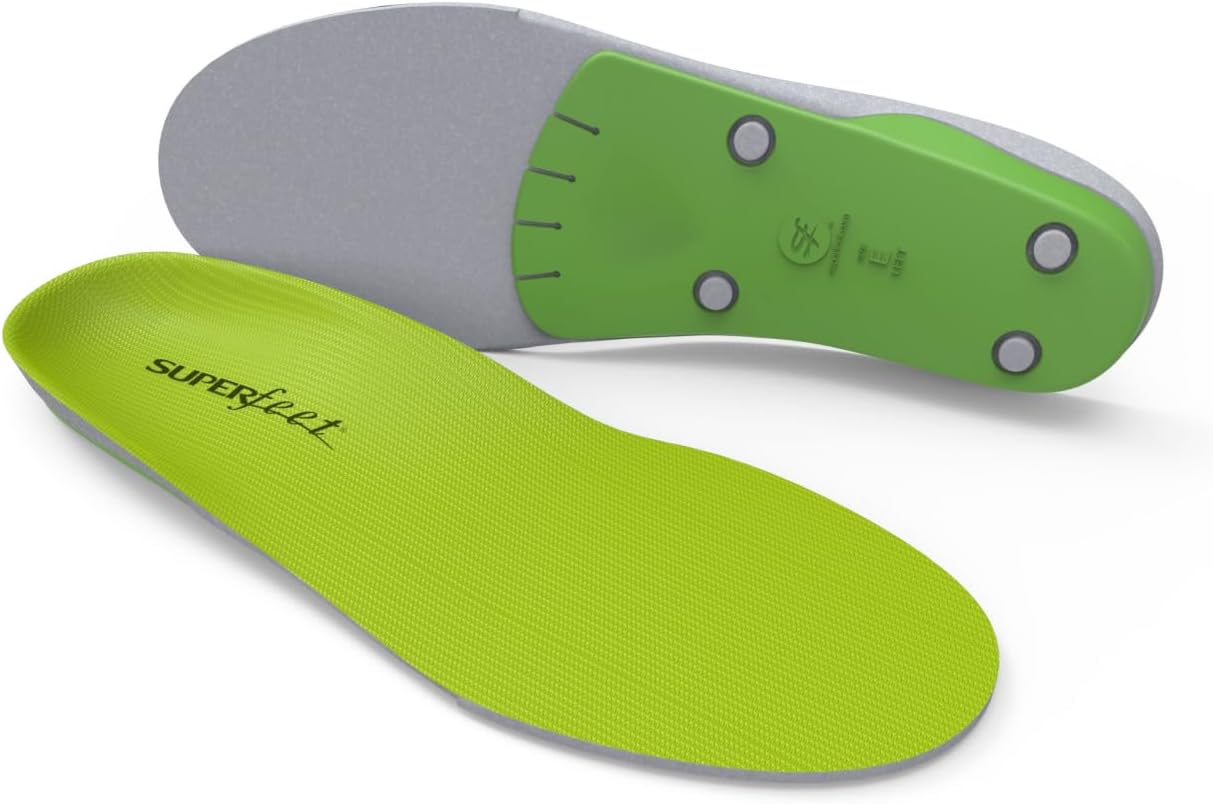
If your complaint is arches that ache and give out by the afternoon, structured support does more than cushioning. This holds the arch rather than compressing under it, which addresses the actual failure. It feels firm for the first week, and that is the point.
Pros
- Firm structural shell genuinely holds the arch all day
- Cut for wide feet, which most insoles are not
- Far more durable than foam or gel
- Over four thousand owner reviews
Cons
- Firm feel takes a week or two to adjust to
- Needs a shoe with a removable factory insole
- Most expensive option here
Best cushioned insole
Dr. Scholl's Work All-Day Superior Comfort Insoles (Women's)
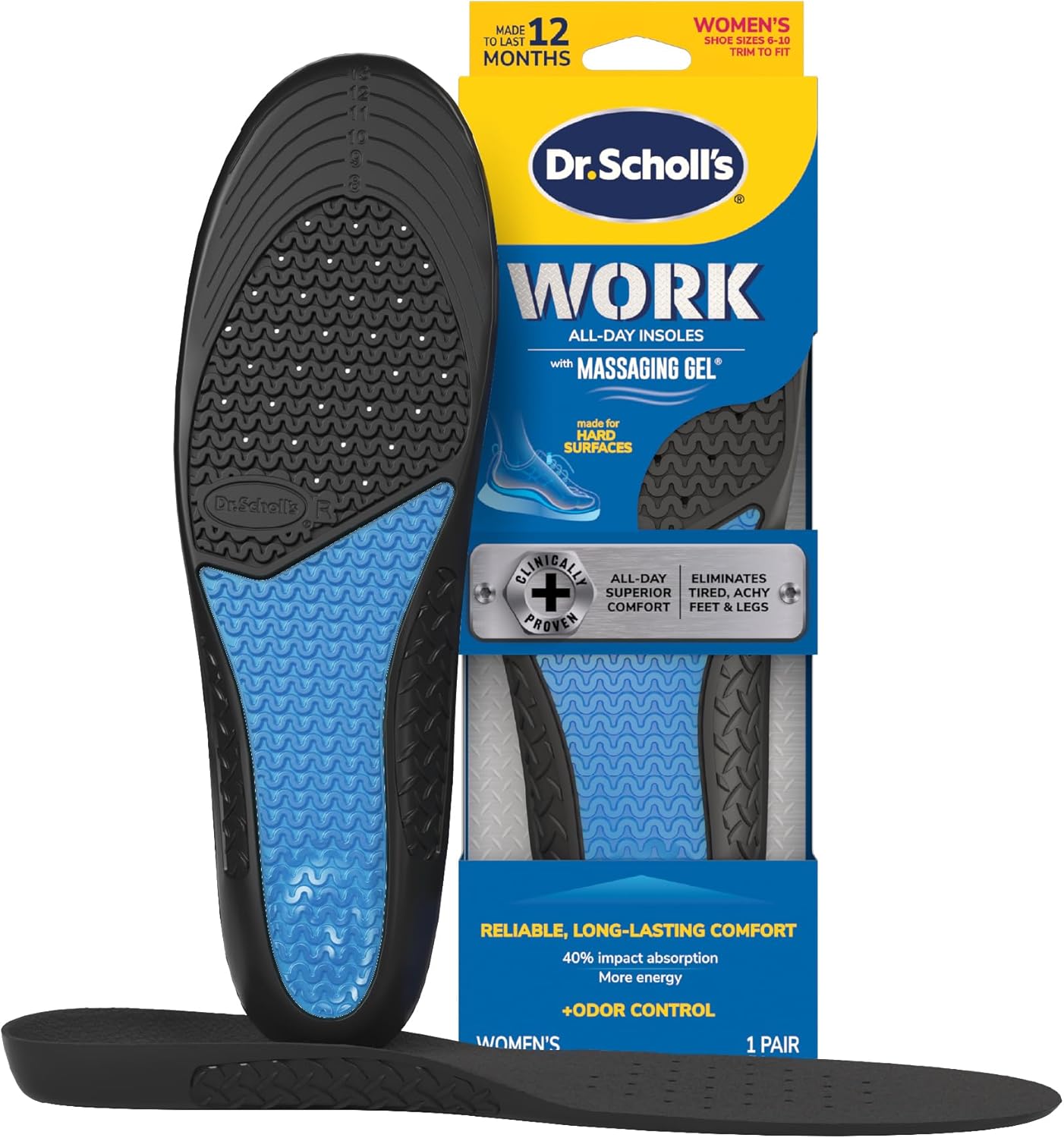
The pick if your soles feel bruised rather than your arches feel tired. Gel through the heel and forefoot takes the sting out of hard flooring. Plan to replace it around every six months on concrete, because gel compresses and the failure is gradual enough that you will not notice the day it stops working.
Pros
- Arch support positioned correctly for women's shoe proportions
- Close to thirty thousand owner reviews
- Trim to fit across most closed shoes
- Cheap enough to replace twice a year without thinking about it
Cons
- Gel compresses on a six month horizon
- Adds bulk to an already snug shoe
- Will not fit a clog with a fixed footbed
Best easy-on shoe
Skechers Foamies Arch Fit Clog
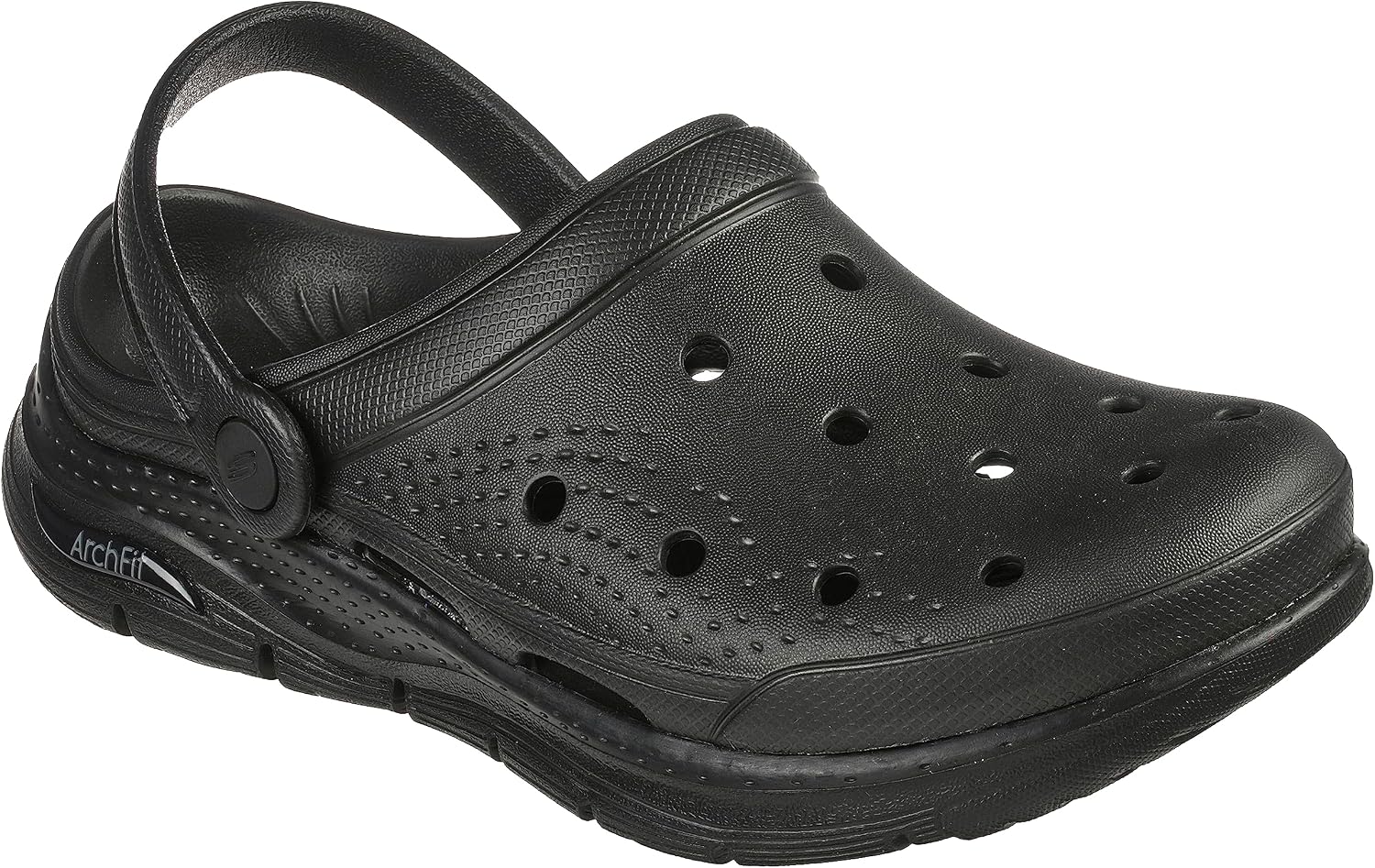
Genuine arch support in something you can step into, which matters when swollen feet make lacing unpleasant at the end of a shift. Cushioning is not support, and this has both, which is less common than the marketing suggests.
Pros
- Contoured Arch Fit footbed rather than flat foam
- Almost weightless and completely washable
- Cheap enough to replace on a schedule
Cons
- Foam compresses permanently and will not last like leather
- Warmer than it looks over a long shift
- Smallest review base here, so durability is less certain
Best if your legs swell too
Sockwell Women's Circulator Moderate Graduated Compression
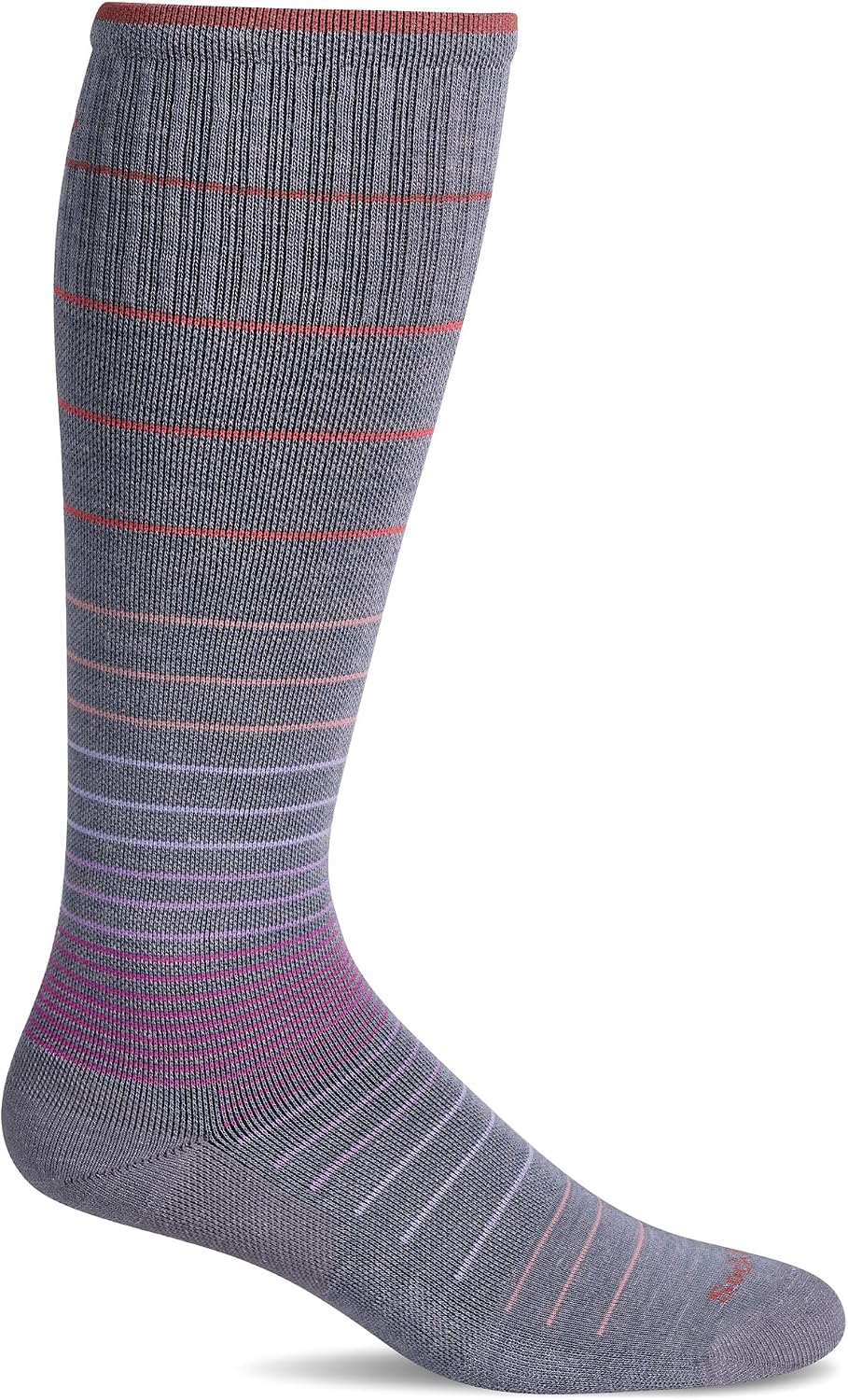
Feet and legs are different problems. If your calves feel heavy and your ankles are puffier by evening, that is fluid pooling rather than a footwear issue, and compression is the tool that addresses it. Worn during the shift, not after.
Pros
- 15-20 mmHg is the right level for standing, travel and recovery
- Nearly five thousand owner reviews, the strongest in the range
- Merino blend manages heat and odour over a long day
- Easy enough to don that it gets worn consistently
Cons
- Premium price, and three pairs is the realistic requirement
- Air dry only
- Not firm enough if you have been told to wear 20-30 mmHg
Also worth considering
Strong, well-reviewed products that just missed our ranked list - worth a look if the picks above aren't quite right for you.
- Topo by Ergodriven - A terrain rather than a flat cushion, so it keeps offering your feet new positions. Worth it if a normal mat stops helping after ninety minutes.
- Timberland PRO Anti-Fatigue Technology Insole - Built for the inside of a work boot rather than a trainer, and firmer than the Dr. Scholl's without being as rigid as the Superfeet.
- Orthofeet Coral Orthopedic Women's Sneakers - The pick if your feet already hurt rather than simply getting tired, with a genuinely wide toe box and adjustable arch height.
Frequently asked questions
Why do my feet hurt so much after standing all day?
Standing still is harder on your feet than walking. When you walk, the muscles in your legs and feet contract and relax in a cycle that pumps blood back up your legs and keeps loading different tissues in turn. Standing in one place removes that cycle: the same structures take the same load continuously, blood and fluid pool in your lower legs and feet, and the small muscles that support your arch fatigue and stop doing their job. The pain that arrives around hour six is usually those muscles giving up rather than any injury.
Is it normal for your feet to hurt after standing for 8 hours?
Aching and tiredness after a long standing shift is extremely common and by itself is not a sign that something is wrong. What is not normal is sharp pain, pain that is worse on your first steps in the morning, numbness or tingling, pain that persists into the next day, or pain in one foot only. Those patterns point to something specific rather than general fatigue, and they are worth having looked at.
How do I stop my feet hurting from standing all day at work?
The three levers that make the most difference, roughly in order, are the surface you stand on, the shoes you stand in, and movement. An anti-fatigue mat helps most if you stay in roughly one spot. Shoes with real arch support and a cushioned midsole matter most if you move around. And shifting your weight, taking micro-breaks and doing calf raises breaks up the static loading that causes most of the problem.
Why do the soles of my feet hurt after standing all day?
Pain across the whole sole is usually general fatigue of the plantar structures plus fluid pooling. Pain concentrated in the heel, especially if it is worst on your first steps after rest, points more toward the plantar fascia. Pain across the ball of the foot behind the toes suggests load is being carried on the metatarsal heads, which is common in flat, unsupportive shoes and in anyone spending a lot of time leaning forward.
Should I see a doctor about foot pain from standing?
See someone if pain wakes you at night, is worst on your first steps in the morning and has lasted more than a few weeks, involves numbness, tingling or burning, affects one foot noticeably more than the other, follows a specific injury, or comes with swelling that does not settle overnight. Also seek advice sooner rather than later if you have diabetes, because foot problems there are managed differently and reduced sensation hides warning signs.