Compression Sock Size Charts: We Checked 19 Brands
Compression socks fit by calf circumference, but most brands sell by shoe size. We read 19 brands' sizing pages; only 3 publish a calf chart you can read.
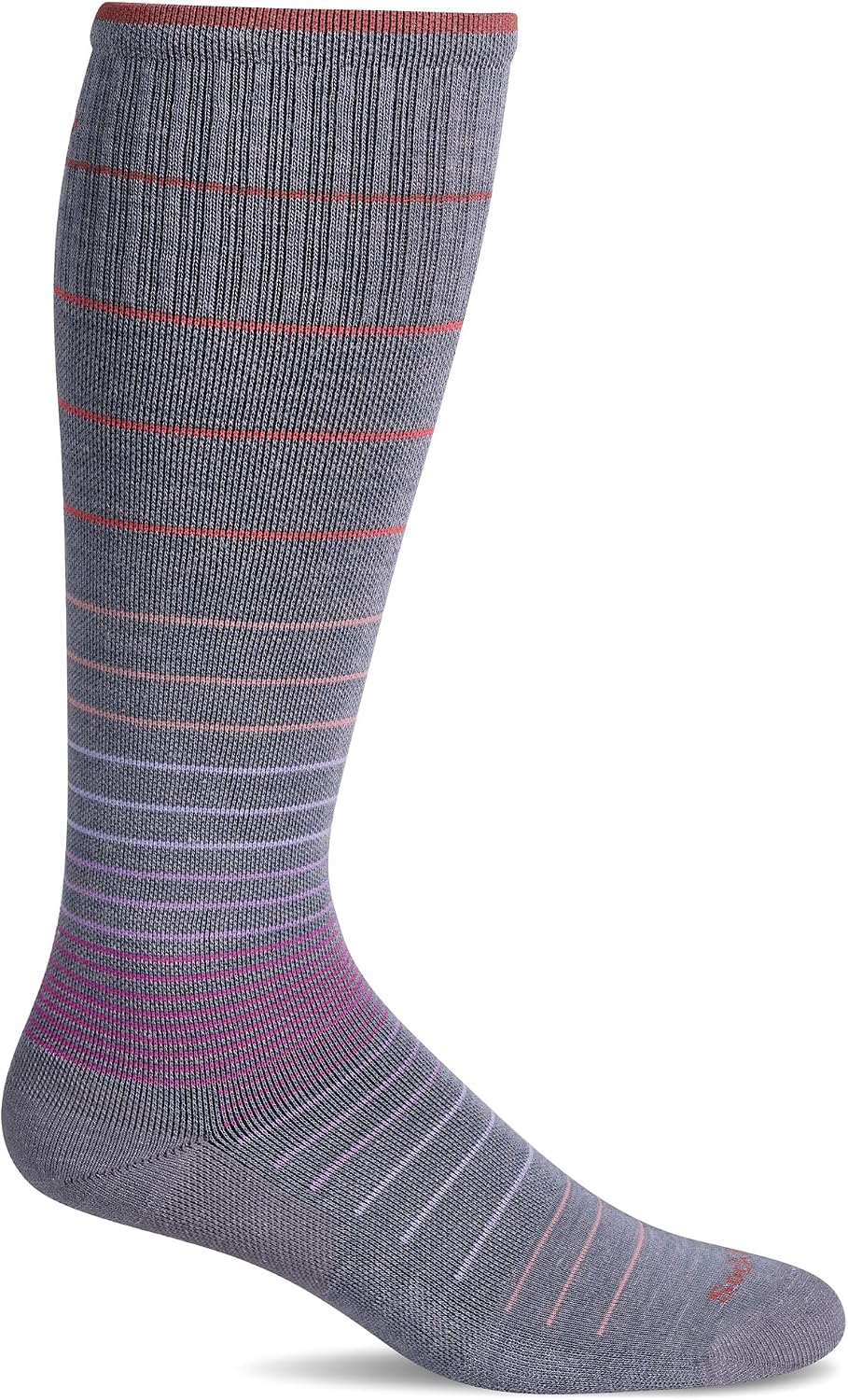
A compression sock is rated at the ankle and eases up the calf. Whether it delivers that pressure, or clamps below the knee and leaves a trench, depends on one number: the circumference of the widest part of your calf. That is how medical compression has always been fitted.
So we asked a simple question of 19 brands. If I want to buy your sock on my calf measurement, will your website let me?
We did not ask retailers, and we did not ask customer service. We read each brand’s own sizing page or product page and recorded exactly what it publishes, with a link to the page in every cell of the table below. Where a brand publishes its chart only as an image, we say so, because an image cannot be searched, copied, or read by a screen reader, and it silently vanishes when the site is redesigned.
What we found
Three of nineteen brands publish calf circumference ranges you can read. Comrad gives six bands from 10 to 20 inches including two wide sizes. VIM & VIGR gives three standard bands and a 17-21 inch wide calf. Doc Miller, the cheapest brand in the set, gives an 11-18 inch calf range and a 7-10 inch ankle range with instructions on where to put the tape.
Six more describe the method but hide the numbers in an image. Truform, CEP, PRO Compression, medi, Run Forever and Tommie Copper all tell you to measure your calf. None of them puts the resulting ranges in text on the page we checked.
Four size purely by shoe size, with no calf measurement anywhere. Sockwell, Zensah, Swiftwick and Apolla. Sockwell’s official size chart maps sock size to shoe size and stops, for every model it makes; its wide calf line is described as “about 15-20% wider than our regular fit”, which is a relative figure that tells you nothing about what it will actually fit.
Three say nothing about sizing at all on the product page. Bombas, FIGS and Physix Gear list sizes without a method. Physix Gear’s product page does not state a compression figure in mmHg either, which our mmHg guide treats as a warning sign for any brand.
The remaining three are medical or medical-adjacent: JOBST ships dedicated full-calf sizes but keeps the figures off the product page, Dr. Segal’s leads with the ankle measurement but publishes the method rather than the ranges, and Sigvaris sizes by fit code with the guide behind a link.
Why this matters more than the mmHg number
Most compression sock advice is about pressure: 15-20 versus 20-30 mmHg. That decision matters, and we cover it separately. But a sock at the right pressure in the wrong size delivers the wrong pressure, at the wrong place. A calf that exceeds the top of a size band gets the tightest ring at its widest point instead of at the ankle, which is the opposite of graduated compression and the most common reason people conclude that compression “does not work for them”.
Stepping down a compression level does not fix that. It is a circumference problem. The fix is a size that matches the measurement, and you cannot buy on a measurement a brand will not publish.
How to use this
Measure the widest part of your calf first thing in the morning, before any swelling, with a soft tape. Then:
- If your brand is one of the three with a text chart, buy on the number. That is what the chart is for.
- If your brand hides the chart in an image, open the product page and read it there. Write the number down, because it will not be there next year.
- If your brand sizes by shoe size only, compare your measurement against a brand that does publish ranges. If you sit near or above 16 to 17 inches, treat a shoe-size-only sock as a gamble and look for a stated wide calf range. This is where Sockwell loses to VIM & VIGR despite being the better sock for most people.
Our roundups now carry this data per product: see the best compression socks, the men’s roundup and the Sockwell comparison.
What this is not
This is a survey of what brands publish, not a test of how their socks fit. A brand that publishes nothing may make a sock that fits you perfectly. The point is that you would have no way to know before it arrives.
We checked each page on the date shown in the table. Brands change their sites; if you find a chart we have recorded as missing, tell us and we will re-check and correct the row.
The table: 19 brands, what each one publishes
Every cell is quoted from the brand's own site and links to the page it came from. "Not published" means it does not appear as readable text on that page as checked between 2026-09-06 and 2026-09-11. Where a brand publishes its chart only as an image, we say so: an image cannot be searched, copied, or read by a screen reader.
Frequently asked questions
How are compression socks supposed to be sized?
By leg measurement. Graduated compression is rated at the ankle and eases up the calf, so the pressure you actually get depends on the circumference of your ankle and the widest part of your calf. Medical brands size on those two numbers plus length to the knee. Shoe size only tells a manufacturer how long to make the foot.
Why do so many brands size compression socks by shoe size?
It sells better. A shoe size is a number everyone already knows, and a tape measure is a step most people will skip. The trade is that a shoe size says nothing about your calf, which is the measurement that decides whether the sock fits or cuts in below the knee.
Which compression sock brands publish a calf size chart?
Of the 19 brands we checked, three publish calf circumference ranges as readable text on their own site: Comrad, VIM and VIGR, and Doc Miller. Six more describe the method but put the actual figures only in an image. Four size purely by shoe size with no calf measurement anywhere.
What should I do if my brand does not publish a calf chart?
Measure the widest part of your calf first thing in the morning, before any swelling, and compare it to a brand that does publish ranges to see roughly where you fall. If you are near or above 16 to 17 inches, treat a shoe-size-only sock as a gamble and look for a brand with a stated wide calf range.
Does a size chart published as an image count?
For a person with the page open, partly. For anyone else, no. An image cannot be searched, copied into a note, read aloud by a screen reader, or found by a search engine, and it silently drops off when a brand redesigns its site. We record image-only charts separately for that reason.