Sockwell vs VIM & VIGR: Which Compression Socks Are Worth It?
Sockwell versus VIM & VIGR compression socks head to head on material, compression accuracy, calf fit, durability and price, with a pick for each buyer.
Sockwell and VIM & VIGR come up together constantly, and for good reason. Both sell single pairs rather than forcing multipacks, both publish real mmHg ratings, and both sit in the bracket above drugstore compression without crossing into fitted medical products.
Every comparison you will find between them is published by one of the two brands, or by an affiliate that recommends whichever pays better. We do not sell socks, so here is the version where both are allowed to lose.
The short answer
Buy Sockwell if your calves are average. The merino blend is the difference between a firm sock you wear for twelve hours and one you take off at lunch.
Buy VIM & VIGR if your calves are fuller or muscular and Sockwell’s wide calf fit does not cover you. That fit is women’s styles at 15-20 mmHg only, so men with wide calves, and anyone wanting firm 20-30 mmHg on a wide leg, are the cases where VIM & VIGR wins outright. A sock that fits at 15-20 mmHg beats a better sock that cuts into your leg at any pressure.
That is genuinely the whole decision for most people. The detail below explains why.
Material: Sockwell wins, and it is not close
Sockwell builds on a merino wool blend. VIM & VIGR’s main line is cotton.
At 15-20 mmHg over a few hours, this barely matters. At 20-30 mmHg over a full shift, it is the difference between the two brands.
Firm compression traps heat. Merino handles that by regulating temperature and resisting odour, and it keeps doing so at hour twelve. Cotton is pleasant against the skin and breathes reasonably, but it gets warm and holds smell in a way merino does not, and it takes longer to dry.
If you are buying 20-30 mmHg for a long day on your feet, this single property should drive the decision.
Fit: VIM & VIGR wins, and it is also not close
Calf circumference is the most common reason compression socks get abandoned. It is not the compression level, it is the cuff.
Sockwell’s standard leg runs narrow. It does have a Wide Calf Series, adding roughly 15 to 20 percent more stretch, but it is women’s styles at moderate 15-20 mmHg only. VIM & VIGR engineer wide calf across more of their range, and the difference is immediately obvious to anyone who has had a sock leave a red trench below the knee.
This matters more than material for the people it affects. Merino in a sock that cuts in is worse than cotton in a sock that fits.
So the honest split is narrower than it first looks. A woman wanting moderate compression on a wide calf can now stay with Sockwell and keep the merino. Where Sockwell genuinely has no answer is men with wide calves, and anyone needing firm 20-30 mmHg with a wide leg - VIM & VIGR’s verified wide calf option is also 15-20 mmHg, so that particular combination is unserved by both.
If you are a man and the wide calf gap is your problem, this comparison cannot solve it and a third brand probably can. We put Sockwell, JOBST, Run Forever and Doc Miller side by side in the best compression socks for men, which is also where the men’s Circulator sits if you want Sockwell’s merino at moderate 15-20 mmHg rather than the firm socks compared here.
Compression accuracy
Both brands print real mmHg figures and both grade properly from the ankle upward, which already separates them from a large part of the category where “graduated compression” appears with no number behind it.
We could not measure applied pressure ourselves, so we are not going to claim one is more accurate than the other. What owner reports consistently suggest is that Sockwell’s compression holds slightly longer before fading, which is a durability point rather than an accuracy one.
Durability and cost per month
Neither brand escapes the physics: elastane degrades, and both should be treated as consumables with a useful life of roughly three to six months of regular wear.
Sockwell’s merino appears to hold its compression marginally longer in owner reports. Both are expensive enough that keeping three pairs in rotation is a real cost, which is why our main compression roundup includes a budget option for exactly this reason.
If you are going to wash them hot and tumble dry them, do not buy either. You will destroy a premium sock in weeks. Wash cool, no fabric softener, air dry.
Price and appearance
VIM & VIGR wins on looks. The pattern and colour range is the best in this comparison, and if these are visible at work that is not a frivolous consideration. Sockwell’s women’s line is competitive; the men’s is plainer.
On price the two are close enough that it should not decide anything. Both are premium. Neither is Sigvaris or JOBST money.
Who should buy what
| Situation | Pick |
|---|---|
| Average calves, long shifts, firm compression | Sockwell Elevation Firm |
| Fuller or muscular calves | VIM & VIGR Wide Calf |
| Want firm compression that does not look medical | VIM & VIGR 20-30 mmHg |
| Men, average calves, on your feet all day | Sockwell Men’s Elevation Firm |
| Buying on clinical advice | Consider Sigvaris or JOBST instead of either |
| Cost is the constraint | See the budget pick in our main roundup |
Before you buy either
Make sure you have settled the compression level first, because it matters more than the brand. Our mmHg guide covers 15-20 against 20-30 and why higher is not automatically better.
And measure your calf in the morning, at the widest point, before you order. If that measurement sits near the top of a size band, the wide calf option is the one to take regardless of which brand you prefer on paper.
Worth saying plainly: neither brand is the right buy if you are dealing with visible varicose veins. Both centre on 15-20 mmHg lifestyle compression, and that tier is not what the condition calls for. Firm 20-30 mmHg stockings are effectively a different category, with different brands, and that is the page to read instead.
A note on scope
We are independent reviewers, not clinicians. This comparison covers how these socks are made, specified and sold. If you are buying because of a diagnosed venous condition, diabetes or lymphoedema, the compression level and often the brand should be decided with a clinician.
How we test
Every pick is scored on the same five criteria and cross-checked against real owner feedback - so the ranking reflects how a product holds up over a full shift, not its spec sheet.
Support
Whether graduated compression actually matches its stated mmHg rating, or, for mats and insoles, how much load it takes off your legs.
Comfort
All-day wearability: no bite at the cuff, no hotspots, breathable enough for a full shift.
Durability
Whether it holds compression or loft after repeated washing and months of daily use.
Fit
Size range, calf-width options, and how honest the sizing chart is against real owner reports.
Value
What you get for the price, including cost per wear once durability is accounted for.
Sockwell, men's
Sockwell Men's Elevation Firm Graduated Compression
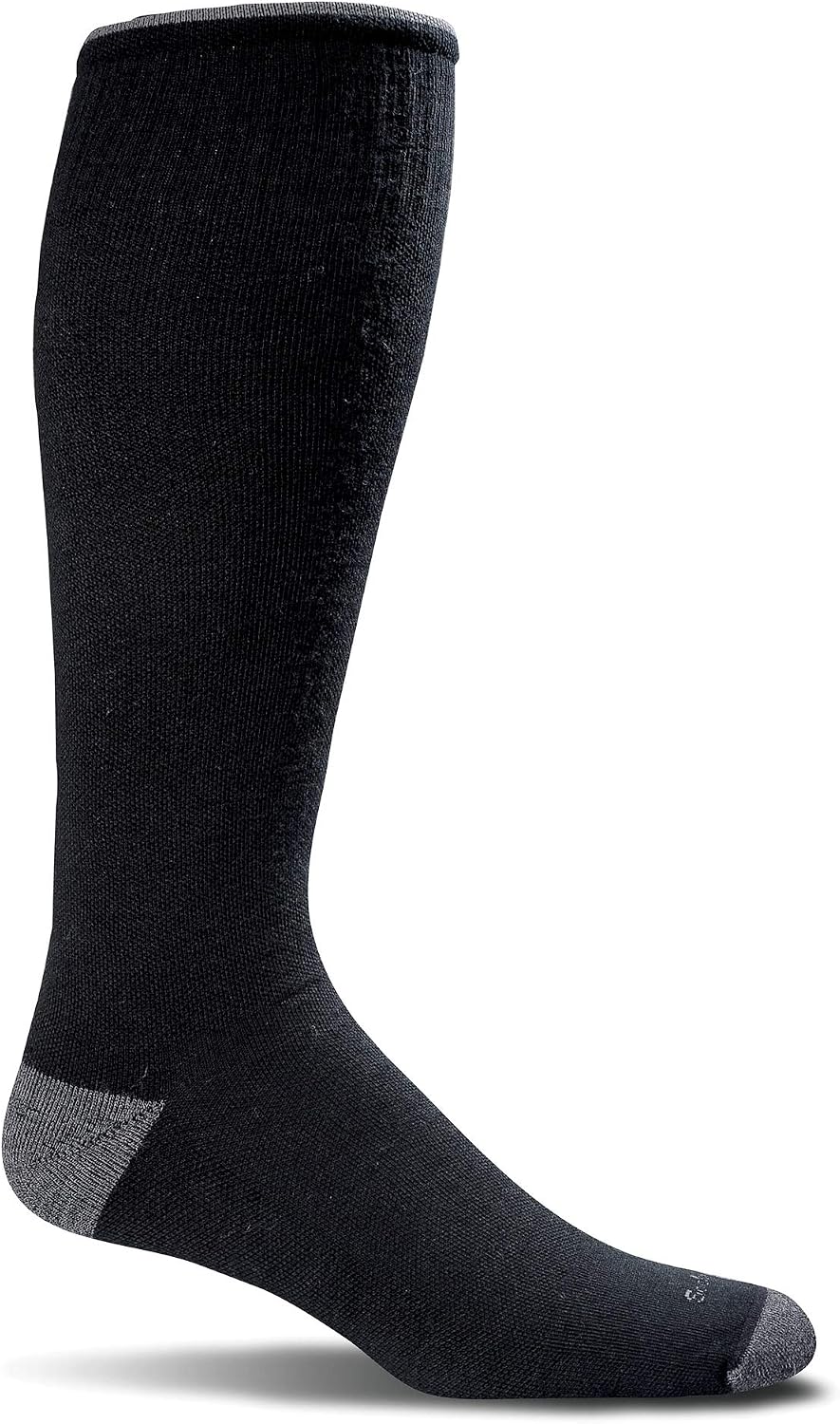
Sockwell's case rests almost entirely on the merino blend, and it is a strong case. At 20-30 mmHg you are wearing a firm sock for twelve hours, and firm nylon socks get hot and start to smell well before the shift ends. Merino does not, and that single property is what separates a sock people keep wearing from one that migrates to the back of a drawer. The gradient is properly executed, firm at the ankle and easing up the calf rather than gripping at the top. With close to two thousand owner reviews it also has the longest credible track record of anything in this comparison. Where it loses is fit: sizing runs on the narrower side, and there is no true wide calf class.
Pros
- Merino blend handles full shifts without heat or odour
- Well-executed 20-30 mmHg gradient
- Longest and most credible review history here
- Holds compression better than nylon over time
Cons
- No genuine wide calf sizing
- Runs narrow through the calf
- Air dry only
Sockwell, women's
Sockwell Women's Elevation Firm Graduated Compression
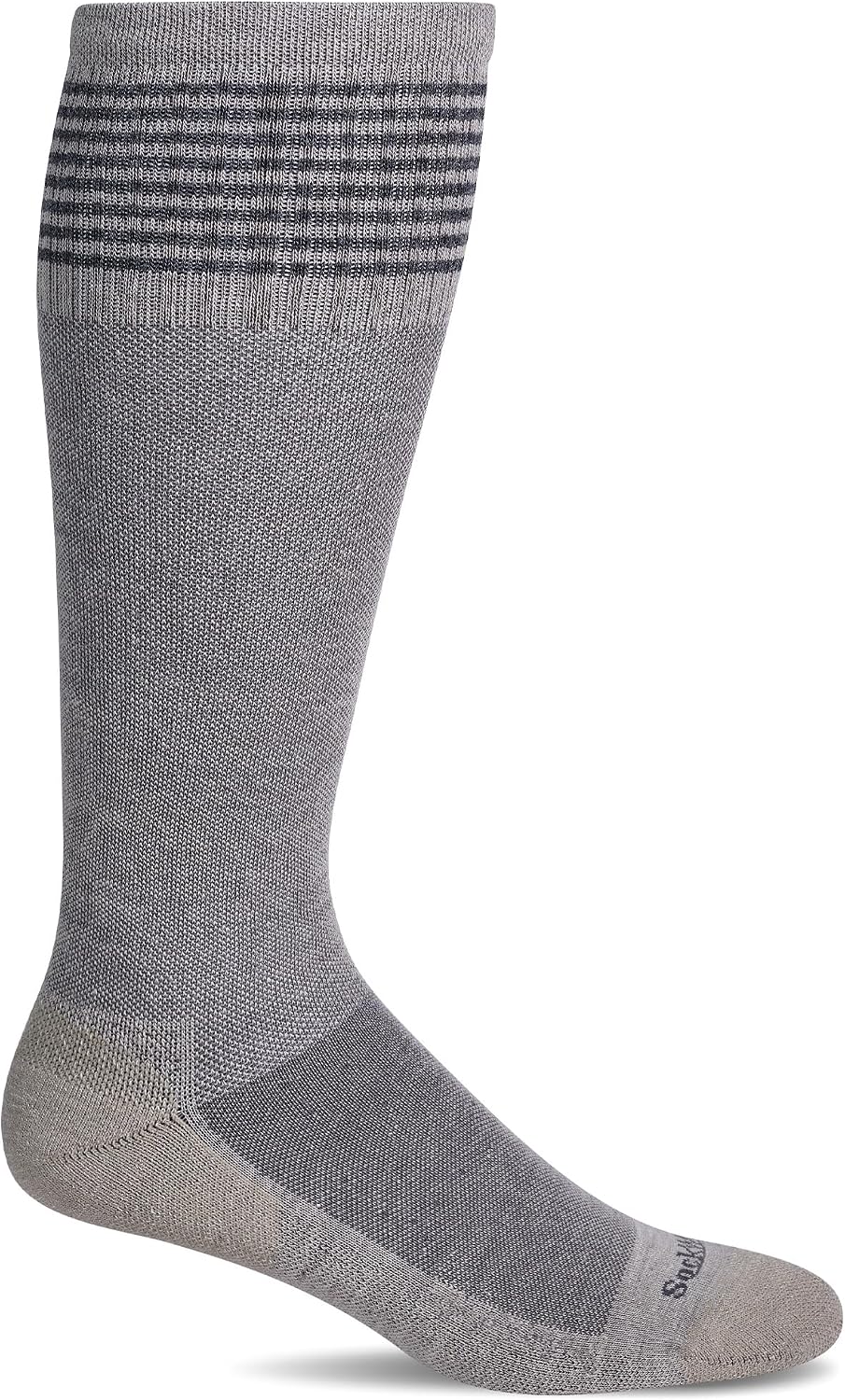
The women's Elevation is the same construction and the same firm 20-30 mmHg, and it scores a point higher on fit because the women's size range is better graded through the calf than the men's. It is the pair we rate highest across our compression coverage, and the reasoning is the same: at a compression level this firm, material quality stops being a luxury and becomes the thing that determines whether you wear the sock. The colour range is broader than Sockwell's men's line, which is not a trivial point for anyone wearing these visibly at work. Same caveats apply on price and drying.
Pros
- Same merino advantage with better calf grading than the men's
- Firm 20-30 mmHg suited to varicose veins and persistent swelling
- Broad colour range for visible workplace wear
- Strong review history
Cons
- Premium price
- Air dry only, so you want more than one pair
- Still no dedicated wide calf class
VIM & VIGR, wide calf
VIM & VIGR 15-20 mmHg Cotton, Wide Calf
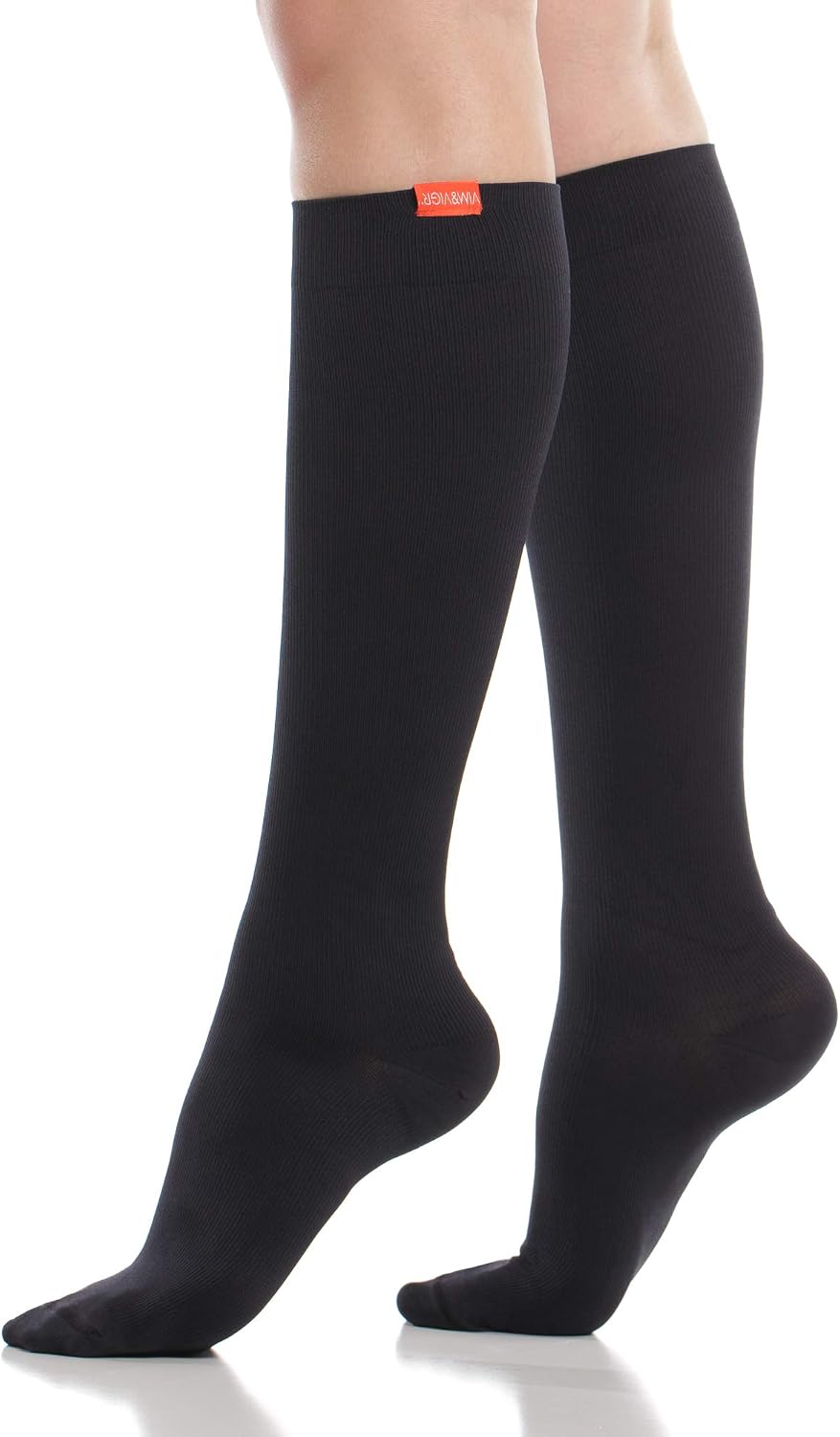
This is the sock that wins the comparison for a large group of people, and it wins on one attribute. VIM & VIGR treat wide calf as a real size class, engineered rather than stretched, and almost nobody else at this quality level does. Calf circumference is the most common reason compression socks get abandoned, and no amount of merino fixes a cuff that leaves a trench below the knee. At 15-20 mmHg this is an everyday sock rather than a medical one, which suits standing shifts and travel. The cotton is comfortable if less technical than merino, running warmer on a long day. Review volume on this specific size variant is modest, which reflects Amazon splitting counts across variants rather than a weak product.
Pros
- Wide calf engineered as a real size class, not a stretched standard
- Solves the most common compression sock complaint outright
- Comfortable cotton against skin
- Sold as a single pair
Cons
- 15-20 mmHg only in this variant, so no firm option for wide calves
- Cotton runs warmer than merino on long shifts
- Modest review count on the variant listing
VIM & VIGR, firm
VIM & VIGR 20-30 mmHg Cotton
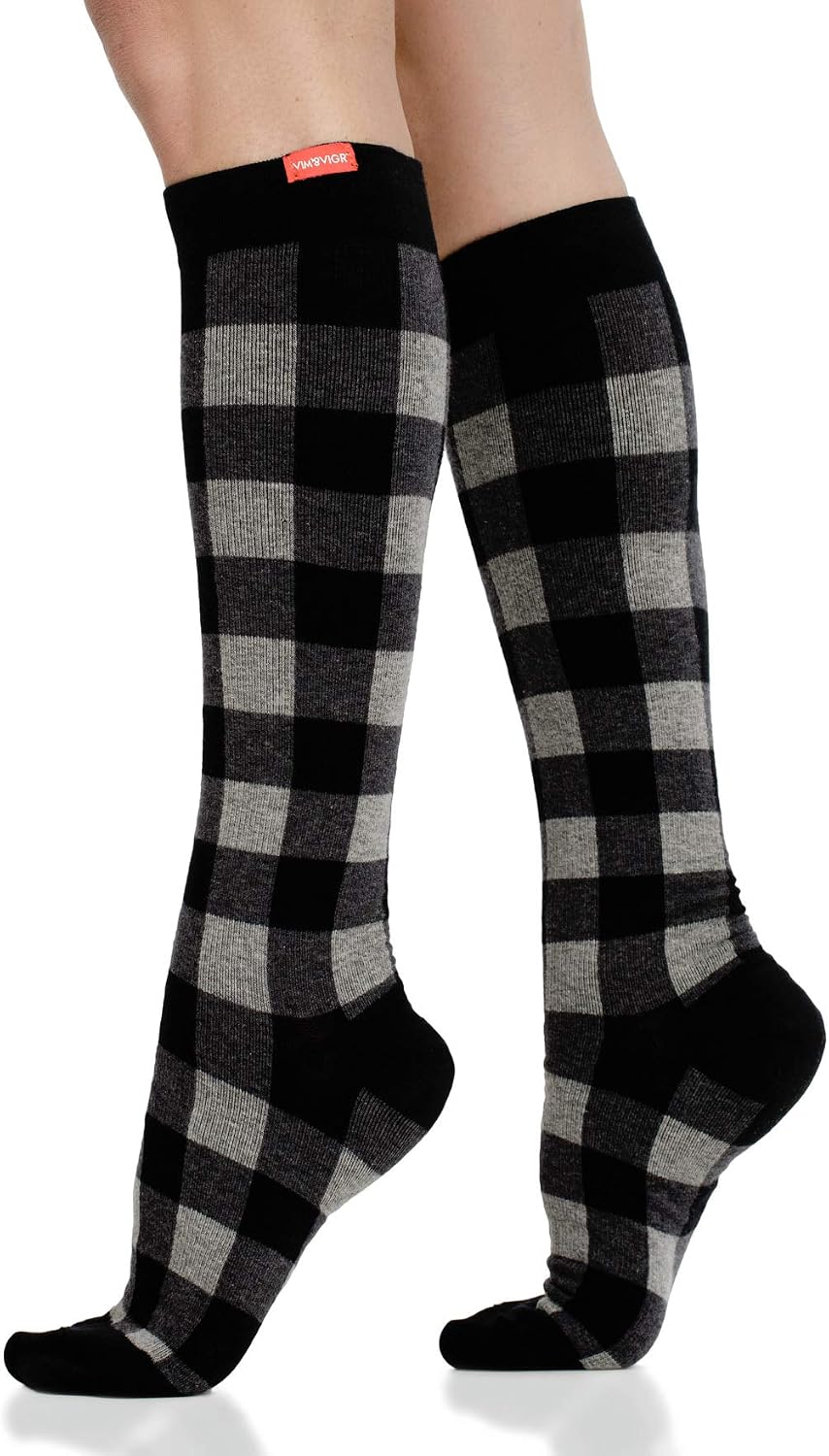
This is VIM & VIGR's answer to Sockwell's Elevation, and it is the matchup that decides the comparison for anyone with average calves. It delivers the same firm 20-30 mmHg in a cotton construction that is comfortable and looks less clinical than most medical compression. Against the Sockwell it loses on the thing that matters at this level: cotton at 20-30 mmHg for a full day gets warm and holds odour in a way merino does not, and the compression appears to fade a little sooner in owner reports. The pattern and colour range is the best of any sock here, which is a genuine consideration if these are visible at work. The Amazon listing is a size variant with a modest review count.
Pros
- Firm 20-30 mmHg in a sock that does not look medical
- Best pattern and colour range in this comparison
- Comfortable cotton construction
Cons
- Cotton runs warm at this compression level over a full shift
- Compression fades sooner than the merino Sockwell
- Expensive for cotton, and a thin review history on the variant
Sockwell, moderate
Sockwell Women's Circulator Moderate Graduated Compression
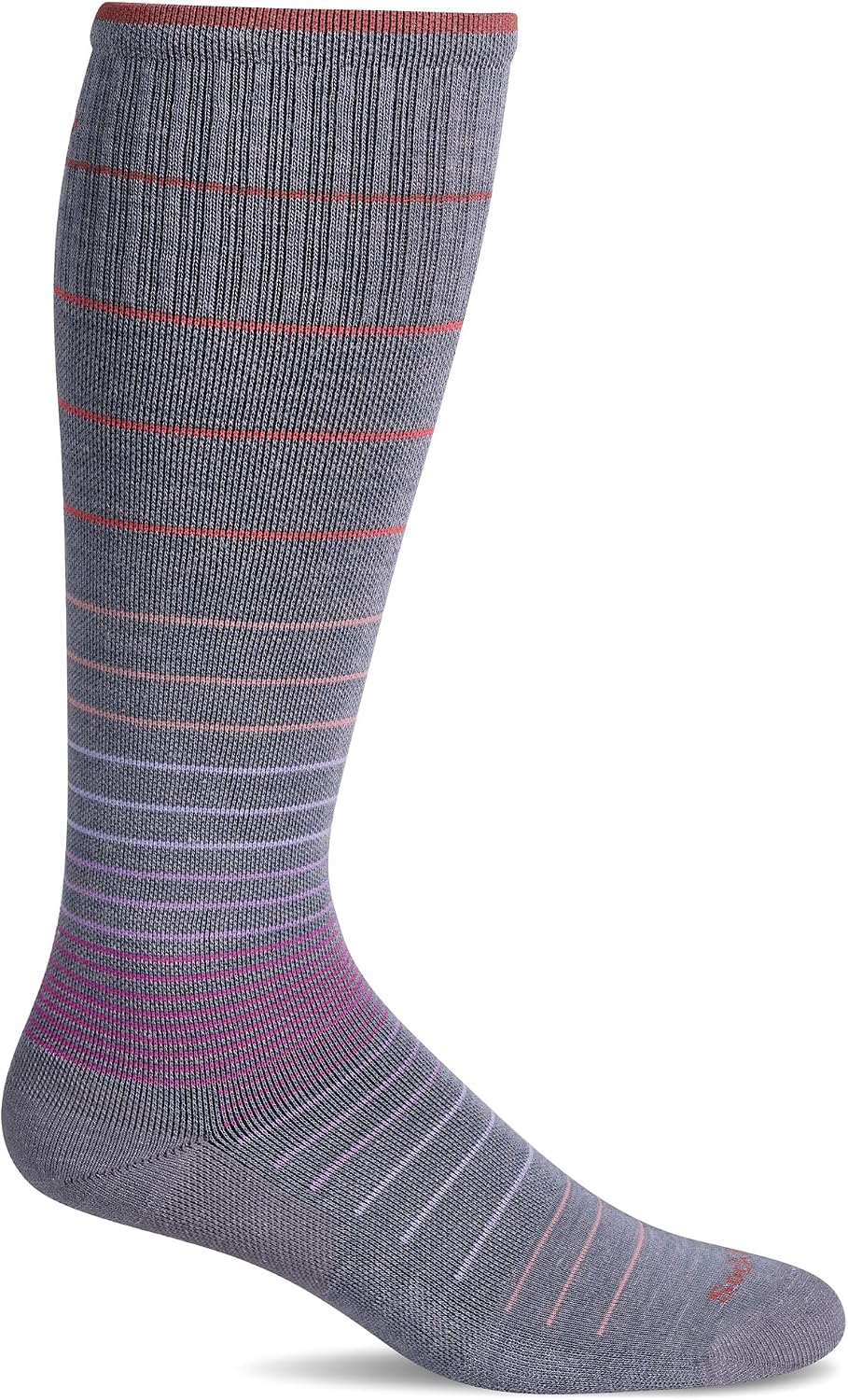
Both brands are represented above at firm compression, which is where the comparison is usually framed, but most buyers should be looking at moderate 15-20 mmHg instead. This is Sockwell's moderate option and it is the best-evidenced product either brand sells on Amazon, with close to five thousand owner reviews. Against VIM & VIGR's 15-20 mmHg cotton it wins on material for the same reason it wins at every level: merino handles a full day without the heat and odour that cotton accumulates. It loses on the same thing too. There is no wide calf Circulator, so if that is your constraint the VIM & VIGR wide calf remains the answer regardless of what the merino does better.
Pros
- Best-evidenced product from either brand, nearly five thousand reviews
- Merino advantage at the compression level most people should buy
- Easy to don, so it gets worn consistently
Cons
- No wide calf version, which is the whole VIM & VIGR advantage
- Premium price
- Air dry only
Also worth considering
Strong, well-reviewed products that just missed our ranked list - worth a look if the picks above aren't quite right for you.
- Comrad CloudCotton Knee High 15-20 mmHg - The third brand people usually shortlist alongside these two. Its cotton and tree fibre blend is arguably the most comfortable sock of the group, but it is 15-20 mmHg only, so it does not compete in the firm tier where this comparison is decided.
- Sigvaris DYNAVEN Women's Calf-High 20-30 mmHg - If your reason for buying is clinical rather than comfort, Sigvaris comes from a medical compression background rather than a lifestyle one, and the open toe option is easier to get on than either brand here.
- Run Forever 20-30 mmHg Knee High - Neither Sockwell nor VIM & VIGR is cheap. If the appeal of firm compression is undermined by the price of keeping three pairs in rotation, this is the budget route, at the cost of material quality.
Frequently asked questions
Which is better, Sockwell or VIM & VIGR?
Sockwell wins on material and durability thanks to its merino blend, which handles a full shift without getting hot or holding odour. VIM & VIGR wins decisively on fit, because it offers wide calf as a genuine size class rather than an afterthought. If your calves are average, buy Sockwell. If they are fuller or muscular, buy VIM & VIGR, because the best material in the world does not help in a sock that cuts into your leg.
Are Sockwell compression socks medical grade?
Sockwell's Firm line is rated 20-30 mmHg, which is the same range as many clinically prescribed socks. The distinction people usually mean by medical grade is whether the product is fitted and specified by a clinician, which is a process rather than a property of the sock. For a diagnosed condition, the level should come from your clinician regardless of brand.
Is VIM & VIGR worth the price?
If you need wide calf sizing, yes, because few brands do it properly and a sock that fits at 15-20 mmHg beats a sock that does not fit at any pressure. If you have average calves and want a sock for long shifts, Sockwell's merino gives you more for similar money.
Do either of these come in single pairs?
Yes. Both brands sell single pairs on Amazon rather than forcing a multipack, which is unusual in this category and one of the reasons both made our shortlist. Many budget compression brands only list three and six packs.
How long do Sockwell and VIM & VIGR socks last?
Both should be treated as consumables with a useful life of roughly three to six months of regular wear, because the elastane that creates the compression degrades with washing. Sockwell's merino tends to hold up marginally better in owner reports, but neither brand escapes the underlying physics.