The Best Sockwell Compression Socks: Which Model Should You Buy?
Sockwell's Circulator, Elevation and Pulse lines compared on compression level, merino content, calf fit and price, plus where Sockwell loses to other brands.
Sockwell makes four compression sock lines people actually shortlist, and the naming does not make it obvious which is which. Circulator, Elevation, Pulse, Elevate: none of those tells you the compression level, the cut or what it is for.
This page sorts that out, and then says where Sockwell loses, because a brand guide that finds no fault is a sales page.
The short answer
- Buy the Circulator unless you have a specific reason not to. Moderate 15-20 mmHg, the best-evidenced product they sell, and the one most people keep wearing.
- Buy the Elevation if you need firm 20-30 mmHg.
- Men should look at the Pulse first for its over-the-calf cut, or the men’s Elevation if the socks live inside work boots.
Decoding the range
| Model | Compression | Cut | Best for |
|---|---|---|---|
| Circulator | 15-20 mmHg moderate | Crew | Standing all day, travel, everyday |
| Elevation (women’s) | 20-30 mmHg firm | Crew | Varicose veins, persistent swelling |
| Pulse (men’s) | Firm graduated | Over the calf | Under trousers, dress shoes |
| Elevation (men’s) | 20-30 mmHg firm | Crew | Work boots, cushioning underfoot |
The thing to understand is that compression level and cut are independent choices. Sockwell’s naming mixes them together, which is why people end up with the wrong sock.
Why Sockwell costs what it does
The answer is the merino blend, and it is a legitimate reason rather than marketing.
Compression socks trap heat, and the firmer the compression the more they trap. A nylon compression sock worn for twelve hours inside a work boot or a nursing clog gets hot around hour six and starts to smell by hour ten. Merino regulates temperature and resists odour, and it keeps doing so at the end of a long day.
That single property is why people who have written off compression socks as unbearable often get on fine with Sockwell. The problem was usually the material rather than the compression.
It is worth being clear that these are a merino blend, typically around 30 percent merino with rayon from bamboo, nylon and spandex. Pure merino cannot hold graduated compression, because the elastic fibres are what generate the pressure in the first place.
Where Sockwell loses
Calf width. The standard leg runs narrow, and on a calf over roughly 16 inches a regular-fit Sockwell leaves a trench below the knee. Stepping down a compression level does not fix it, because it is a circumference problem rather than a pressure one.
Here is the awkward part, and it is the reason for the table above. Sockwell does not publish a calf measurement anywhere. Its official size chart maps sock size to shoe size and stops, for every model in the range. You are asked to buy a sock whose fit is decided by calf circumference using a number that has nothing to do with your calf, and every one of the five picks on this page is sized that way.
The Wide Calf Series is a partial answer, in the brand’s own words: a leg cut “about 15-20% wider than our regular fit”, in women’s moderate 15-20 mmHg styles only, with no men’s option and nothing at firm 20-30 mmHg. That is still a relative figure rather than an absolute one, so it tells you the sock is wider without telling you what it will actually fit. Measure the widest part of your calf in the morning, and if you are near or above 16 inches, treat a regular-fit Sockwell as a gamble. Sockwell is not unusual here: of 19 brands whose sizing pages we read, only three publish a calf chart as text.
For the cases Sockwell does not cover, VIM & VIGR build wide calf as an engineered size class; we compared the brands directly in our Sockwell vs VIM & VIGR head to head.
One model will not state its pressure. The Elevate Micro’s product page calls it “Moderate” and never gives an mmHg range at all. Our own mmHg guide treats an unstated range as a warning sign, and that applies to Sockwell exactly as it would to a brand we had never heard of.
Price against evidence. Sockwell is expensive, and Truform delivers the same 20-30 mmHg with a much wider size range and over eight thousand owner reviews for a fraction of the cost. It is plainer, heavier and warmer. If appearance and material do not matter to you, the value case for Sockwell weakens considerably.
Amazon listings are patchy. Several Sockwell models we checked had no working buy box or only a handful of reviews, because the brand sells heavily direct. The five here are the ones we could verify as genuinely buyable with a meaningful review history. If you want a model not listed here, buying direct may be the only reliable route.
Moderate or firm
If you are choosing without a clinical reason, take moderate.
15-20 mmHg covers standing all day, travel, recovery and general evening heaviness, and it goes on easily. 20-30 mmHg is genuinely harder work to put on, and a sock you fight with at 5am is a sock that ends up in a drawer delivering nothing.
Firm compression is the right choice for visible varicose veins, persistent swelling that does not resolve overnight, or post-surgical recovery, and in those cases the level should come from a clinician. Our mmHg guide covers this in more detail.
Note what the two men’s picks above have in common: the Pulse and the men’s Elevation are both firm 20-30 mmHg. If you want moderate 15-20 in a men’s cut, Sockwell does make one - the men’s Circulator - and it leads our best compression socks for men, where it is compared against JOBST, Run Forever and Doc Miller. That page is also the better starting point if you need a wide calf, since Sockwell has no men’s option there at any compression level.
Care, and why you need three pairs
Elastane degrades with washing and stretching, and manufacturers put the useful life at three to six months of regular wear. Sockwell is no exception; merino does not change the physics.
Wash cool on a gentle cycle, skip fabric softener, which coats and degrades the elastic fibres, and air dry. Heat is what kills compression fastest.
Because air drying takes a day, one pair cannot cover consecutive days. Three pairs is the practical minimum for regular wear, and that multiplies Sockwell’s price by three, which is worth factoring in honestly before you commit to the brand.
Where to go next
If Sockwell’s calf fit is the sticking point, read the head to head with VIM & VIGR.
If you want to see how Sockwell compares against the wider field rather than against itself, our general compression roundup puts it alongside Comrad, Run Forever and others.
And if you are buying for long shifts specifically, our picks for nurses and twelve hour shifts explains why the Circulator rather than the Elevation is usually the right Sockwell for that job.
One case where Sockwell is not the answer: visible varicose veins. Even the Elevation tops out at the bottom of the range that condition calls for, and the brands built for it are specialists rather than lifestyle labels. Our varicose vein stocking guide covers that field properly.
What the manufacturers actually publish
Every figure below is quoted from the manufacturer's own page, linked in the cell. Where a cell reads "Not published", that brand does not state it anywhere on its product page as of 2026-09-07.
How we test
Every pick is scored on the same five criteria and cross-checked against real owner feedback - so the ranking reflects how a product holds up over a full shift, not its spec sheet.
Support
Whether graduated compression actually matches its stated mmHg rating, or, for mats and insoles, how much load it takes off your legs.
Comfort
All-day wearability: no bite at the cuff, no hotspots, breathable enough for a full shift.
Durability
Whether it holds compression or loft after repeated washing and months of daily use.
Fit
Size range, calf-width options, and how honest the sizing chart is against real owner reports.
Value
What you get for the price, including cost per wear once durability is accounted for.
Best for most people
Sockwell Women's Circulator Moderate Graduated Compression
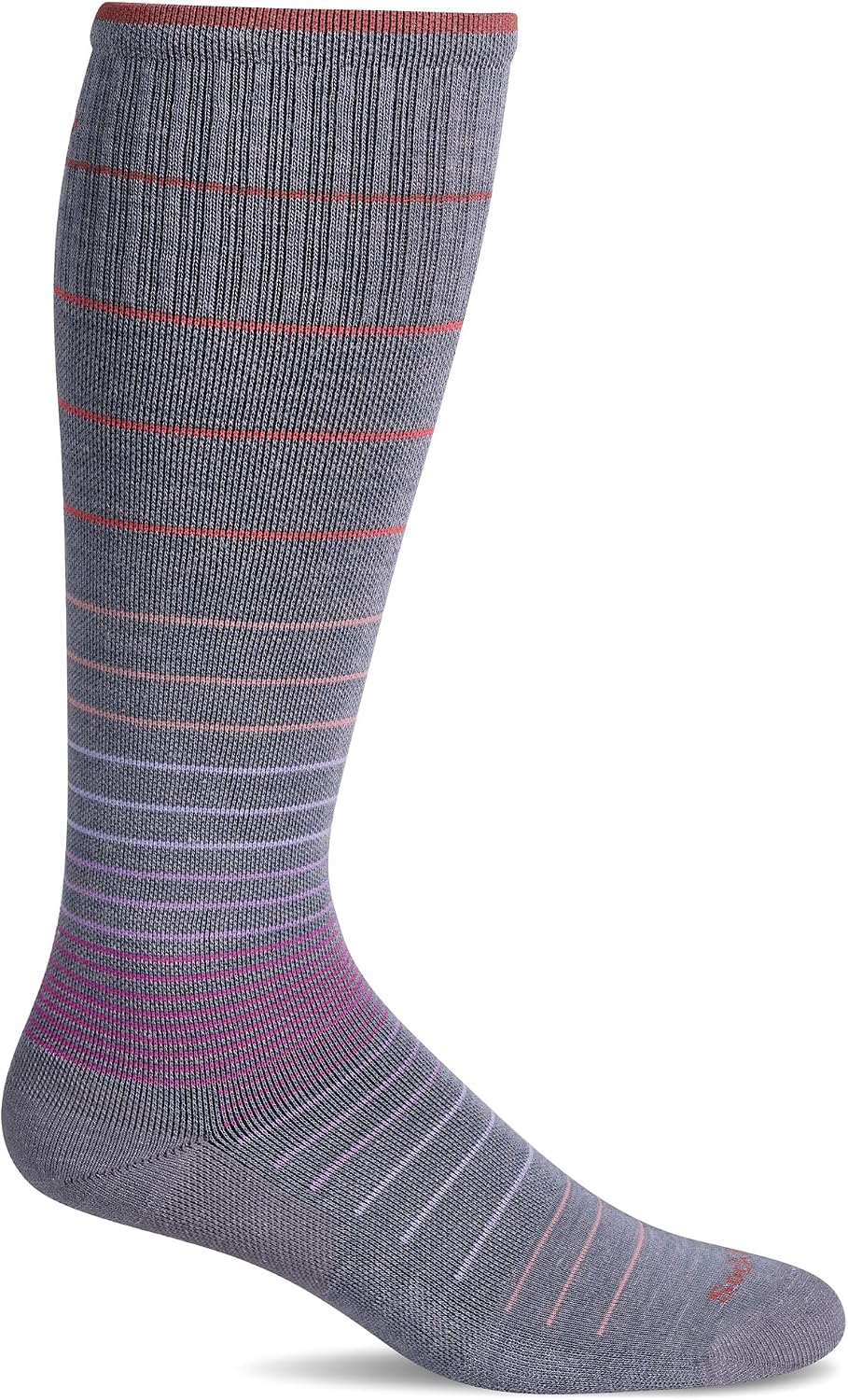
The Circulator is the Sockwell most people should buy, and the reason is that 15-20 mmHg is the level that fits how most people actually live. It is enough to make a real difference to end-of-day swelling and heavy legs after a long shift or a flight, and it is easy enough to get on before an early start that it becomes a habit rather than a chore. With close to five thousand owner reviews it is by a distance the best-evidenced product Sockwell sells on Amazon. The merino blend is the reason to pay Sockwell prices at all: it handles a twelve hour day without the heat and odour that make nylon compression unpleasant. The trade-offs are the ones that apply across the whole brand, namely price and air drying, which together mean you really want three pairs.
Pros
- 15-20 mmHg is the right level for standing, travel and recovery
- Nearly five thousand owner reviews, the strongest in the range
- Merino blend manages heat and odour over a long day
- Easy enough to don that it gets worn consistently
Cons
- Premium price, and three pairs is the realistic requirement
- Air dry only
- Not firm enough if you have been told to wear 20-30 mmHg
Best firm option
Sockwell Women's Elevation Firm Graduated Compression
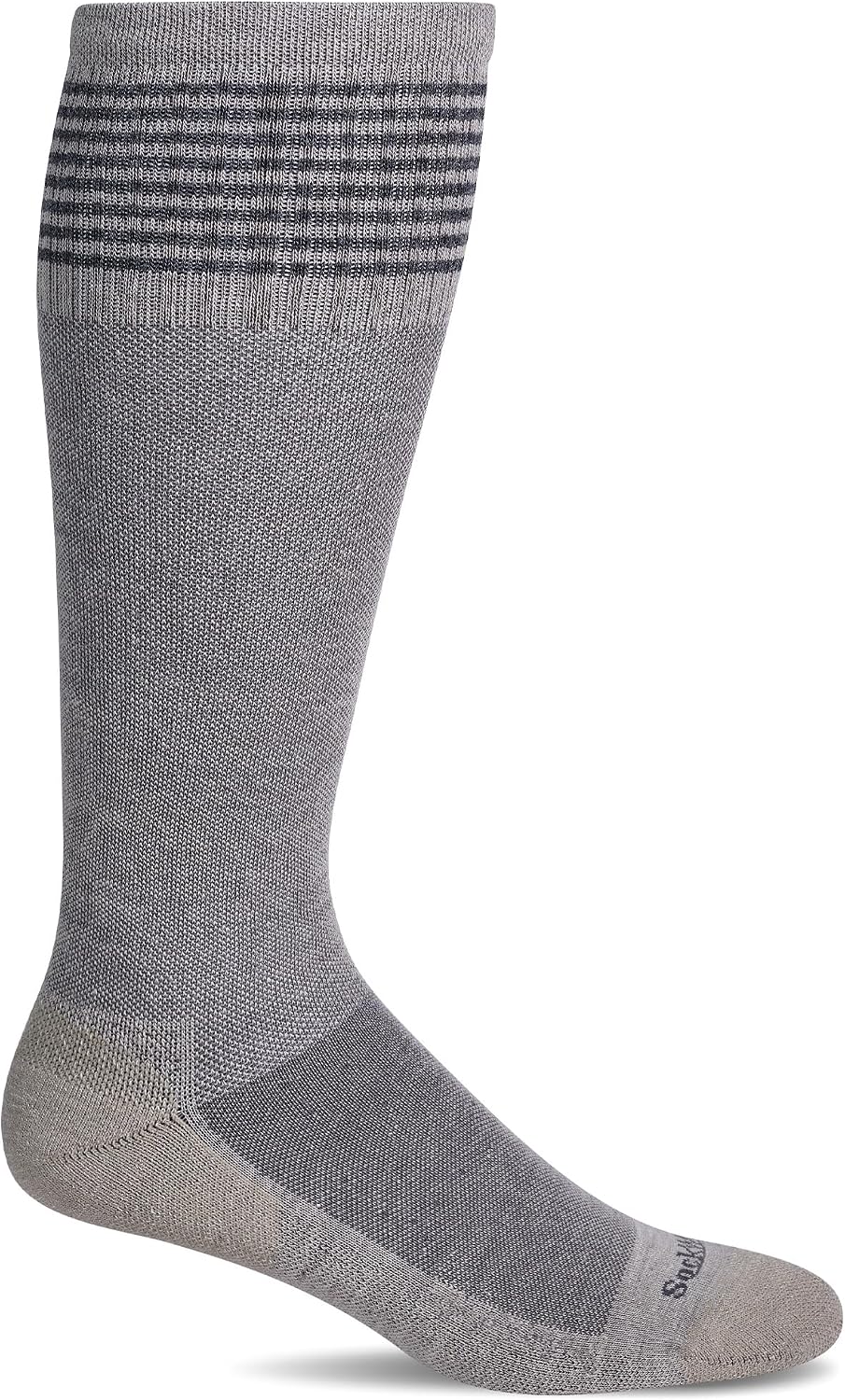
The Elevation is Sockwell's firm 20-30 mmHg line, and it is the pair to buy if you need that tier rather than moderate compression. At this pressure the merino stops being a luxury and becomes the thing that determines whether you keep wearing the sock: firm compression traps heat, and a nylon equivalent is genuinely unpleasant by the end of a long day in a way this is not. The gradient is well executed, firm at the ankle and easing properly up the calf rather than clamping at the top, which is a failure mode you see in cheaper firm socks. The women's size range is better graded through the calf than the men's. It is harder to put on than the Circulator, which is inherent to the compression level rather than a fault, and the price is the same premium.
Pros
- Firm 20-30 mmHg with a properly executed gradient
- Merino matters most at this compression level
- Better calf grading than the men's line
- Long review history
Cons
- Meaningfully harder to don than the Circulator
- Premium price
- Still no dedicated wide calf option
Best for men
Sockwell Men's Pulse OTC Firm Graduated Compression
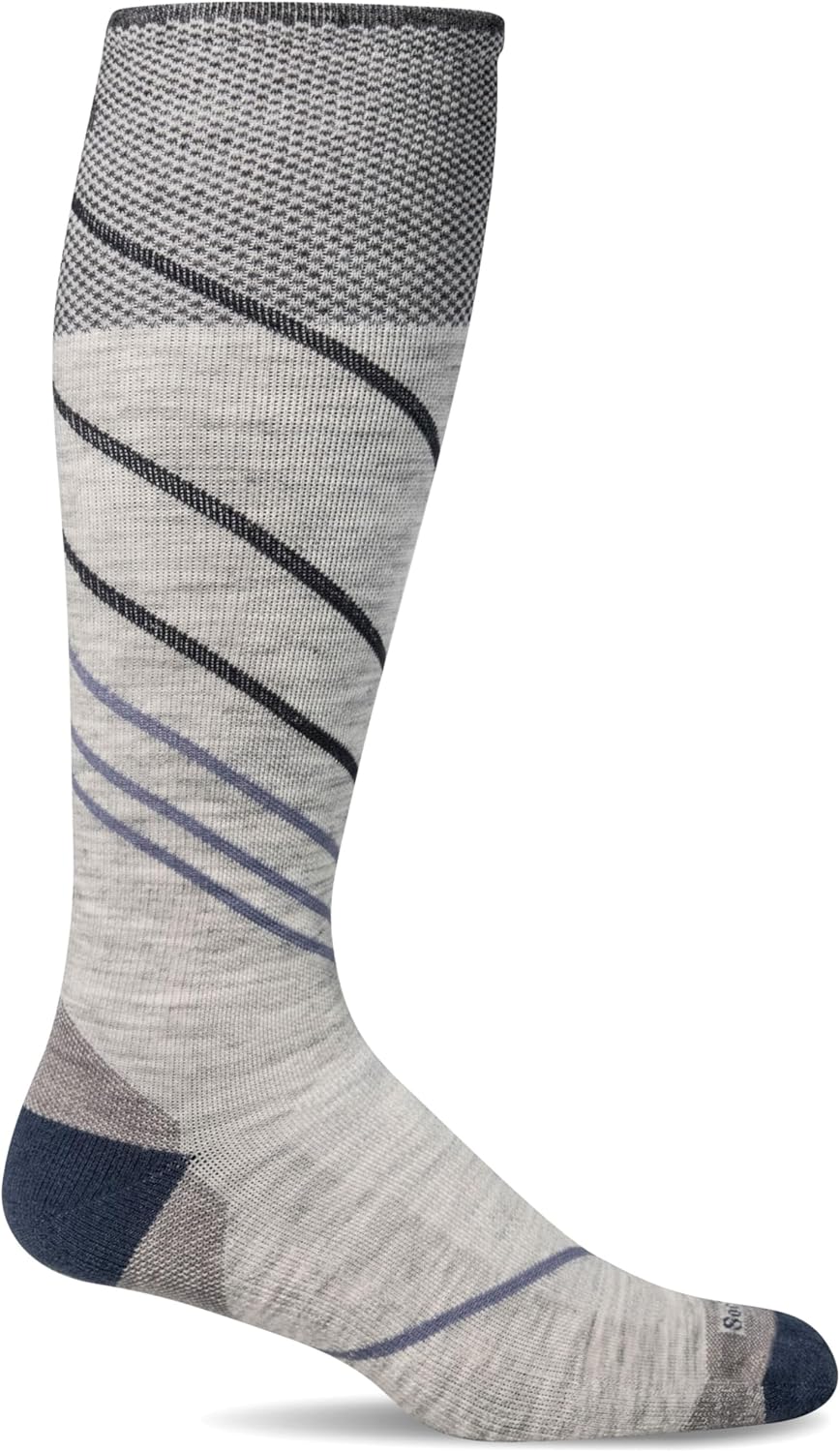
The Pulse is the pick from Sockwell's men's range, and the over-the-calf cut is the reason. It sits high enough to stay put under work trousers or a suit without the constant hitching a shorter sock demands, which sounds minor and is not when you are wearing them five days a week. The knit is finer than the Elevation, so it works under a dress shoe as well as a boot, which meaningfully widens where you can wear it. Same merino advantage, same firm graduated compression. Its review base is smaller than the Circulator's but healthy at over six hundred. The colour range is plain compared with Sockwell's women's line, which is either a drawback or the entire point depending on who is buying.
Pros
- Over-the-calf cut stays put under trousers
- Finer knit works under dress shoes as well as boots
- Merino handles long days in enclosed footwear
- Healthy review base for a men's compression sock
Cons
- Plain colourways
- Narrow through the calf, like the rest of the range
- Premium price
Best for work boots
Sockwell Men's Elevation Firm Graduated Compression
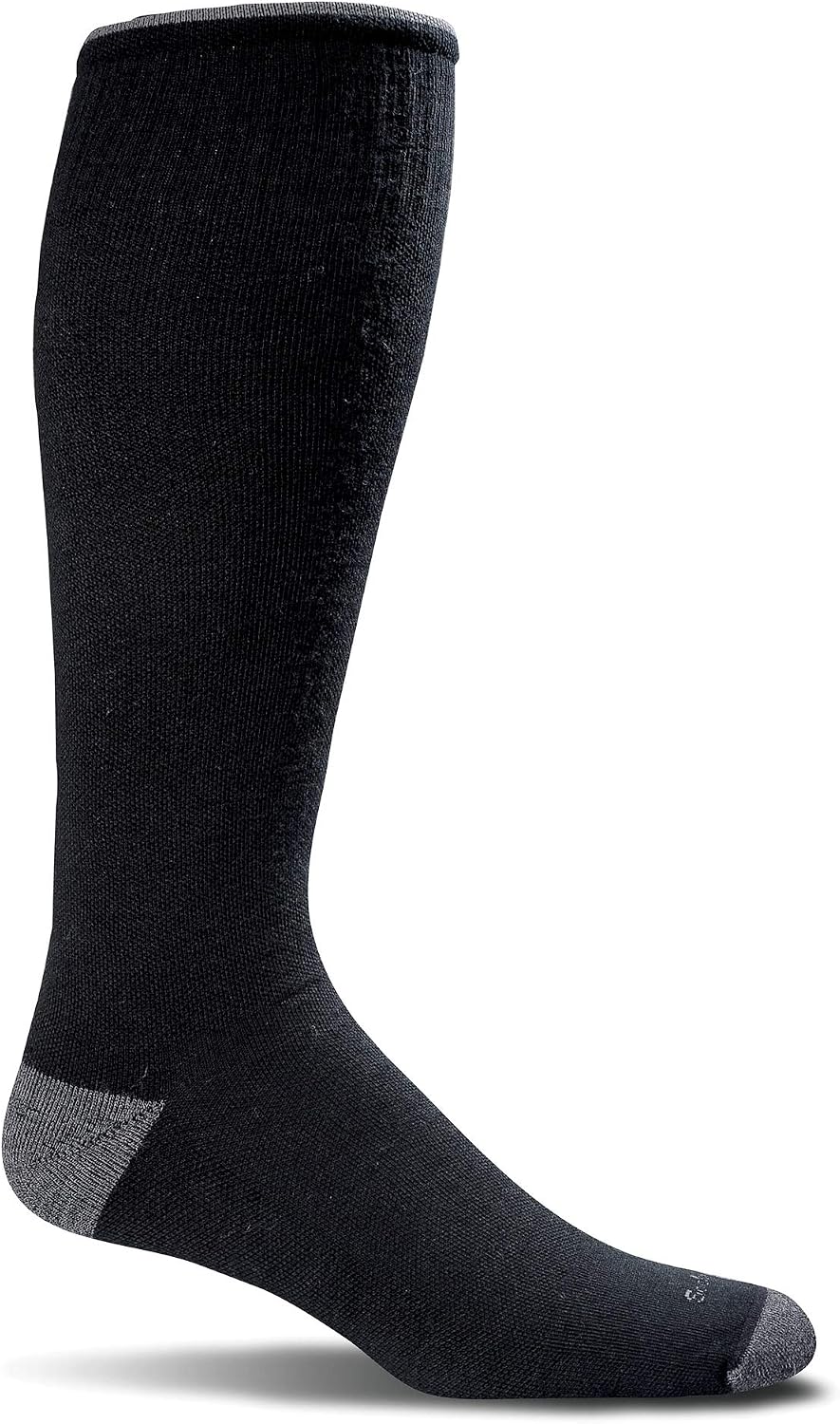
The men's Elevation is the chunkier of Sockwell's two men's firm options, and that is exactly what you want inside a work boot. The heavier knit adds cushioning underfoot that the finer Pulse does not, which matters if you are on concrete in steel toes rather than on a ward floor in trainers. With nearly two thousand reviews it has the longest track record in the men's range. It scores lowest here on fit, and that is the honest weak point: Sockwell's men's sizing runs narrow through the calf, and this is the sock most likely to leave a trench below the knee on a muscular leg. If that describes you, no amount of merino compensates, and a wider-cut brand is the better purchase.
Pros
- Heavier knit adds real cushioning inside a boot
- Nearly two thousand owner reviews
- Firm 20-30 mmHg with the merino advantage
Cons
- Narrowest fit in the range through the calf
- Too chunky for dress shoes
- No wide calf option
Best low-profile option
Sockwell Women's Elevate Micro Moderate Compression
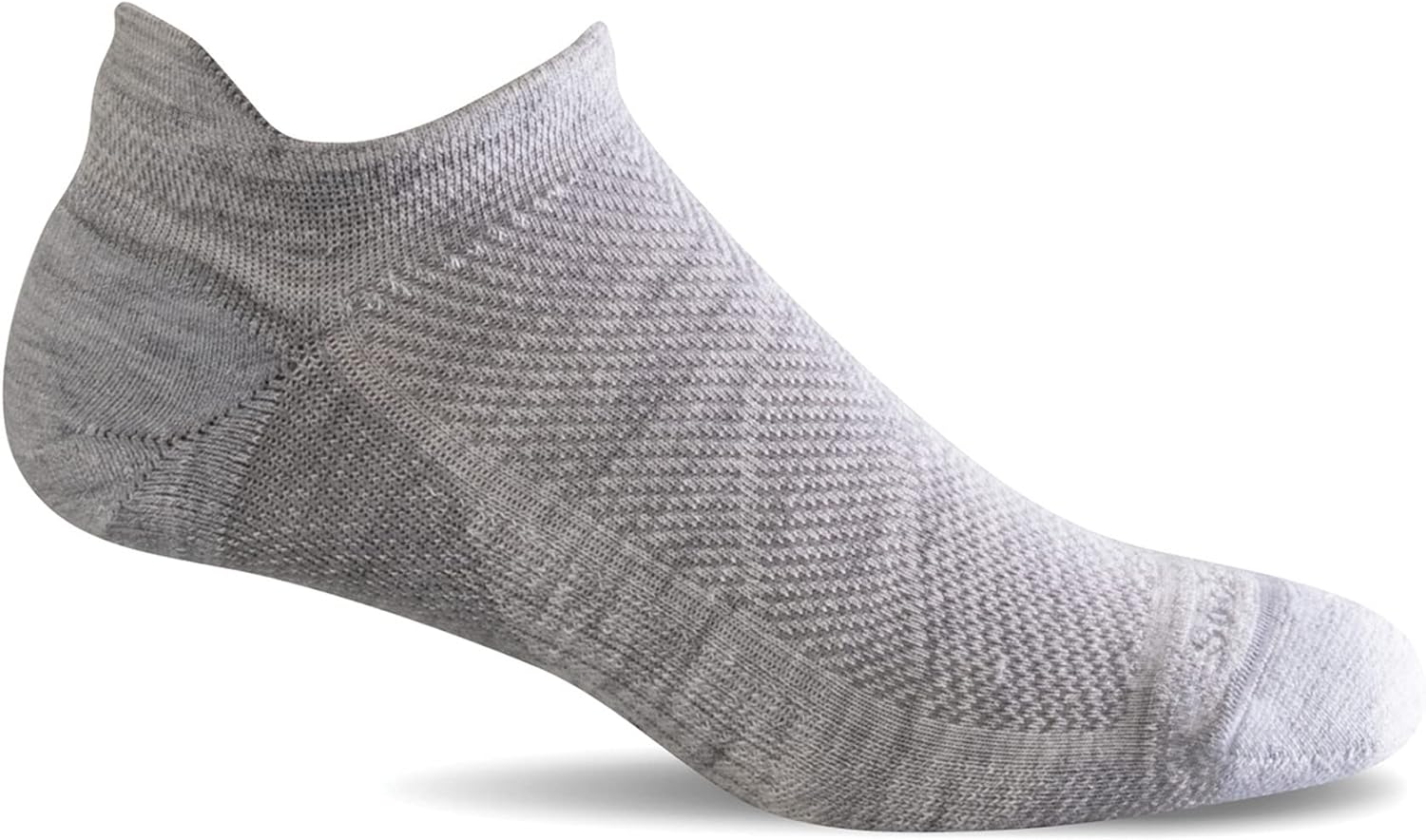
The Elevate Micro is the one to know about if a crew-height compression sock is not what you want to be wearing. It is a micro crew, sitting just above the ankle, at moderate 15-20 mmHg with the same merino blend as the rest of the range. That height makes it the Sockwell you can wear with trainers, loafers or ankle boots without it announcing itself, which is a genuine gap the crew models leave. The honest caveat is a structural one rather than a quality one: a shorter sock covers less of the calf, so it does less about calf and upper-leg heaviness than the Circulator does. Buy it for foot and ankle swelling and for wearability, not as a substitute for a knee-high. Its review base is the smallest of the five here at just over fifty.
Pros
- Micro crew height works with low-cut shoes
- Same merino blend as the rest of the range
- Moderate 15-20 mmHg is easy to wear daily
Cons
- Covers less calf, so less effect on upper-leg heaviness
- Smallest review base of the Sockwells here
- Premium price for a short sock
Also worth considering
Strong, well-reviewed products that just missed our ranked list - worth a look if the picks above aren't quite right for you.
- VIM & VIGR 15-20 mmHg Cotton, Wide Calf - The honest answer if Sockwell does not fit your calves. VIM & VIGR build wide calf as a real size class rather than stretching a standard sock, which is the one thing Sockwell does not offer at any price.
- Truform 20-30 mmHg Knee High - If you want firm compression and Sockwell's price is the obstacle, Truform delivers the same pressure with a much wider size range for a fraction of the cost. Plainer and warmer, but far better evidenced.
- Comrad CloudCotton Knee High 15-20 mmHg - The closest competitor to the Circulator on comfort. Cotton rather than merino, so it runs warmer over a full shift, but many people find it the more pleasant sock against skin.
Frequently asked questions
What is the difference between Sockwell Moderate and Firm?
Moderate is 15-20 mmHg and Firm is 20-30 mmHg. Moderate suits standing all day, travel and recovery, and is far easier to put on. Firm is the tier associated with visible varicose veins and persistent swelling, and is usually chosen on clinical advice. The construction and merino content are broadly similar; the pressure is what changes.
Is Sockwell Circulator or Elevation better?
Different jobs. The Circulator is moderate 15-20 mmHg and is the better everyday and shift sock. The Elevation is firm 20-30 mmHg and is the one to buy if you need that level. If you are choosing without a clinical reason to go firm, the Circulator is the more sensible purchase and the one more people keep wearing.
Are Sockwell socks really merino wool?
They are a merino blend rather than pure wool, typically around 30 percent merino with rayon from bamboo, stretch nylon and spandex making up the rest. Pure merino would not hold graduated compression, since the elastic fibres are what generate the pressure. The merino content is enough to deliver the temperature regulation and odour resistance that distinguishes them from nylon socks.
Do Sockwell socks run small?
They run narrow through the calf rather than small overall. Sockwell does offer a Wide Calf Series with roughly 15 to 20 percent more stretch in the leg, but it is women's styles at moderate 15-20 mmHg only, so there is no wide option for men or at firm 20-30 mmHg. If your calf measurement sits near the top of a size band, size up; if it exceeds the band, move to the wide calf fit where one exists and to another brand where it does not.
Can you machine wash Sockwell compression socks?
Wash cool on a gentle cycle without fabric softener, which coats and degrades the elastic fibres. Air dry rather than tumble dry, since heat is what kills the compression fastest. This is why owning three pairs is the practical recommendation with any merino compression sock.