Knee Pain From Standing All Day: Causes and What Helps
Why knees ache and stiffen after a standing shift, why locking your knees is the usual culprit, what helps at work and afterwards, and the knee symptoms that need assessment rather than another product.
Knees are the joint people least expect to hurt from standing, because nothing has hit them and they have not gone anywhere. The cause is usually not how long you stood but how you stood.
Locking your knees is the problem
Watch anyone standing still for a long time and most of them settle into locked knees. It feels like the least effortful way to stand, and in the short term it is, because it lets you hang on the joint structures instead of holding yourself up with muscle.
That is exactly why it hurts later.
Locking parks your body weight on the joint rather than sharing it with the quadriceps and glutes that should be carrying some of it. It also holds the knee at the very end of its range for hours, and it compresses the same contact surfaces continuously rather than rotating through different ones.
There is a second issue. Cartilage has no blood supply of its own. It gets what it needs from joint fluid, and that fluid circulates when the joint moves. A knee held rigid for eight hours is a knee getting less of what keeps it healthy. This is why knees often feel stiff rather than sharply painful after a standing shift, and why the first few steps after standing still feel worse than walking does.
Add a floor with no give, and the load returned by every step and every minute has nowhere to go but up through the joint. Concrete is the hardest case.
The fix at work is a stance, not a purchase
Stand with a very slight bend in the knees, and change position often.
That is genuinely most of it. A soft knee shares load with muscle instead of dumping it on the joint, and it keeps the calf pump available rather than shutting it down.
Then break up the static loading:
- Shift your weight between feet every few minutes
- Rest one foot on a low box or rail and swap every ten to fifteen minutes, which helps knees and lower back at once
- Bend and straighten gently through a small range now and then, which moves fluid through the joint
- Walk during breaks rather than sitting
None of that costs anything, and it addresses the mechanism rather than padding around it.
What is worth buying
If you stay in one spot: the surface
An anti-fatigue mat helps knees for the same reason it helps feet and backs. Its slight instability means you are constantly making small adjustments instead of locking in, which is exactly what a joint that dislikes stillness wants. It also absorbs some of what a rigid floor would otherwise return to you.
If you move around: support underneath
A collapsing arch rolls the foot inward, which rotates the lower leg, which changes the alignment the knee is tracking through. Supporting the arch interrupts that chain before it reaches the joint.
Structured support does more here than soft cushioning. Very soft shoes feel good early and then let the arch drop, which is the thing you were trying to prevent. Insoles are the cheap version if your shoes are otherwise sound; if the midsole is over a year old and worn full time it is probably collapsed, and our women’s and men’s roundups score support explicitly.
What will not do much
Knee sleeves and braces feel supportive and mostly provide warmth and proprioceptive feedback. They do not correct alignment and they do not address static loading. Not harmful; not the fix.
Extra cushioning treats impact, and standing still is not an impact problem.
Pain behind the knee deserves a separate note
Aching behind the knee after standing is often tight hamstrings and calf muscles where they cross the back of the joint, which is common in people who stand with locked knees. It can also be a swelling at the back of the joint.
The back of the knee is also where a serious circulation problem can show up. Pain behind one knee together with calf swelling, warmth, redness or tenderness should be assessed promptly. That combination is not one to stretch out and monitor.
If your legs also feel heavy and your ankles swell by evening, that is fluid pooling from static standing, and why your legs hurt from standing covers what actually helps.
When to get it looked at
Ordinary knee stiffness after a long shift settles overnight. Get advice if the knee:
- Locks, catches or gives way
- Is swollen, hot or red
- Will not take your weight
- Followed a specific twist or injury
- Wakes you at night
And seek prompt assessment for pain behind one knee with calf swelling or tenderness.
We review products and we are not clinicians. Persistent knee pain deserves someone examining the joint rather than another mat, insole or sleeve.
How we test
Every pick is scored on the same five criteria and cross-checked against real owner feedback - so the ranking reflects how a product holds up over a full shift, not its spec sheet.
Support
Whether graduated compression actually matches its stated mmHg rating, or, for mats and insoles, how much load it takes off your legs.
Comfort
All-day wearability: no bite at the cuff, no hotspots, breathable enough for a full shift.
Durability
Whether it holds compression or loft after repeated washing and months of daily use.
Fit
Size range, calf-width options, and how honest the sizing chart is against real owner reports.
Value
What you get for the price, including cost per wear once durability is accounted for.
Best for a fixed standing spot
ComfiLife Anti Fatigue Floor Mat, 20 x 32 inch
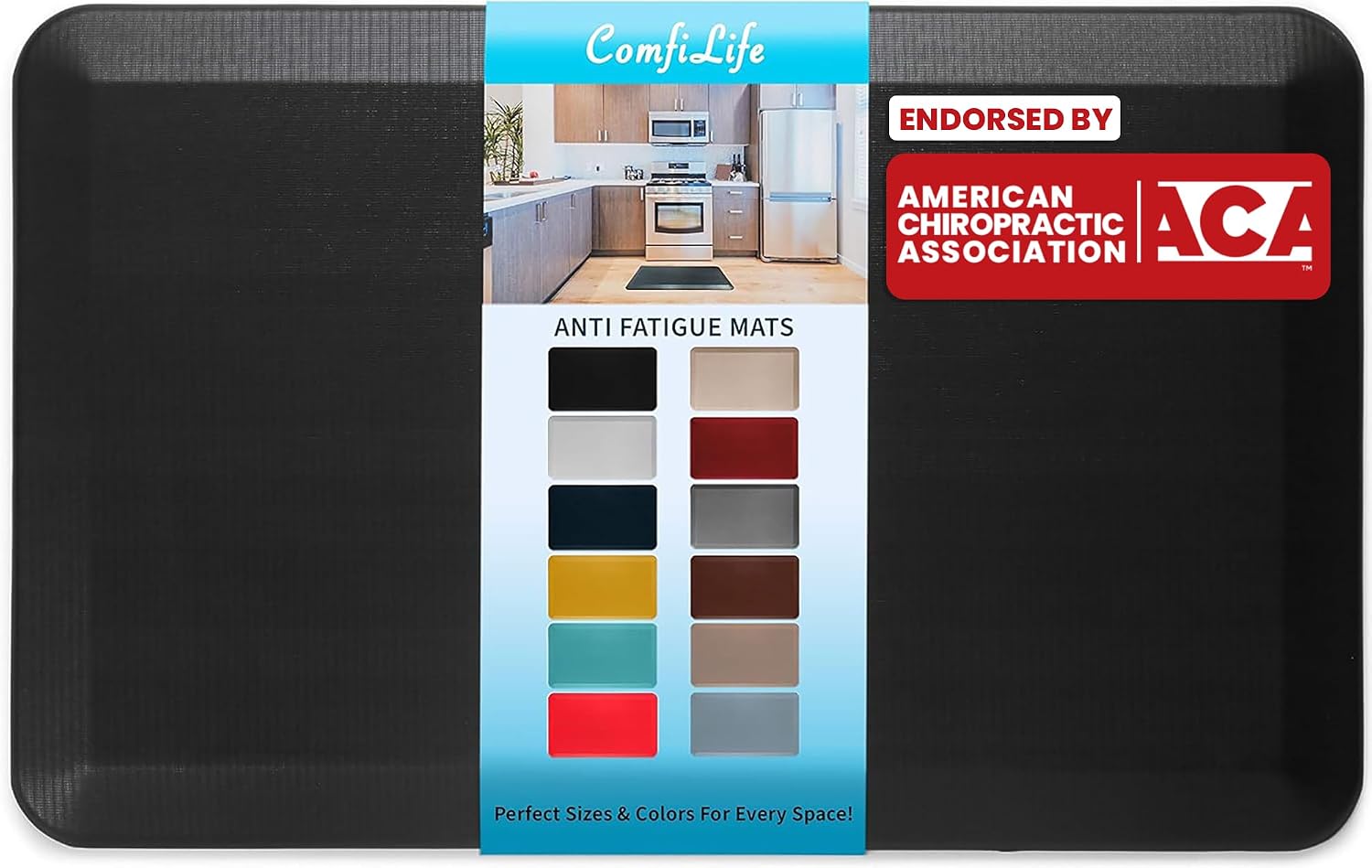
A knee dislikes being held still, and a mat makes you move without thinking about it. The constant small corrections keep the joint cycling gently rather than locking, which is the mechanism behind most standing knee ache.
Pros
- Right size and lower price for a fixed standing spot
- Same 4.8 star foam as the longer version
- Easy to lift, move and store
Cons
- Too short if you move between stations
- No advantage over the 39 inch beyond price and storage
- Single firmness option
Best for changing position
Topo by Ergodriven
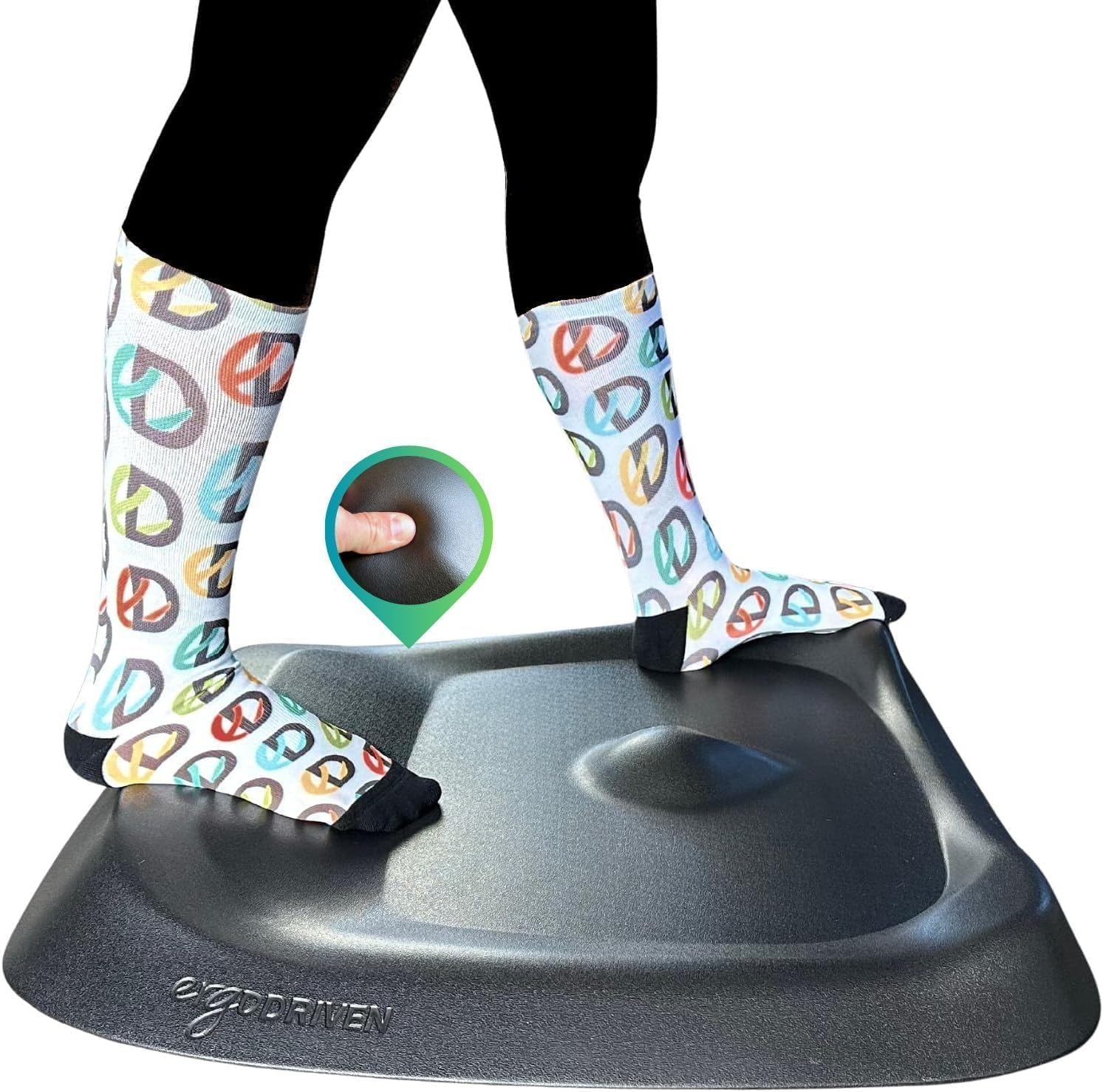
The most useful mat here for knees specifically, because the terrain gives you edges and mounds to move between. That is exactly what a joint held at one angle for hours is short of.
Pros
- Terrain design keeps giving you new standing positions, not just cushioning
- Very dense foam that resists compression over years
- Built-in calf and arch stretch points
- PVC free
Cons
- Most expensive mat on this list by a wide margin
- Bulky and awkward to move aside when you want to sit
- Wrong shape and look for a kitchen
Best support underneath
Superfeet All-Purpose Wide-Fit Support Insoles
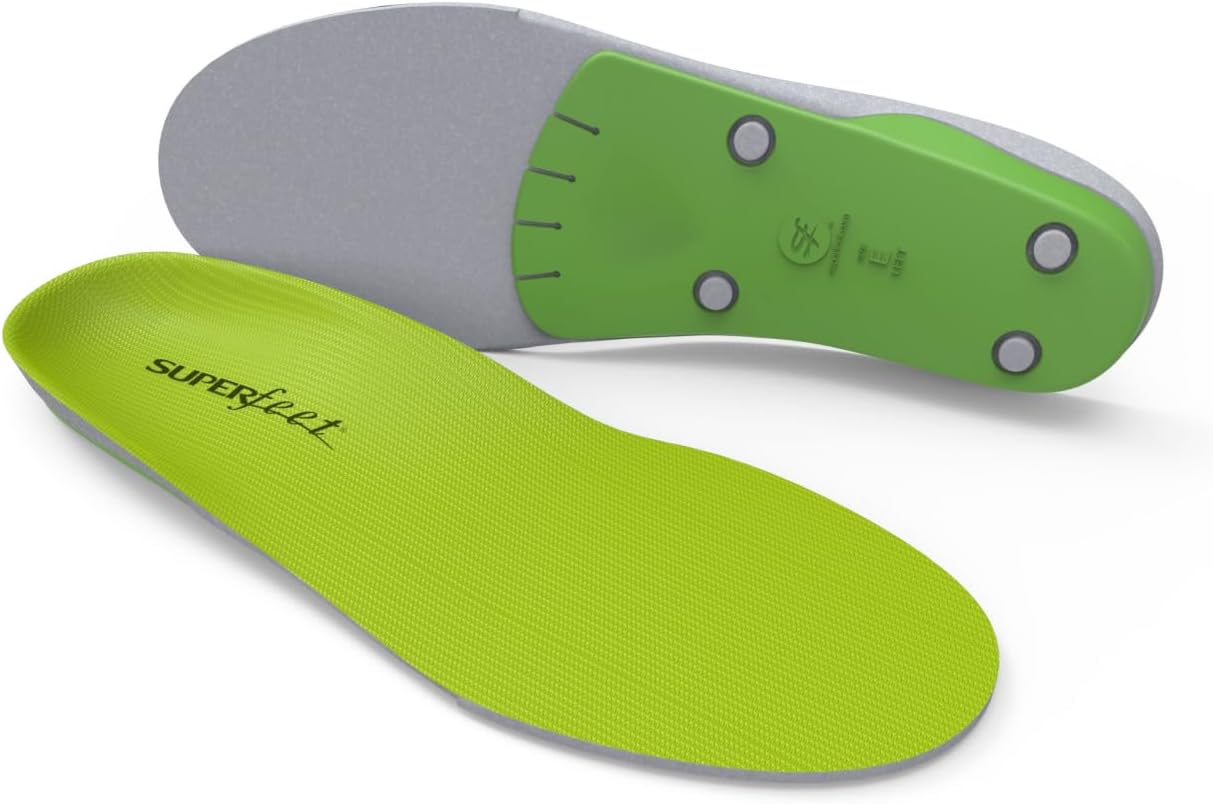
A collapsing arch rotates the lower leg, which changes the alignment the knee tracks through. Supporting the arch interrupts that chain before it reaches the joint. Structured support does this; soft cushioning does not.
Pros
- Firm structural shell genuinely holds the arch all day
- Cut for wide feet, which most insoles are not
- Far more durable than foam or gel
- Over four thousand owner reviews
Cons
- Firm feel takes a week or two to adjust to
- Needs a shoe with a removable factory insole
- Most expensive option here
Best easy-on supportive shoe
Skechers Foamies Arch Fit Clog
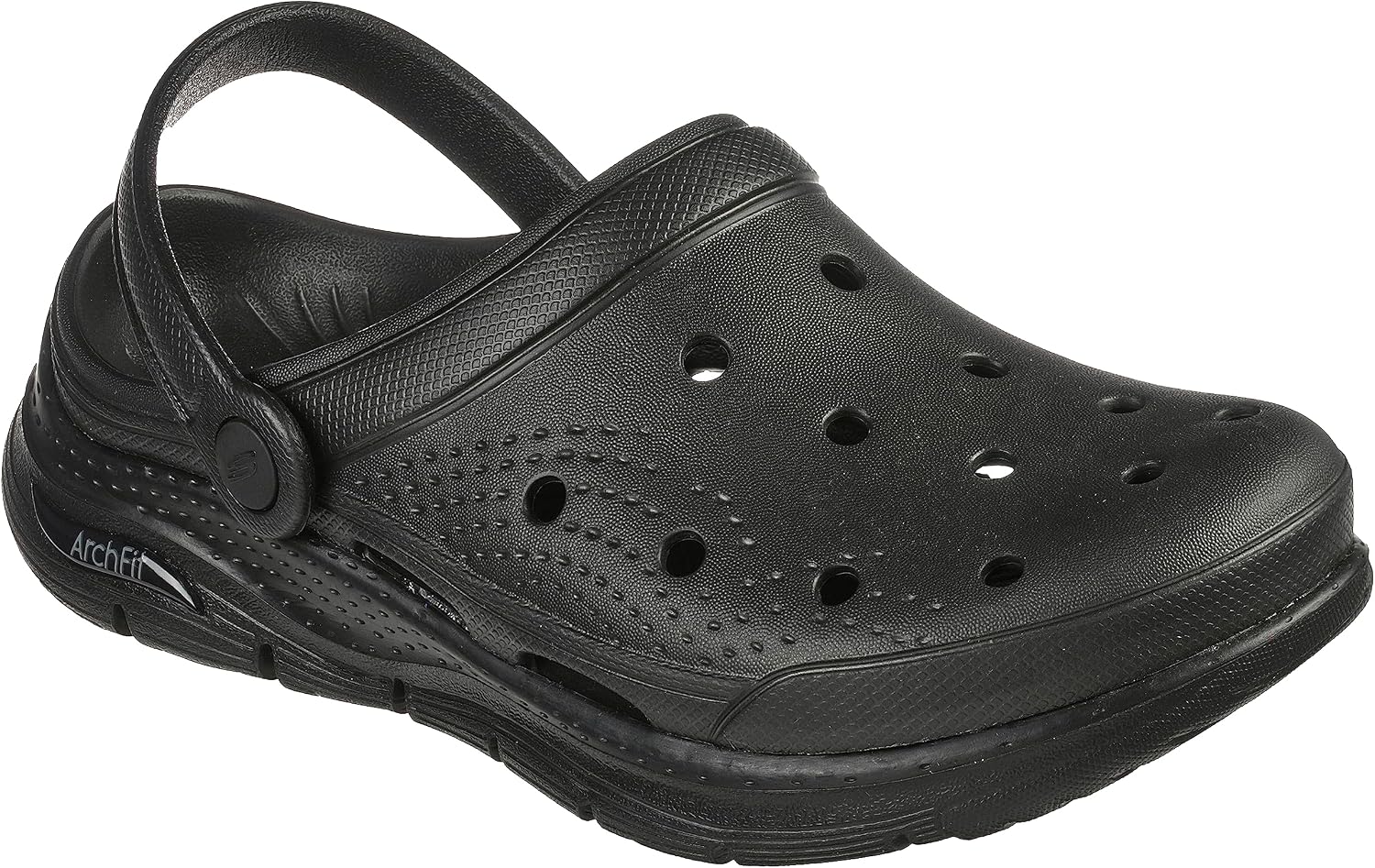
A contoured arch footbed rather than flat foam, in something you can step into. Support underfoot matters more for knees than cushioning does, and this has the former rather than only the latter.
Pros
- Contoured Arch Fit footbed rather than flat foam
- Almost weightless and completely washable
- Cheap enough to replace on a schedule
Cons
- Foam compresses permanently and will not last like leather
- Warmer than it looks over a long shift
- Smallest review base here, so durability is less certain
Best if legs feel heavy too
Sockwell Women's Circulator Moderate Graduated Compression
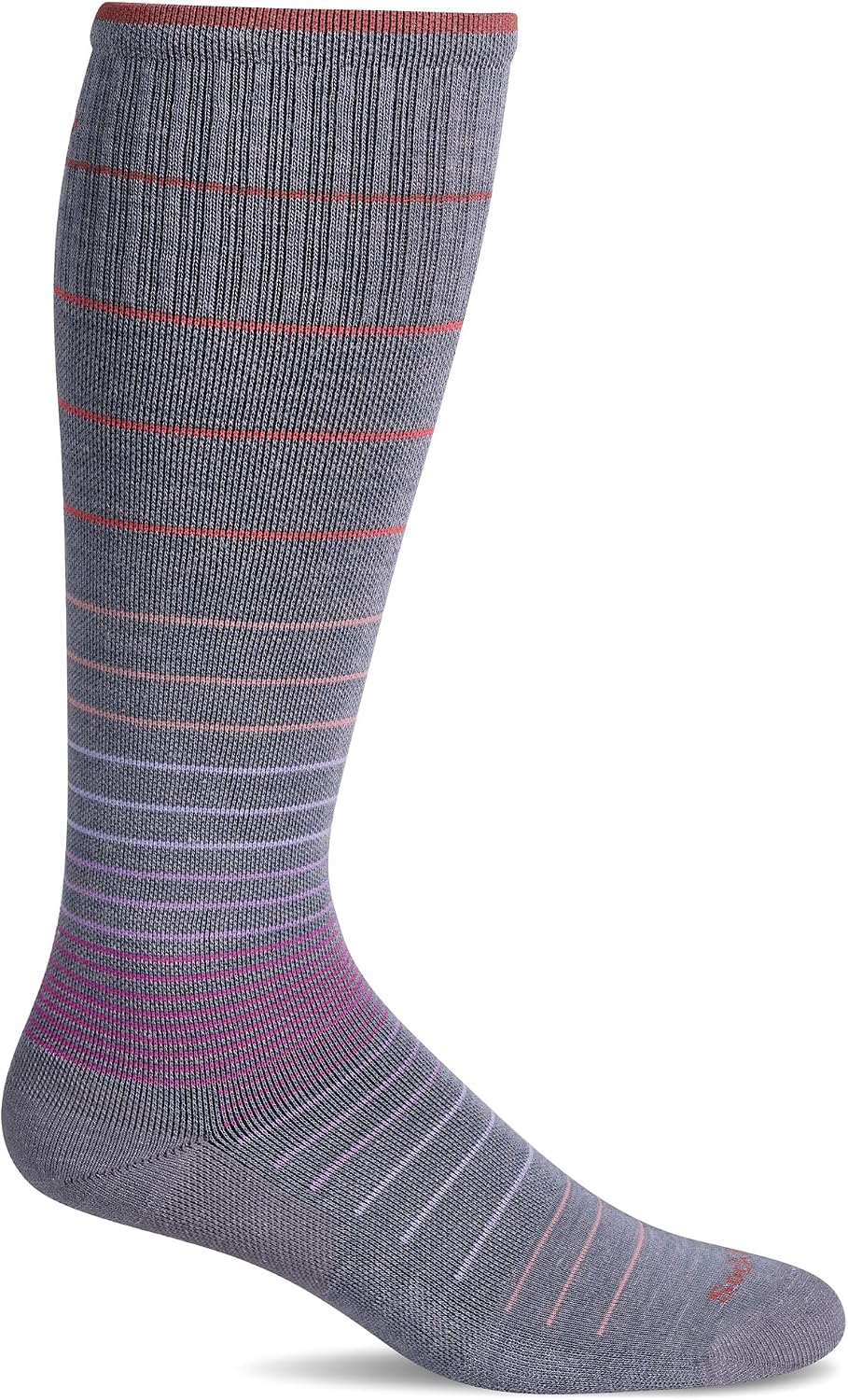
Locked knees also impede the calf pump, so knee ache and heavy legs often arrive together. If your ankles swell by evening, compression addresses that half while the mat and the shoes address the joint.
Pros
- 15-20 mmHg is the right level for standing, travel and recovery
- Nearly five thousand owner reviews, the strongest in the range
- Merino blend manages heat and odour over a long day
- Easy enough to don that it gets worn consistently
Cons
- Premium price, and three pairs is the realistic requirement
- Air dry only
- Not firm enough if you have been told to wear 20-30 mmHg
Also worth considering
Strong, well-reviewed products that just missed our ranked list - worth a look if the picks above aren't quite right for you.
- Timberland PRO Anti-Fatigue Technology Insole - Built for the inside of a work boot, and a middle ground if the Superfeet feels too rigid.
- KANGAROO Cushioned Anti Fatigue Mat - A cheaper cushioned mat, worth considering if you need to cover more than one standing position.
- Dr. Scholl's Work All-Day Superior Comfort Insoles (Women's) - The cushioned women's option if your complaint is bruised soles alongside the knees rather than arch collapse.
Frequently asked questions
Why do my knees hurt after standing all day?
Usually because of how you are standing rather than how long. Most people lock their knees when standing still, which parks body weight on the joint structures instead of sharing it with the muscles around them, and holds the joint at one end of its range for hours. Cartilage relies on movement to circulate the fluid that nourishes it, so a static joint gets less of what it needs. Add a hard floor with no give, and the load has nowhere to go but up through the knee.
Is it bad to lock your knees while standing?
For long periods, yes. Locking parks your weight on the joint and its ligaments rather than sharing it with the quadriceps and glutes, and it holds the knee at the extreme of its range for hours at a time. It also impedes the calf muscle pump, so it contributes to blood pooling in the lower legs. Standing with a very slight bend, and changing that position often, is far better than a locked, rigid stance.
What does pain behind the knee after standing mean?
It is often tightness in the hamstrings and calf muscles where they cross behind the joint, particularly if you stand with locked knees. It can also come from a swelling at the back of the joint. Because the back of the knee is also where a serious circulation problem can present, pain behind one knee that comes with calf swelling, warmth, redness or tenderness should be assessed promptly rather than stretched and ignored.
Do anti-fatigue mats help knee pain?
They help, for the same reason they help feet and backs: a mat is slightly unstable, so you make constant small adjustments rather than locking into one position, and it is that continuous small movement that knees want. It also removes some of the impact a rigid floor returns to you. It is not a treatment for a knee problem, but for ordinary aching from static standing it is the highest-value single change if you stay in one spot.
When should I see someone about knee pain from standing?
See someone if the knee locks, catches or gives way, if it is swollen, hot or red, if you cannot put weight on it, if the pain followed a specific twist or injury, or if it wakes you at night. Also get advice for pain behind one knee accompanied by calf swelling or tenderness, which needs prompt assessment. Ordinary aching that settles overnight after a long shift is a different thing.