Why Your Legs Hurt From Standing All Day (and What Actually Helps)
Why legs ache, feel heavy and swell after a standing shift, how leg pain differs from foot pain and needs a different fix, what genuinely reduces it, and the warning signs that need a clinician rather than a purchase.
Leg pain from standing has a different cause from foot pain, and it needs a different fix. That distinction is worth getting right before you spend anything, because the products that solve one do very little for the other.
Sore soles are about the surface and the shoe. Heavy, aching legs are about circulation.
The calf pump, and why standing switches it off
Getting blood back up your legs is genuinely hard work. It has to travel upward against gravity, and your heart is not doing most of that job. Your calf muscles are.
Every time a calf muscle contracts it squeezes the deep veins running through it and pushes blood upward, and one-way valves stop it falling back. That is the calf muscle pump, and it is the main mechanism returning blood from your lower legs.
It only works when the muscles contract and relax. Walking runs the pump continuously. Standing still switches it off, because the muscles are holding a fixed position rather than cycling.
So blood and fluid pool below. That accumulation is what produces the specific set of symptoms people describe after a standing shift: heaviness, a full or tight feeling in the lower legs, aching that is hard to point at, and ankles that are visibly puffier than they were that morning.
This is also why standing still is harder on your legs than walking a similar number of hours, which surprises people who assume the more active job must be the tougher one.
Heavy is fluid; stiff is muscle
Two different complaints get lumped together, and separating them tells you which fix to reach for.
Heavy, full, swollen is fluid. It builds through the shift, is worst by evening, is usually symmetrical, and improves overnight when you lie down. Compression and elevation address it.
Stiff, tight, achy is muscle holding one position for hours without moving through its range. Movement and stretching address it, and compression does comparatively little.
Most people standing all day have some of both.
What actually helps
Compression, worn during the shift
This is the one case where compression socks are unambiguously the right tool, and where the evidence is strongest. Graduated compression is firmest at the ankle and eases up the calf, which works against fluid pooling exactly where gravity is worst.
The critical detail: they work while you wear them. Putting them on after work, when the fluid has already accumulated, is largely closing the gate after the horse has gone. They go on before the shift.
For most people standing without a diagnosed condition, 15-20 mmHg is the right level, and going firmer is not better. The mmHg guide covers that decision properly, because it matters considerably more than which brand you buy. Our general roundup covers the field, and there are separate lists for women and men where calf sizing and fit differ.
If you work long shifts specifically, the nurses and twelve-hour shift guide explains why material matters more than compression level once you are past about eight hours, and if you are unconvinced by the category at all, we went through the evidence.
Movement, which restarts the pump
Free, and it addresses the mechanism directly rather than compensating for it.
- Calf raises. Ten slow ones, several times a shift. This is the pump, operated manually.
- Shift your weight between feet every few minutes rather than planting.
- Rest one foot on a low rail or box and swap regularly.
- Walk during breaks instead of sitting. Sitting does not restart the pump; walking does.
Elevation, afterwards
Fifteen minutes with your feet above the level of your heart drains what accumulated during the day. Feet on a footstool does not count, because they are still below your heart. Legs up the wall does.
More on what helps once you are home in relieving sore feet after work.
The surface, if you stand in one spot
An anti-fatigue mat helps legs as well as feet, and not mainly by cushioning. Because a mat is slightly unstable, you make constant small postural corrections, which keeps the calf muscles cycling. It is movement you get without having to remember to do it.
If you stand on concrete, the effect is larger, because a rigid floor encourages planting and holding more than any other surface.
What will not help much
Cushioned shoes. They address the sole, not circulation. Worth having, wrong tool for this.
Massage guns and rollers on the calves. Pleasant, mildly useful for stiffness, and they do nothing about fluid that is there because the pump was idle for eight hours.
Putting compression socks on when you get home. Too late to prevent the pooling that already happened.
Signs it is not ordinary standing fatigue
Ordinary leg fatigue from standing is roughly symmetrical and settles overnight. Depart from either of those and it deserves attention rather than a purchase.
Seek prompt medical advice for:
- Pain, swelling, warmth or redness in one leg only, particularly the calf
- Calf pain tender to the touch that came on without an obvious cause
- Swelling that has not settled by morning
- Visible veins that become painful, or skin changes around the ankle
- Any leg symptoms alongside chest pain or breathlessness, which needs urgent attention
A one-sided, tender, swollen calf is the pattern most worth taking seriously, and it is not something to work through or self-treat.
If you have varicose veins specifically, firm 20-30 mmHg is a different category from the everyday socks above and is covered in our varicose vein stocking guide, including when compression is the wrong thing to reach for.
We review products and we are not clinicians. Compression levels here are product specifications, not medical recommendations, and anyone managing diabetes, peripheral arterial disease or a diagnosed venous condition should get the level from a clinician rather than from a roundup.
How we test
Every pick is scored on the same five criteria and cross-checked against real owner feedback - so the ranking reflects how a product holds up over a full shift, not its spec sheet.
Support
Whether graduated compression actually matches its stated mmHg rating, or, for mats and insoles, how much load it takes off your legs.
Comfort
All-day wearability: no bite at the cuff, no hotspots, breathable enough for a full shift.
Durability
Whether it holds compression or loft after repeated washing and months of daily use.
Fit
Size range, calf-width options, and how honest the sizing chart is against real owner reports.
Value
What you get for the price, including cost per wear once durability is accounted for.
Best overall for standing shifts
Sockwell Women's Circulator Moderate Graduated Compression
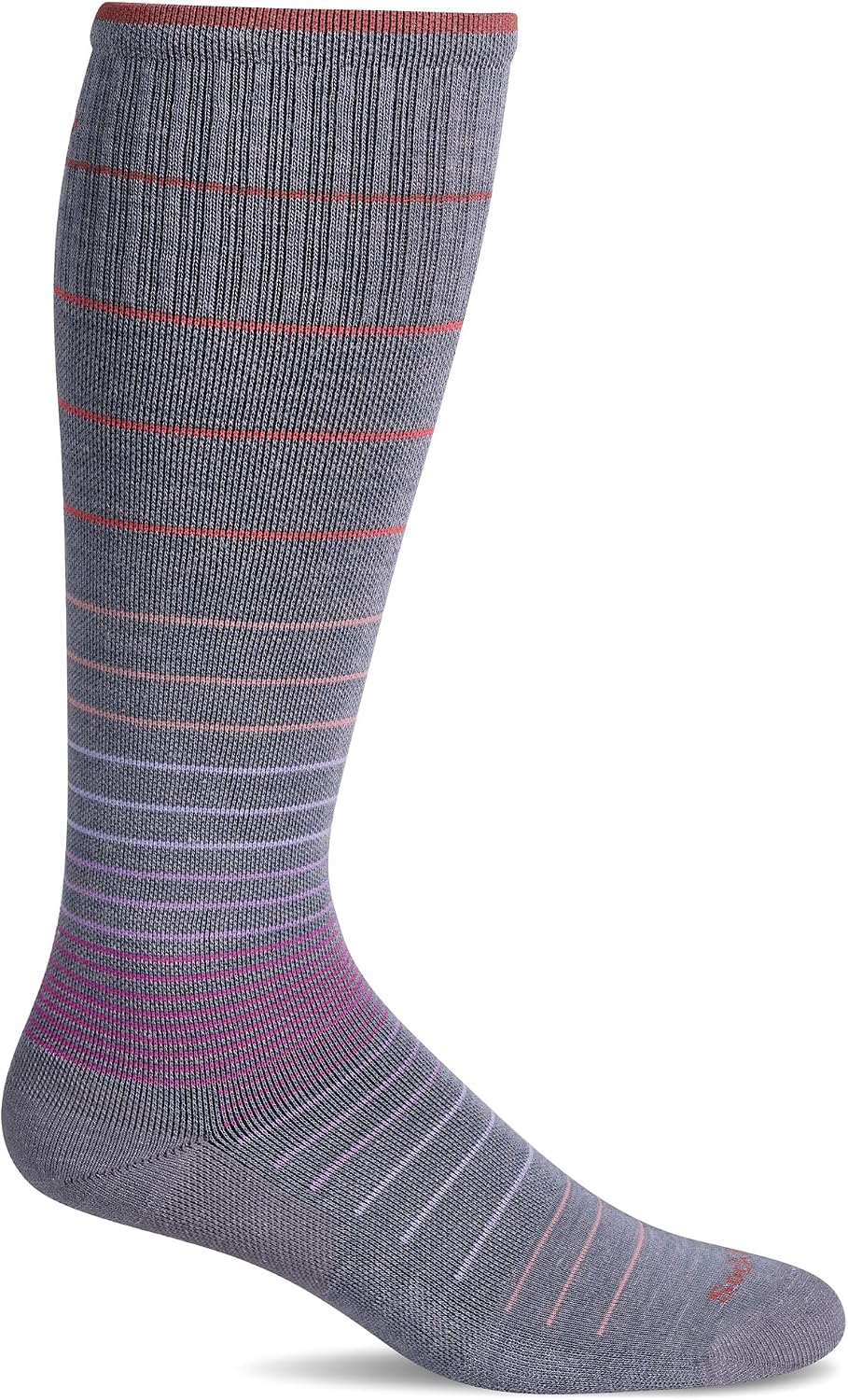
The right tool for this specific problem, at the right strength. 15-20 mmHg counteracts the fluid pooling that makes legs feel heavy, and the merino is what makes it tolerable past hour eight. It has to go on before the shift to do anything.
Pros
- 15-20 mmHg is the right level for standing, travel and recovery
- Nearly five thousand owner reviews, the strongest in the range
- Merino blend manages heat and odour over a long day
- Easy enough to don that it gets worn consistently
Cons
- Premium price, and three pairs is the realistic requirement
- Air dry only
- Not firm enough if you have been told to wear 20-30 mmHg
Most comfortable
Comrad CloudCotton Knee High
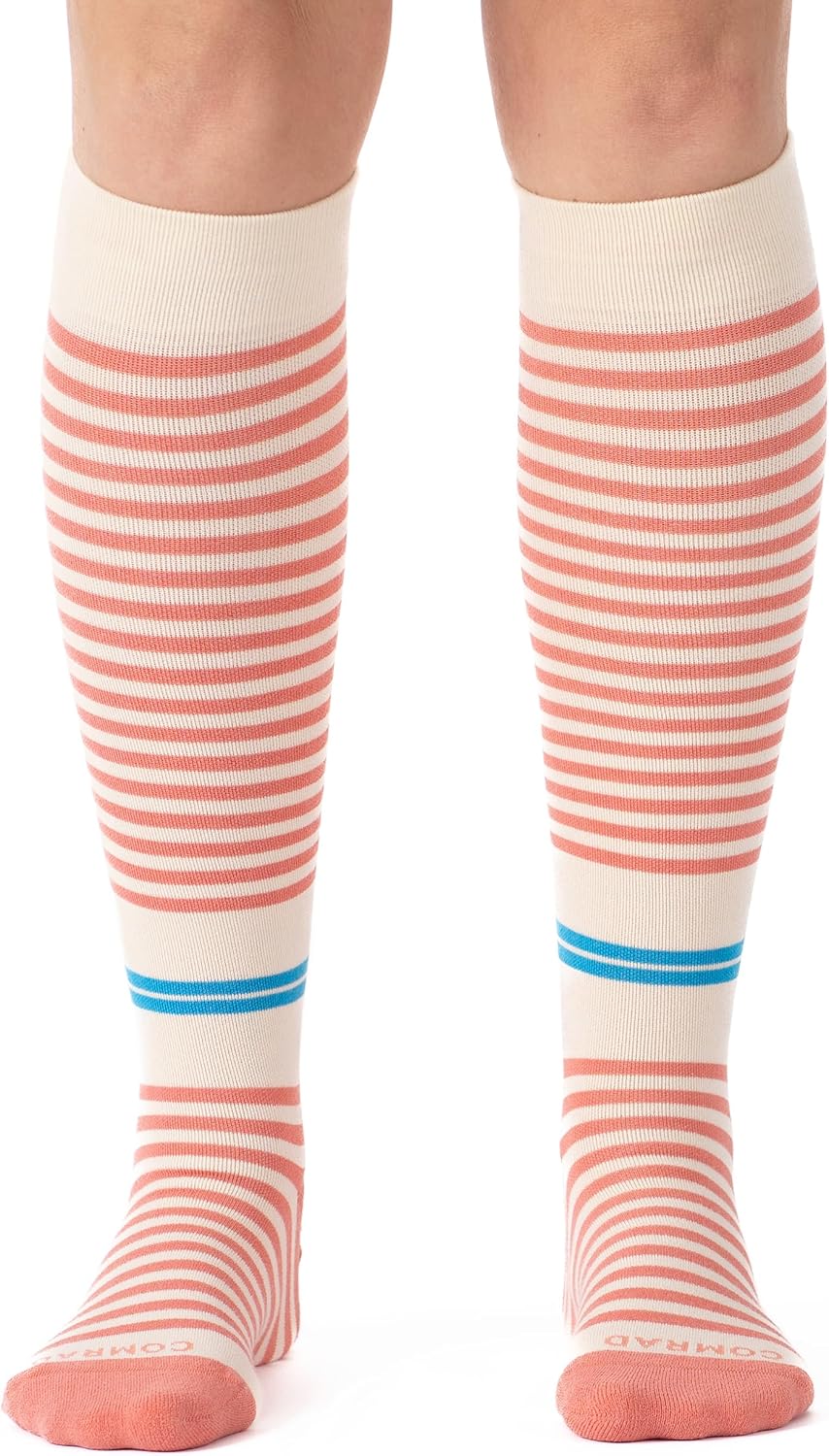
If you have tried compression and abandoned it, the material was probably the problem rather than the pressure. This feels like an ordinary sock, which is most of what decides whether a pair gets worn or ends up in a drawer.
Pros
- Genuinely comfortable, feels like a normal sock rather than a device
- Cotton blend is pleasant against skin and breathes well
- 15-20 mmHg is easy to get on, so it gets worn
- Sold as a single pair rather than forcing a multipack
Cons
- Premium price for an everyday compression level
- Shorter Amazon review history than the established names
- Not firm enough if you need 20-30 mmHg
Best for wide calves
VIM & VIGR 15-20 mmHg Cotton, Wide Calf
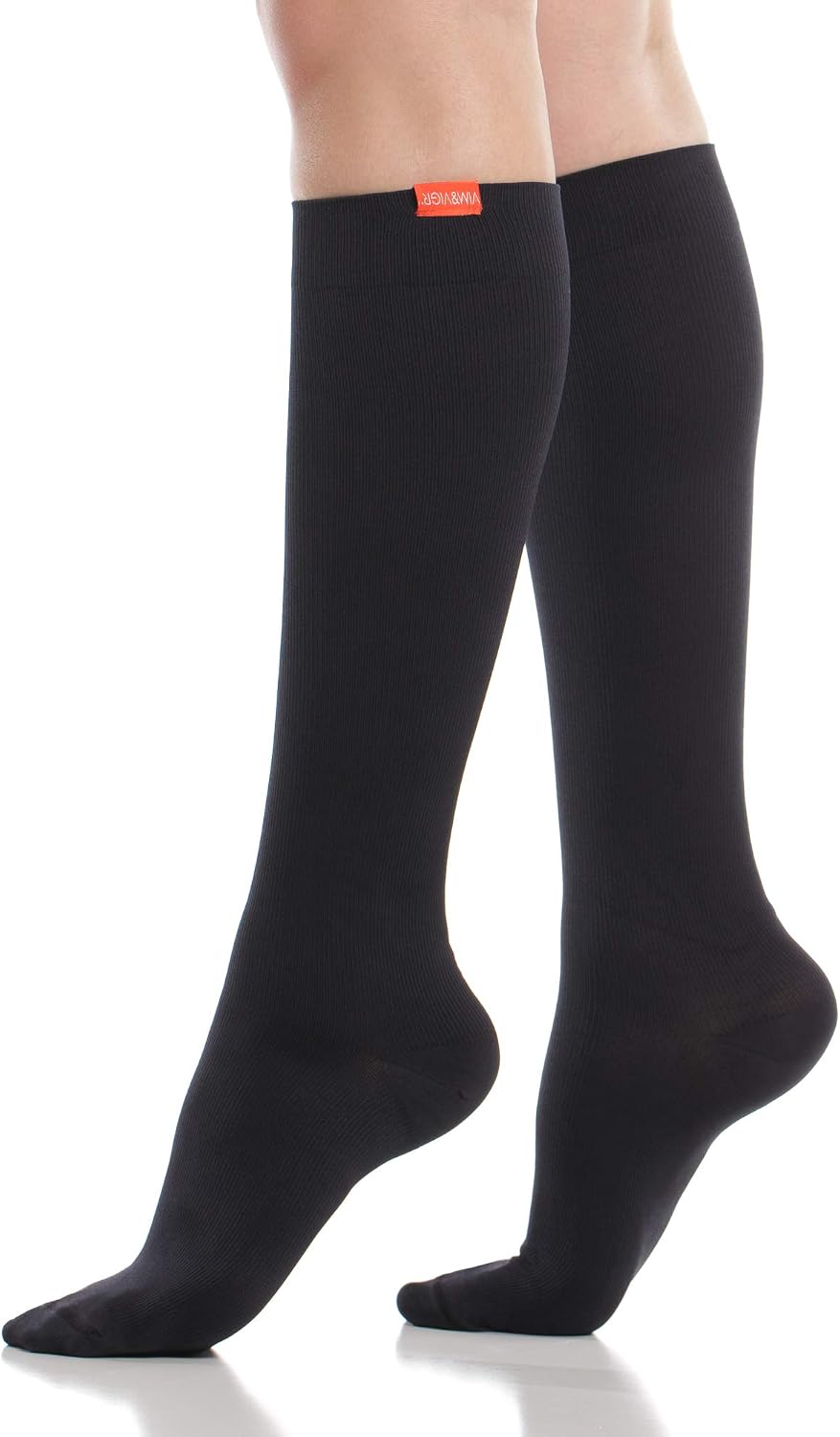
Calf circumference is the most common reason compression fails someone, and a standard cuff on a fuller calf leaves a trench below the knee. The fix is a proper wide-calf class at the same pressure, not a weaker sock.
Pros
- Wide calf engineered as a real size class, not a stretched standard
- Solves the most common compression sock complaint outright
- Comfortable cotton against skin
- Sold as a single pair
Cons
- 15-20 mmHg only in this variant, so no firm option for wide calves
- Cotton runs warmer than merino on long shifts
- Modest review count on the variant listing
Best value for a rotation
Run Forever Compression Socks 20-30 mmHg
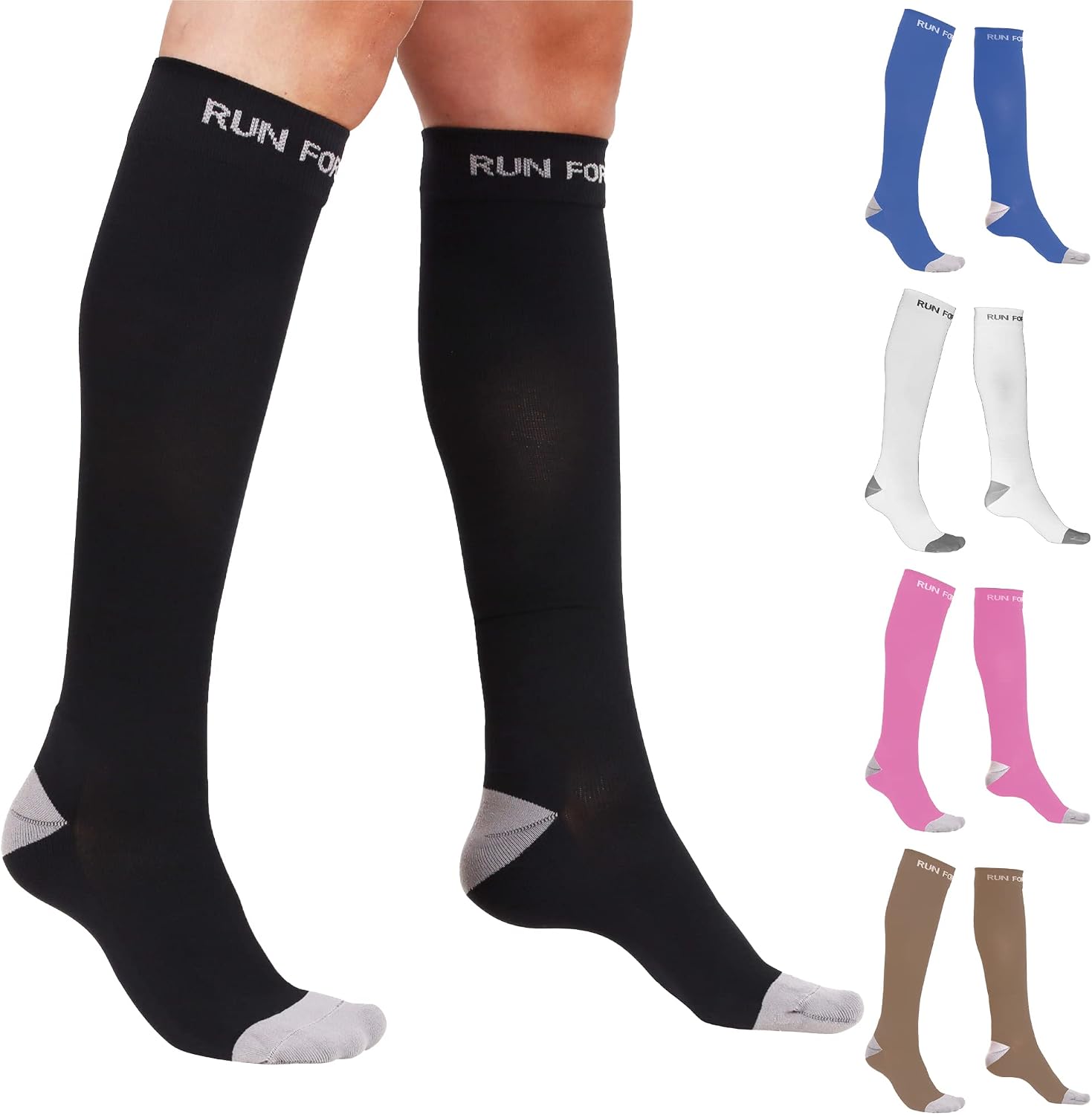
Compression is a consumable: elastane degrades with every wash, so you need three pairs and you replace them. That is expensive in premium merino. Run these as the bulk of a rotation alongside one better pair.
Pros
- Firm 20-30 mmHg at a price that makes a rotation realistic
- Generous unisex sizing accommodates wider calves
- Cheap enough to replace on schedule
Cons
- Nylon runs hot and holds odour
- Compression fades sooner than premium pairs
- Basic construction and limited colours
Best fix that is not a sock
ComfiLife Anti Fatigue Floor Mat, 20 x 32 inch
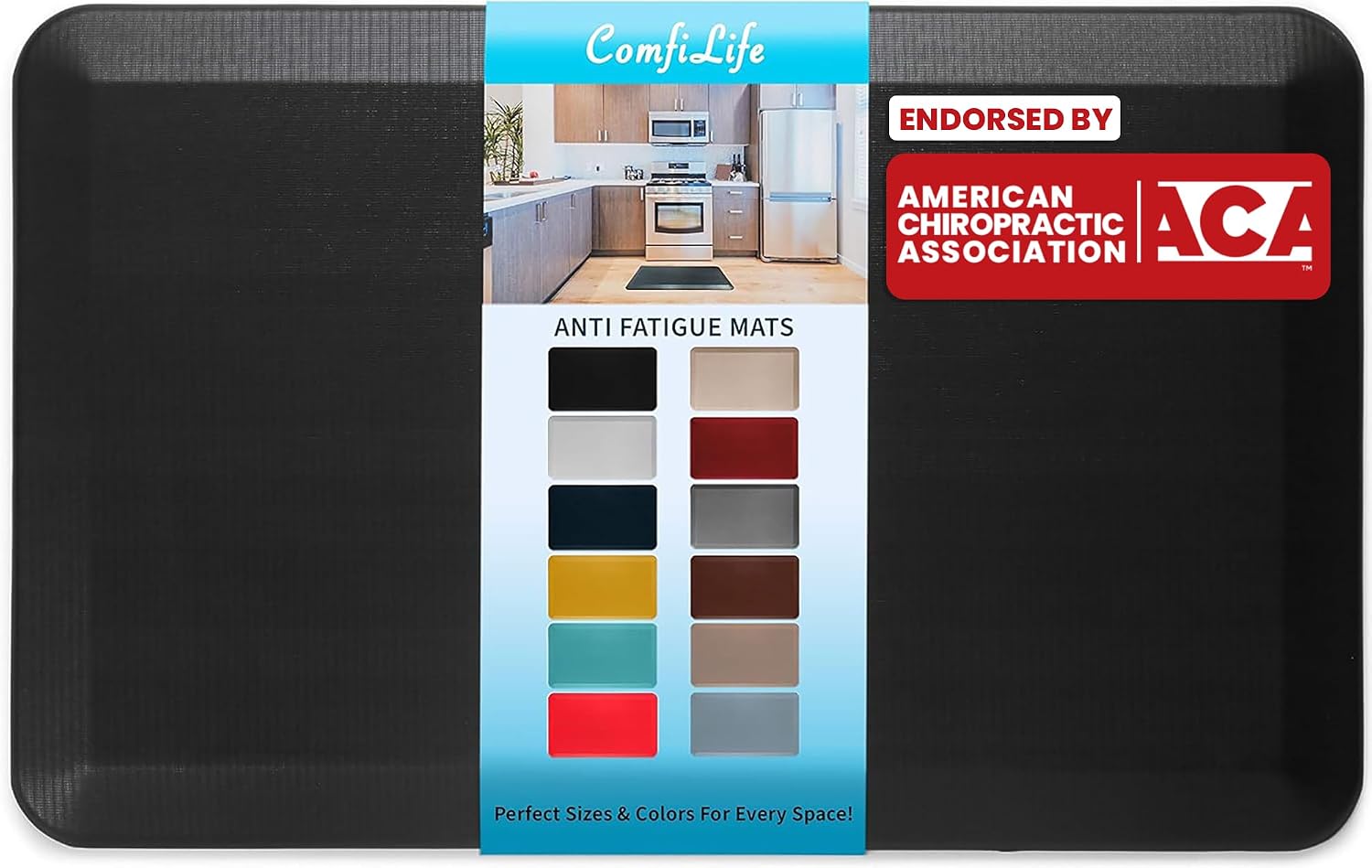
Compression manages the symptom of a calf pump that is idle. A mat attacks the cause, because its slight instability keeps you making small movements, which keeps the pump running.
Pros
- Right size and lower price for a fixed standing spot
- Same 4.8 star foam as the longer version
- Easy to lift, move and store
Cons
- Too short if you move between stations
- No advantage over the 39 inch beyond price and storage
- Single firmness option
Also worth considering
Strong, well-reviewed products that just missed our ranked list - worth a look if the picks above aren't quite right for you.
- Sockwell Women's Elevation Firm Graduated Compression - The firm 20-30 mmHg step up, which is the tier associated with visible varicose veins rather than ordinary standing fatigue.
- Truform 20-30 mmHg Knee High - The sensible budget option at the firm level, with an enormous review record behind it.
- Topo by Ergodriven - A terrain rather than a flat mat, so it keeps offering new positions across a long static shift.
Frequently asked questions
Why do my legs hurt after standing all day?
Mostly because of what standing still does to circulation. Your calf muscles act as a pump that pushes blood back up your legs against gravity, and that pump only works when the muscles contract and relax. Stand in one place and it switches off, so blood and fluid pool in your lower legs. The result is the heaviness, aching and swollen ankles that show up by evening. This is why leg pain from standing responds to compression and movement, while foot pain responds to shoes and the surface.
Is leg pain from standing all day serious?
Usually not. Aching, heavy legs and mild ankle swelling that settles overnight is the ordinary consequence of a static shift. What is not ordinary is pain, swelling, warmth or redness in one leg only, calf pain that is tender to touch and came on without an obvious cause, swelling that does not settle by morning, or visible veins that become painful. Those deserve prompt medical assessment rather than a product.
Do compression socks help legs that hurt from standing?
This is the case they are actually good at. Graduated compression counteracts the fluid pooling that causes heaviness and swelling, and it works while you wear them rather than afterwards, so they need to go on before the shift rather than after it. For most people standing without a diagnosed condition, 15-20 mmHg is the right level. They will not help a foot that hurts because the shoe is wrong.
Why do my legs feel heavy and stiff after work?
Heaviness is fluid, stiffness is muscle. Fluid accumulates because the calf pump is idle during static standing, and it produces that full, tight, heavy sensation in the lower legs. Stiffness comes from muscles holding one position for hours without going through their range. The two have different fixes: compression and elevation for the fluid, movement and stretching for the stiffness.
How do I stop my legs hurting at work?
Restart the calf pump. Shift your weight between feet every few minutes, do ten slow calf raises several times a shift, rest one foot on a low rail and swap, and walk during breaks instead of sitting. Compression socks worn from the start of the shift do the same job passively. If you stand in one spot, an anti-fatigue mat helps by making you move constantly without thinking about it.