Relieving Sore Feet After Work: What Actually Helps in the First Hour
What genuinely reduces sore, swollen feet after a standing shift, ranked by how much difference it makes, what is merely pleasant, and the one free thing that beats almost everything you can buy.
This page is about the feet you already have at the end of a shift. If you want to stop them hurting in the first place, that is a different job and we cover it in why your feet hurt after standing all day.
What follows is ordered by how much difference it actually makes, which is not the order most lists use.
1. Elevation, which beats everything you can buy
Lie down and get your feet above the level of your heart for fifteen minutes.
Gravity has spent eight hours pooling blood and fluid in your lower legs. That fluid is a large part of why your feet feel tight, heavy and tender, and elevation is the only thing that reverses it quickly. Fifteen minutes makes a noticeable difference; thirty is better.
The reason people report it does not work is almost always that they did not go high enough. Feet on a footstool while sitting on the sofa is not elevation, because your feet are still below your heart. Lie on the floor or the bed and put your legs up the wall, or stack pillows so your ankles sit clearly above chest level.
It costs nothing. It outperforms every product on this page.
2. Get out of the shoes immediately
Not in an hour. The moment you are home.
A shoe that has been on a swollen foot for ten hours is now tighter than the one you put on that morning, and it keeps compressing tissue that is trying to drain. If you do nothing else, take them off and let your feet spread.
Going barefoot on hard floors afterwards is a mistake though, particularly if you have any heel pain. Something flat and unsupportive is not a rest from an unsupportive work shoe.
3. Cold if swollen, warm if aching
Match the temperature to the symptom rather than picking one out of habit.
Cold if your feet and ankles are visibly puffy. It constricts blood vessels and reduces swelling. Ten to fifteen minutes with a cold pack, or a cool footbath.
Warm if they are tired and achy without much swelling. Heat relaxes muscle and is more comfortable for general fatigue.
If you cannot tell which, alternate. Avoid heat on anything that is hot, red and inflamed already.
On Epsom salts
The warm water and the fifteen minutes sitting still are doing the work. Evidence that magnesium is absorbed through skin in useful amounts is weak, so the salts are probably not the active ingredient.
That is not an argument against a soak. A warm soak relaxes muscles and, more importantly, it makes you sit down and stop, which is genuinely valuable. Just do not credit the salt.
4. Stretch the calves, not just the feet
Most people rub the sole and ignore the muscle that is actually tight.
Tight calves pull on the heel and change how load passes through the foot, so calf stretching often does more for foot pain than foot stretching does. Stand facing a wall, one foot back with the heel down and the leg straight, and lean in until you feel a stretch in the upper calf. Thirty seconds each side. Then repeat with the back knee slightly bent, which catches the deeper muscle lower down.
For the sole itself, roll it slowly over a ball or a chilled bottle for a couple of minutes per foot. Slow and firm beats fast and hard.
5. Compression, for legs rather than feet
If it is your legs that feel heavy and your ankles that swell, rather than your soles that hurt, compression is the tool that addresses the mechanism.
Worn during the shift, compression socks stop fluid pooling in the first place, which is a great deal more effective than dealing with it afterwards. They do nothing for a foot that hurts because the shoe is wrong. If you are unsure which strength you need, the mmHg guide covers that decision, which matters more than the brand does, and our honest assessment of the evidence sets out what they are and are not good for.
6. Massage and rollers, for comfort
Pleasant, mildly useful for circulation after a static shift, and not a fix. A massager used nightly while you continue standing in worn shoes on bare concrete is treating a symptom you could remove instead.
Buy one because you enjoy it. Do not buy one instead of an anti-fatigue mat or a shoe that supports your arch.
What to change at work tomorrow
Relief after the fact will only ever get you so far. The things that reduce how sore you are in the first place:
- Shift your weight between feet every few minutes rather than standing still
- Rest one foot on a low rail or box, swapping regularly, which unloads your back as well
- Ten slow calf raises, a few times a shift, to restart the pump that returns blood up your legs
- Walk during breaks instead of sitting down
- Stand on something forgiving if you occupy one spot; the floor matters more than most people expect, and standing on concrete is its own problem
When soreness is not just soreness
Ordinary tiredness after a long shift settles overnight. Get advice if pain is worst on your first steps in the morning, involves numbness, tingling or burning, wakes you at night, affects one foot much more than the other, or comes with swelling that has not gone by morning. If you have diabetes, treat any foot problem as a reason to seek advice early rather than late.
We review products and we are not clinicians. None of the above is a substitute for someone looking at your actual foot.
How we test
Every pick is scored on the same five criteria and cross-checked against real owner feedback - so the ranking reflects how a product holds up over a full shift, not its spec sheet.
Support
Whether graduated compression actually matches its stated mmHg rating, or, for mats and insoles, how much load it takes off your legs.
Comfort
All-day wearability: no bite at the cuff, no hotspots, breathable enough for a full shift.
Durability
Whether it holds compression or loft after repeated washing and months of daily use.
Fit
Size range, calf-width options, and how honest the sizing chart is against real owner reports.
Value
What you get for the price, including cost per wear once durability is accounted for.
Best worn during the shift
Sockwell Women's Circulator Moderate Graduated Compression
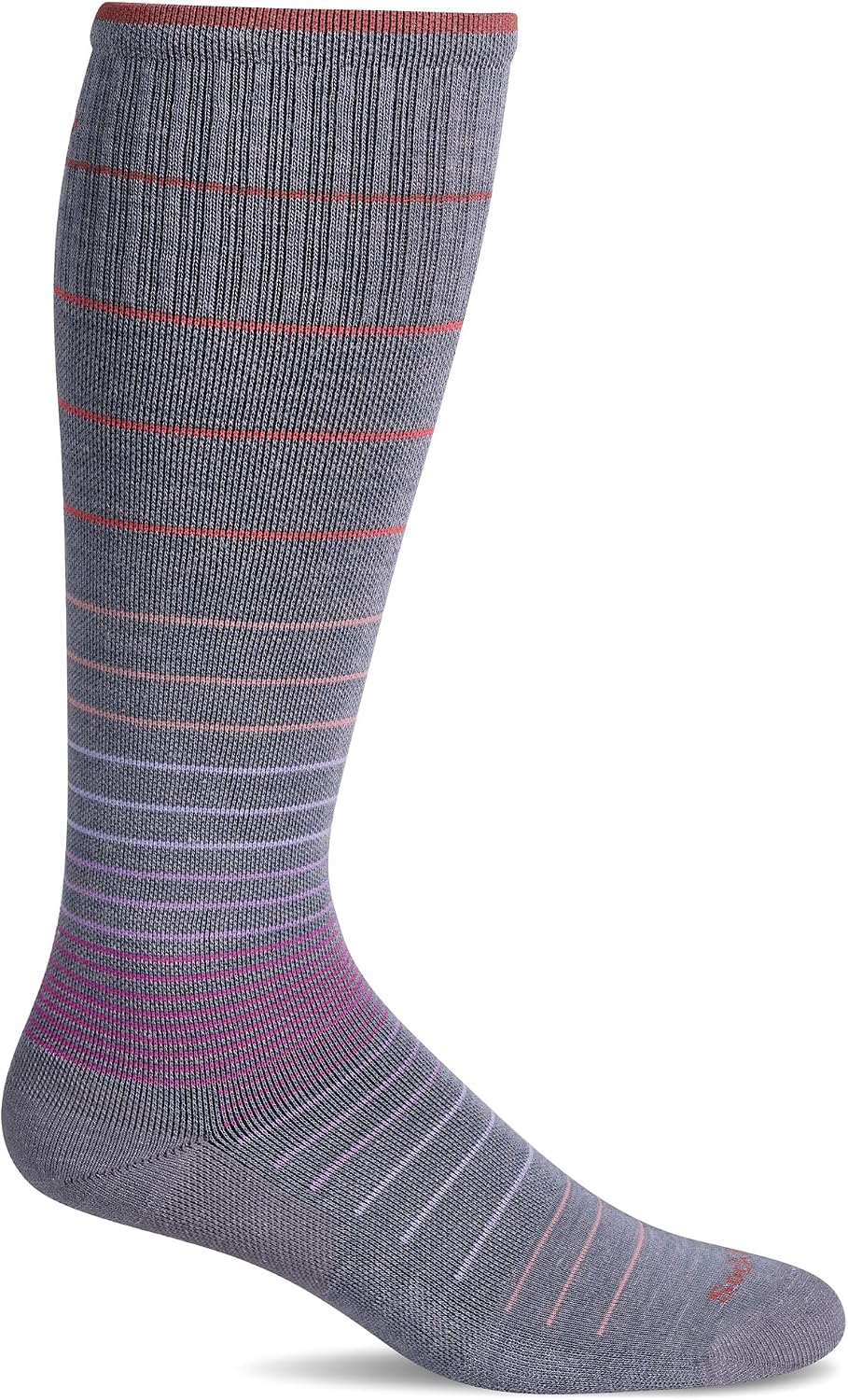
The most effective thing on this list, and the one people get wrong by timing. Compression prevents the fluid pooling that makes your feet feel tight and heavy, so it works during the shift. Putting it on when you get home is closing the gate after the horse has gone.
Pros
- 15-20 mmHg is the right level for standing, travel and recovery
- Nearly five thousand owner reviews, the strongest in the range
- Merino blend manages heat and odour over a long day
- Easy enough to don that it gets worn consistently
Cons
- Premium price, and three pairs is the realistic requirement
- Air dry only
- Not firm enough if you have been told to wear 20-30 mmHg
Best way to be less sore tomorrow
ComfiLife Anti Fatigue Floor Mat, 20 x 32 inch
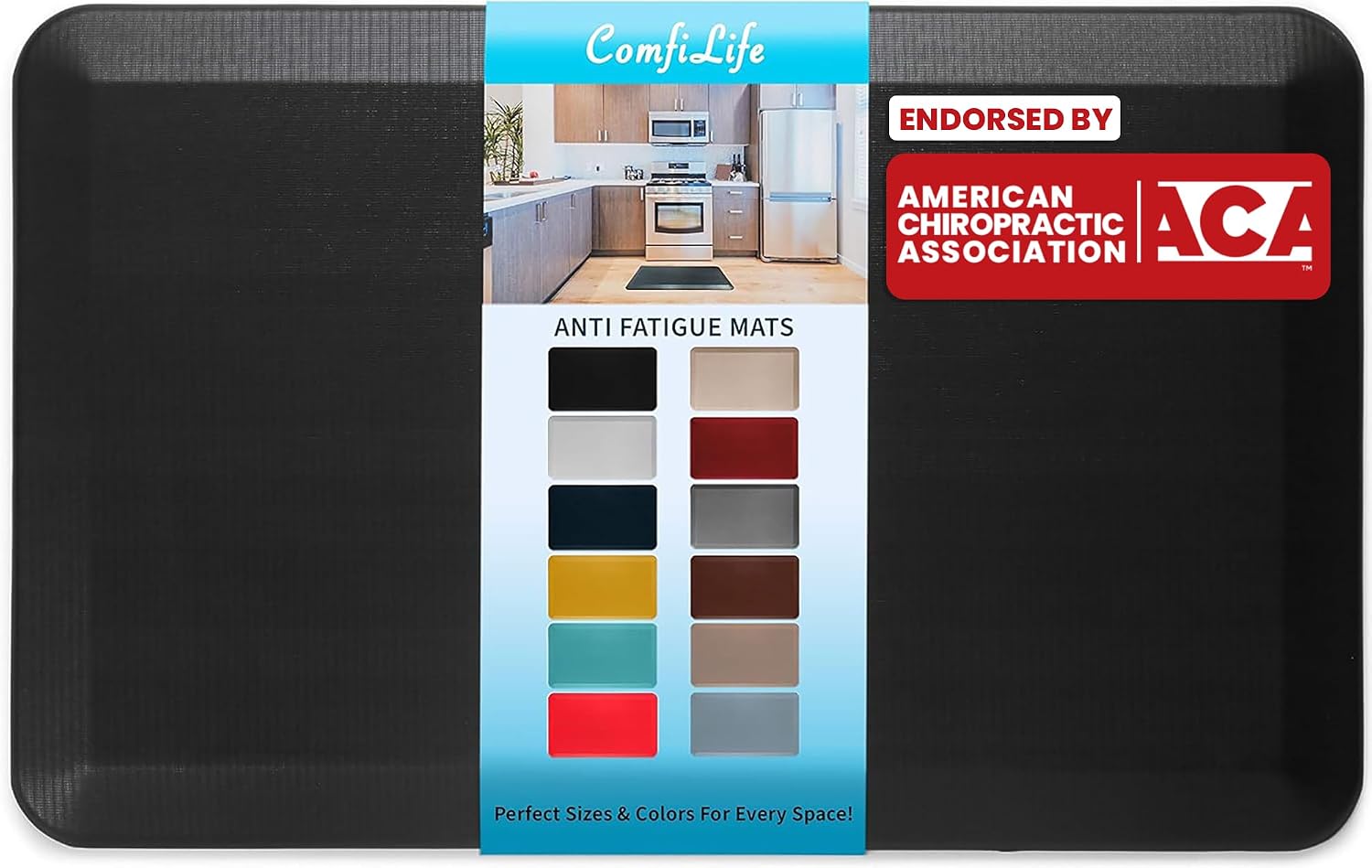
Recovery only gets you so far when the cause is unchanged. If you spend the shift in one spot, this reduces how sore you are in the first place, which beats treating it afterwards.
Pros
- Right size and lower price for a fixed standing spot
- Same 4.8 star foam as the longer version
- Easy to lift, move and store
Cons
- Too short if you move between stations
- No advantage over the 39 inch beyond price and storage
- Single firmness option
Most comfortable to actually wear
Comrad CloudCotton Knee High
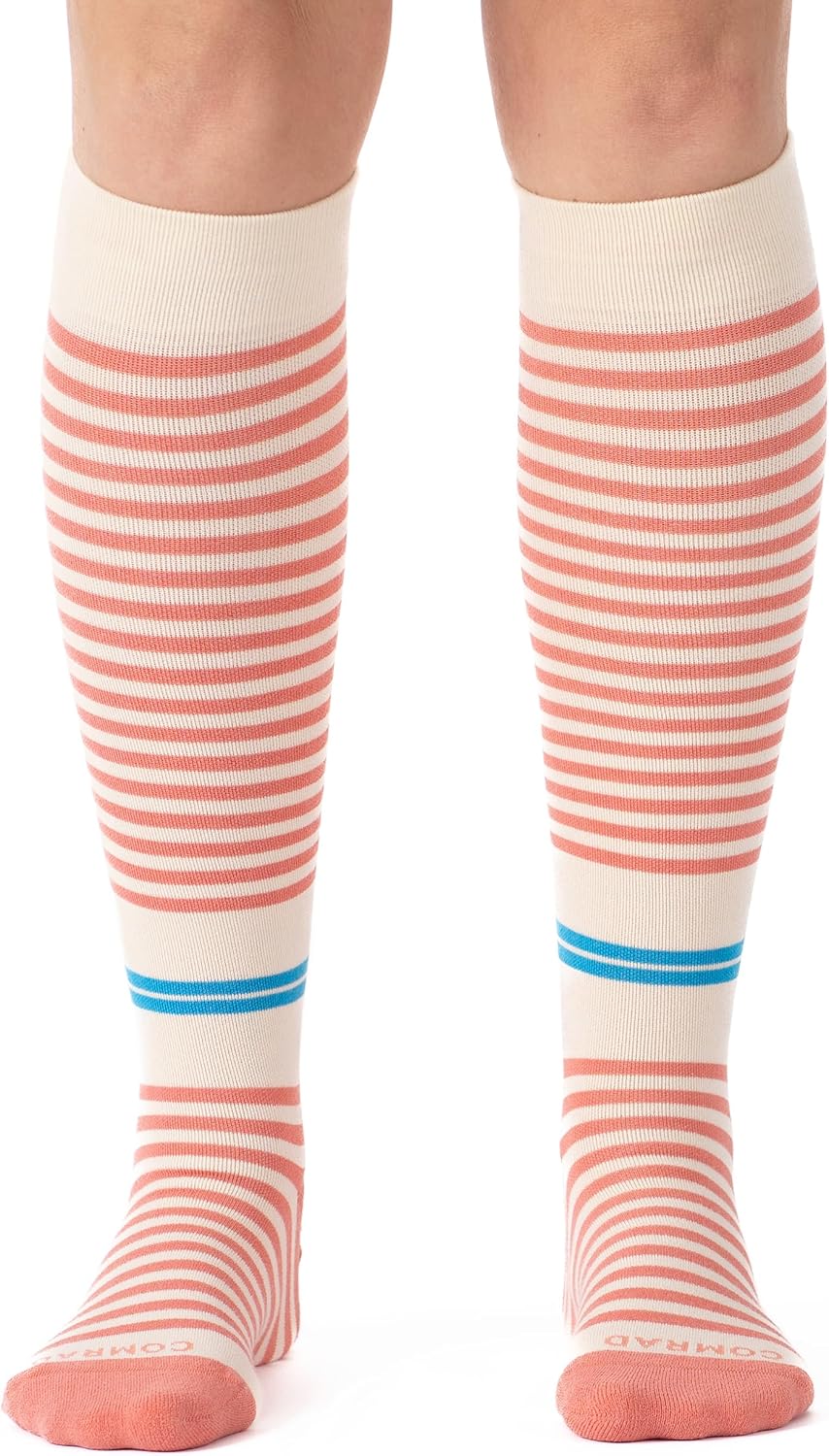
The most common reason compression fails someone is that it ends up in a drawer. This feels like a good everyday sock rather than a medical device, which is most of what determines whether you keep wearing it.
Pros
- Genuinely comfortable, feels like a normal sock rather than a device
- Cotton blend is pleasant against skin and breathes well
- 15-20 mmHg is easy to get on, so it gets worn
- Sold as a single pair rather than forcing a multipack
Cons
- Premium price for an everyday compression level
- Shorter Amazon review history than the established names
- Not firm enough if you need 20-30 mmHg
Best cushioned insole
Dr. Scholl's Work All-Day Superior Comfort Insoles (Men's)
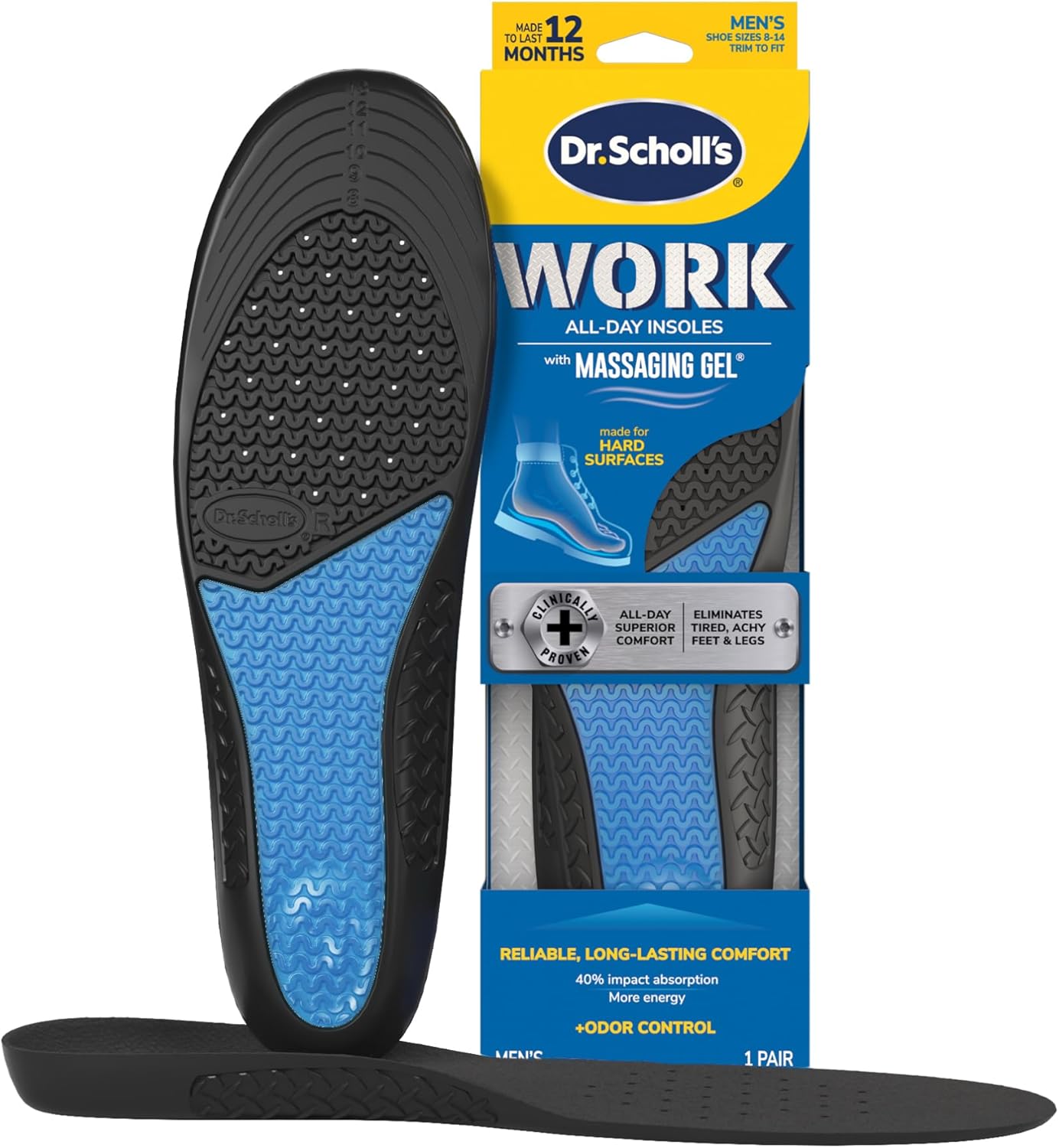
If your soles feel bruised at the end of a shift rather than your arches feeling tired, cushioning is the right lever and this is the well-evidenced option. Replace it on schedule; gel compresses.
Pros
- Over sixty thousand owner reviews, exceptional evidence base
- Designed for standing rather than adapted from a running insole
- Trim to fit works in boots, trainers and work shoes
- Inexpensive enough to replace on schedule
Cons
- Gel compresses, so realistically a six month life on concrete
- Not a corrective orthotic for significant overpronation
- Adds bulk, so a snug shoe may become tight
Best if your arches are the problem
Superfeet All-Purpose Wide-Fit Support Insoles
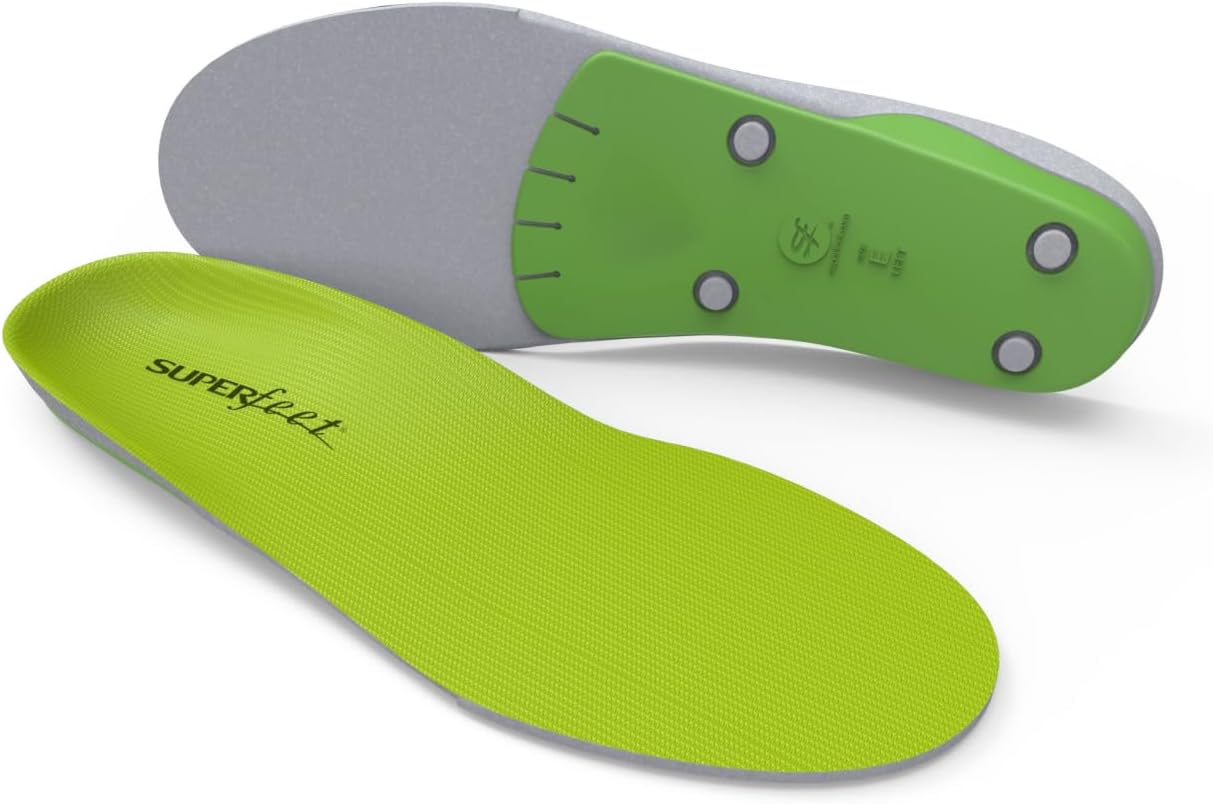
Structured support instead of cushioning. If the ache is in the arch and builds through the day, this holds it up so the small muscles doing that job do not have to.
Pros
- Firm structural shell genuinely holds the arch all day
- Cut for wide feet, which most insoles are not
- Far more durable than foam or gel
- Over four thousand owner reviews
Cons
- Firm feel takes a week or two to adjust to
- Needs a shoe with a removable factory insole
- Most expensive option here
Also worth considering
Strong, well-reviewed products that just missed our ranked list - worth a look if the picks above aren't quite right for you.
- GORILLA GRIP Anti Fatigue Mat - Does most of what the ComfiLife does for less, and a sensible pick if the mat sees a few hours a day rather than a full shift.
- Dr. Scholl's Walk Longer Insoles for Women - Aimed at covering distance rather than standing still, so the better choice if your shift involves a lot of walking.
- VIM & VIGR 15-20 mmHg Cotton, Wide Calf - If a sock has ever left a trench below your knee, the width was wrong rather than the pressure. This is built as a real wide-calf class.
Frequently asked questions
What is the fastest way to relieve sore feet after work?
Elevation. Lie down and get your feet above the level of your heart for fifteen minutes. Gravity has spent your whole shift pooling fluid in your lower legs and feet, and elevation is the only thing that reverses that quickly. It costs nothing, it beats every product, and most people skip it because sitting on the sofa with feet on a footstool is not high enough to count.
Does soaking your feet in Epsom salts actually work?
The warmth and the fifteen minutes off your feet genuinely help. The evidence that magnesium is absorbed through skin in meaningful amounts is weak, so the salts themselves are probably doing less than the soak. That does not make it pointless: a warm soak relaxes muscles and it makes you sit still, which is most of the benefit. Just do not expect the salt to be the active ingredient.
Should I use hot or cold water for sore feet?
Cold for swelling, warm for stiff, aching muscles. If your feet and ankles are visibly puffy, cool water or a cold pack constricts vessels and reduces the swelling. If they are tired and achy without much swelling, warmth is more comfortable and helps muscles relax. If you cannot tell, alternating is a reasonable default. Avoid heat on an area that is hot, red and inflamed.
Do foot massagers help sore feet from standing?
They help comfort and they encourage circulation, which is worth something after a static shift. What they do not do is address the cause, so a massager used every night while standing in worn-out shoes on concrete is treating a symptom you could remove. Buy one because you like it, not as a substitute for fixing the surface or the footwear.
How can I relieve foot pain while still at work?
Change what your feet are doing rather than treating them. Shift your weight between feet deliberately, rest one foot on a low rail or box and swap regularly, do ten slow calf raises a few times a shift, and walk during breaks instead of sitting. If you can change one thing about your setup, an anti-fatigue mat under the spot you occupy most does more than anything you can do to your feet directly.